

Garden care within the areas ready for use
Gardeners Earlsfield
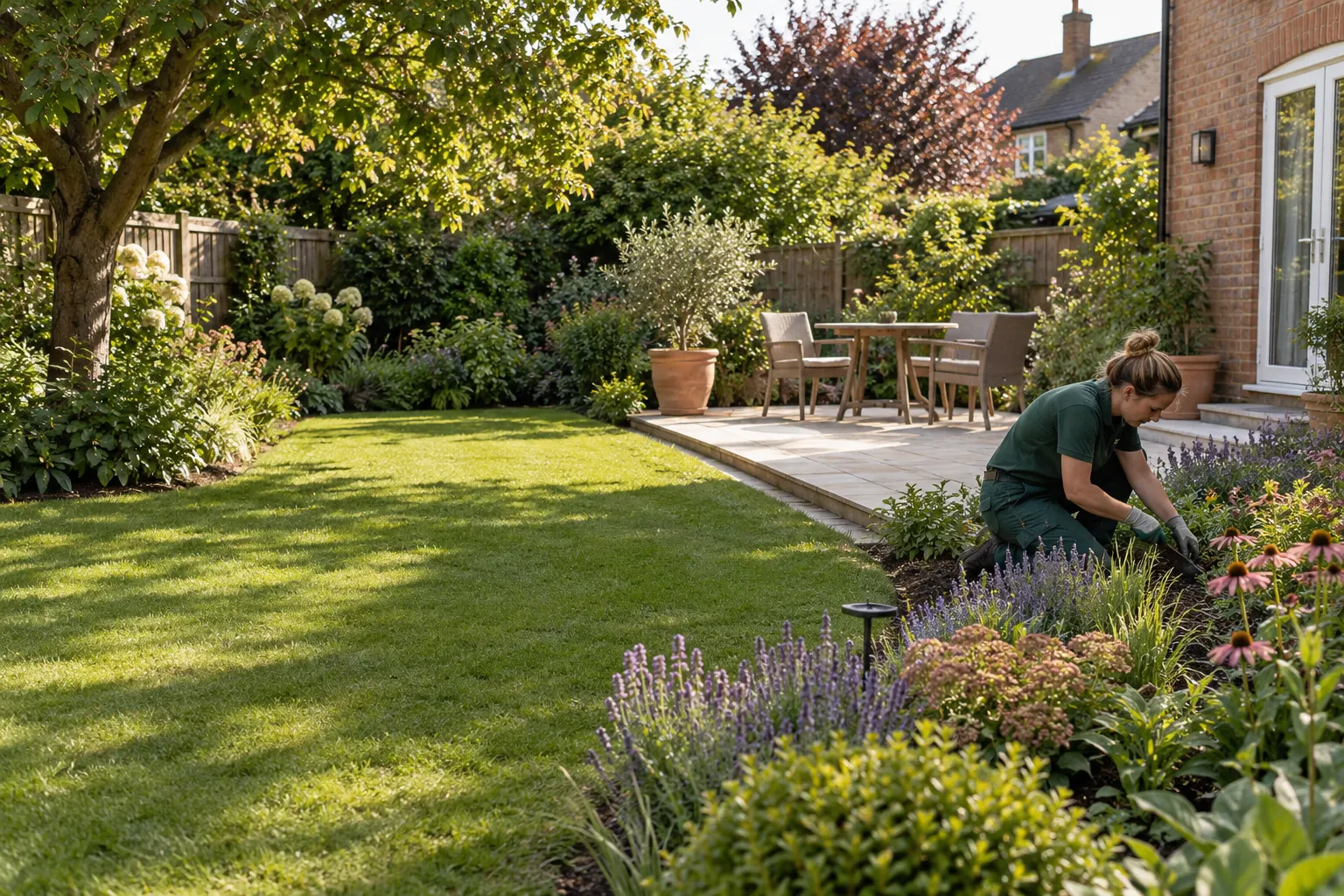
Our gardeners maintain the usable beds, lawn and reachable boundaries while other parts of a property remain in transition. We establish the current working route, separate vegetation from stored materials and follow relevant instructions around new surfaces. The visit completes a defined area of plant care, cutting and collection within the garden’s actual available space.
- How is rubble separated from garden material? We identify bricks, concrete and glass independently, keeping the selected vegetation load clear of those different contents during collection.
- How do you mow beside recently installed edging? Our route and finishing method follow its actual condition, levels and relevant installer instructions, with unfinished sections clearly identified.
A defined working area around renewed surfaces
What can your gardeners maintain beside a renewed patio?
We can weed accessible beds, attend to suitable plants and cut usable grass where a suitable route is available. The new surface’s condition and relevant installer instructions guide adjacent movement. Unfinished paving and stored equipment retain their own limits, leaving the identified gardening area with a practical sequence of plant attention and collection.
How does a visit work when one area is unavailable?
We identify the accessible beds, grass and connecting route for the current operation, including plants and materials that remain in place. That establishes a defined part of the garden for care. Any later stage follows a separate arrangement as access changes, keeping completed work and the portions still outside the active area understandable throughout the project.
The current space available for gardening
A practical route through the usable beds and lawn
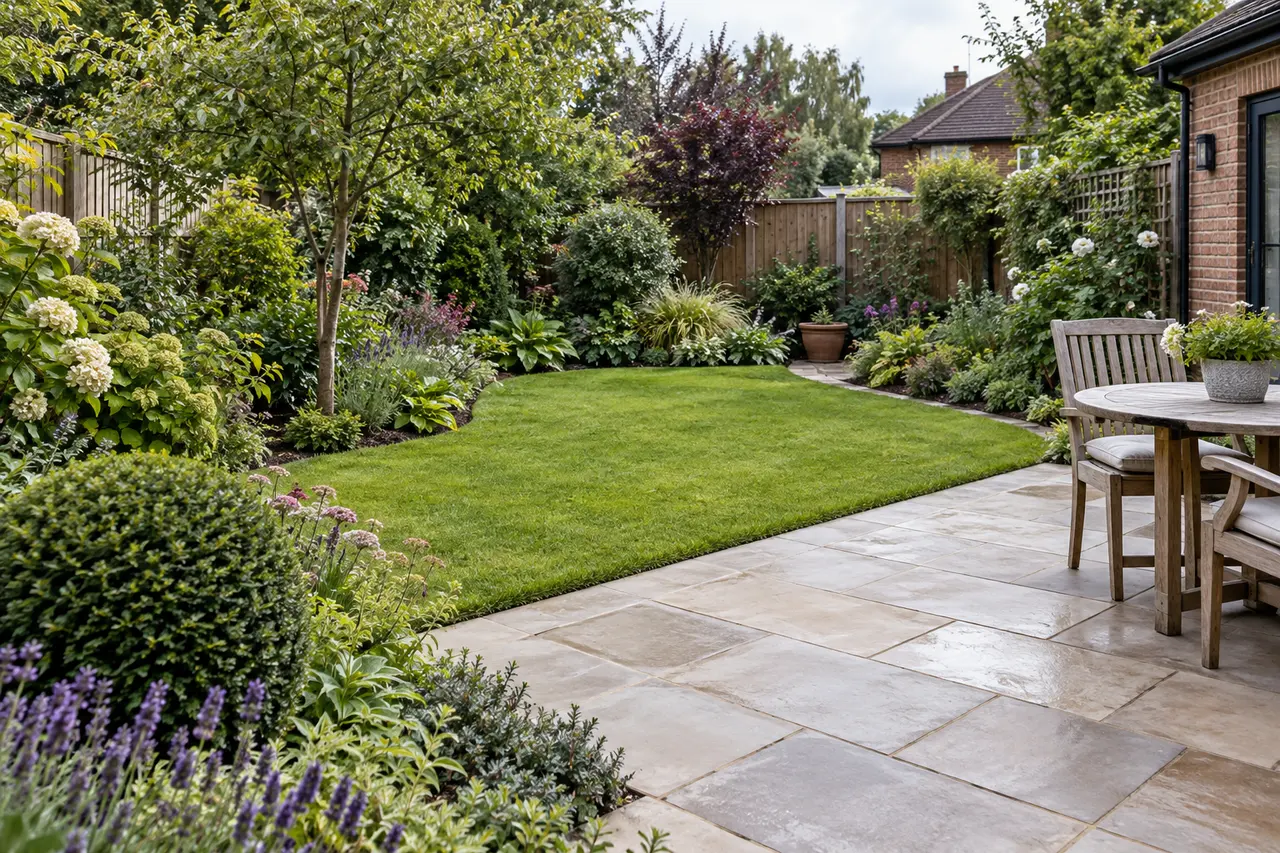
We assess which areas are ready for routine care and where another operation is still taking place. Tools, deliveries and stored materials can change the passage between visits, so our working route follows the present arrangement. The available part receives its own sequence, with suitable standing positions and access to the plants identified before equipment moves into the garden.
Our maintenance can begin with the reachable beds, lifting fresh weeds and attending to suitable spent flowers before the grass stage. Material is gathered as each portion is finished, and the connecting path receives its appropriate sweep. A separate collection position keeps that vegetation distinguishable from the materials associated with other work, leaving the route usable through the completed operation.
Our Routine garden maintenance can include suitable light shrub attention within the available area. Intrusive young shoots, reachable dead material and the surroundings of retained plants receive their identified treatment. Recently planted positions remain clear of repeated traffic, and any unavailable section stays outside the active route. This gives the visit a suitable practical extent with its plant work and final collection connected.
- Our working route remains distinct from the position of stored building materials.
- Retained plants are identified as accessible surrounding weeds are loosened.
- Vegetation is gathered into a recognisable load with its own destination.
- Lawn margins are inspected for loose stones and offcuts before cutting.
- New planting stays clear of repeated carrying and equipment movements.
The planting already within the border
Retained roots and lifted plants assessed individually
We use labels, reliable earlier photographs and known planting positions to identify what remains in a bed after nearby work. Dormant bulbs and perennials can still occupy apparently bare soil, while retained shrubs may have roots extending across the border. That information guides the first hand operation, keeping the actual plants recognisable as the working surface opens around them.
Our hand weeding follows accessible unwanted roots between the retained occupants. Grass across an old bed edge can be worked back to its intended line, with detached material gathered clear as the stems become visible. This gives each selected portion a controlled finish around the known planting, leaving its roots seated and a usable view for the next part of the bed receiving attention.
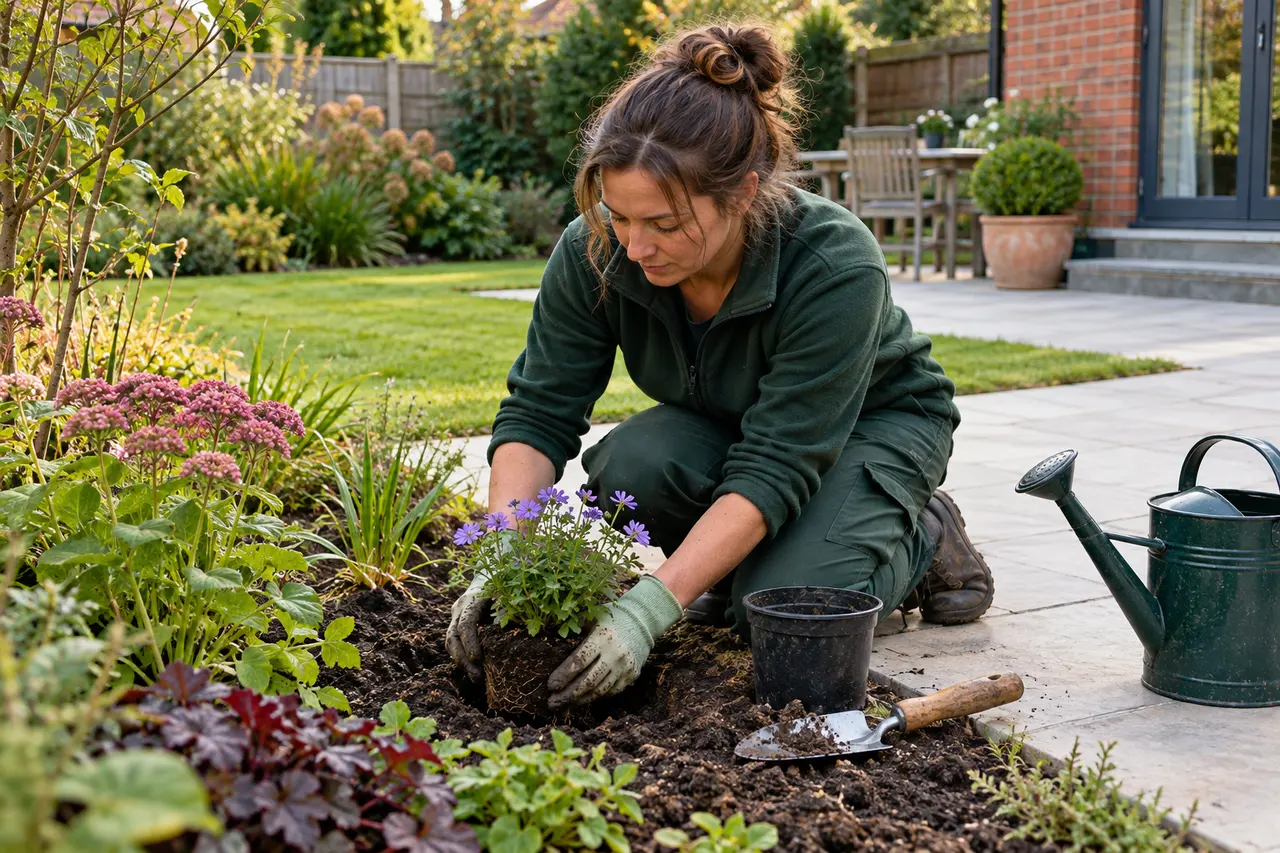
Where fresh planting is included, we assess the cleared position for light, soil condition and existing root space. The prepared hole gives the selected rootball appropriate room, followed by suitable watering at the receiving roots. Access remains for continued care after placement, connecting the introduced plant with the bed’s actual occupants and conditions as the surrounding garden returns to routine use.
Vegetation around stored or discarded objects
A selected clear-up with separate material handling
Our initial view separates unwanted growth from the objects around which it has developed. We identify stored materials and any concealed wire, tile fragments or glass before cutting approaches the affected part. Those contents inform the working method and the suitable extent to open, keeping the selected vegetation and retained possessions clear as the garden becomes more visible.
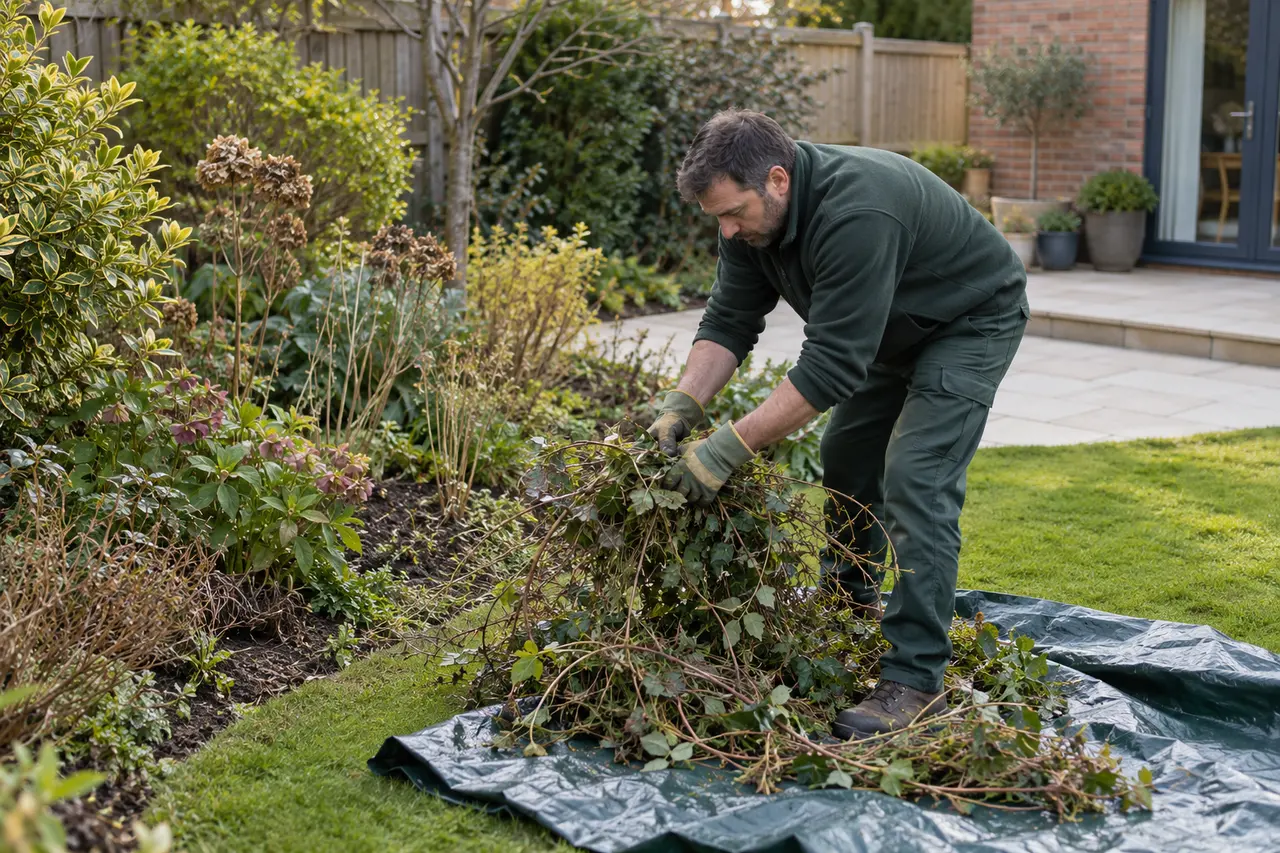
Our Garden clear-up work removes the identified unwanted plants and gathers their resulting cuttings. Bricks, packaging, rubble and household items remain separately identified for their appropriate handling. This gives the green load a clear basis, with any different disposal requirement explicit alongside the growing work and the accessible route available for collecting the material actually included within the operation.
The receiving position keeps soft weeds, hedge fragments and woody material controlled as beds and paths emerge. Any retained or excluded item affecting access remains visible in the work arrangement. We relate the next suitable portion to that actual condition, so the recovered surface and its practical limitations are clear while the vegetation selected for removal leaves through its own collection route.
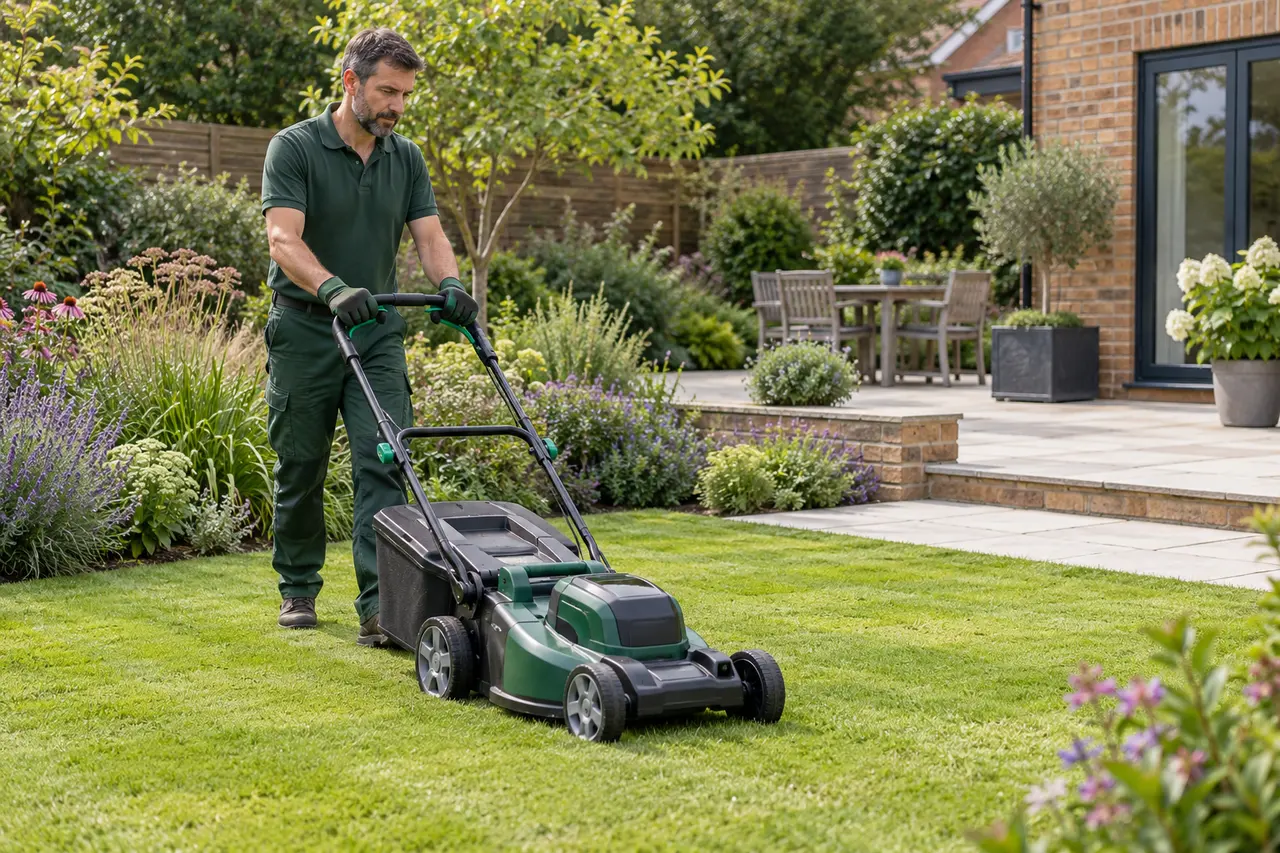
The grass beside changed paving
Mowing and edge finishing along the actual new outline
We assess the lawn’s outline where paving changes have introduced corners, raised edges or a narrower approach. Those details determine the equipment and accessible finishing positions. Our route includes the small strips created by the revised surface, giving them an identified place in the operation before the main cutting passes begin across the suitable open grass.
After loose stones and offcuts are collected, we cut the accessible lawn in controlled overlapping passes with a suitable turning place. The selected route keeps the machine supported while protecting delicate bed margins. Clippings receive their included gathering, and suitable tools finish small portions beside fixed obstacles, leaving a readable line between the grass and the paving attended within that area.
Our Lawn mowing can maintain that available turf while other work continues elsewhere. The new surface’s condition and relevant installation instructions guide adjacent movement and finishing. Any heavily worn or disturbed lawn portion receives its own recovery assessment, leaving the ordinary cut complete within the grass area ready for it and the further task related to the actual ground condition.
The growth beside frequently used passages
Selective boundary attention around a usable route
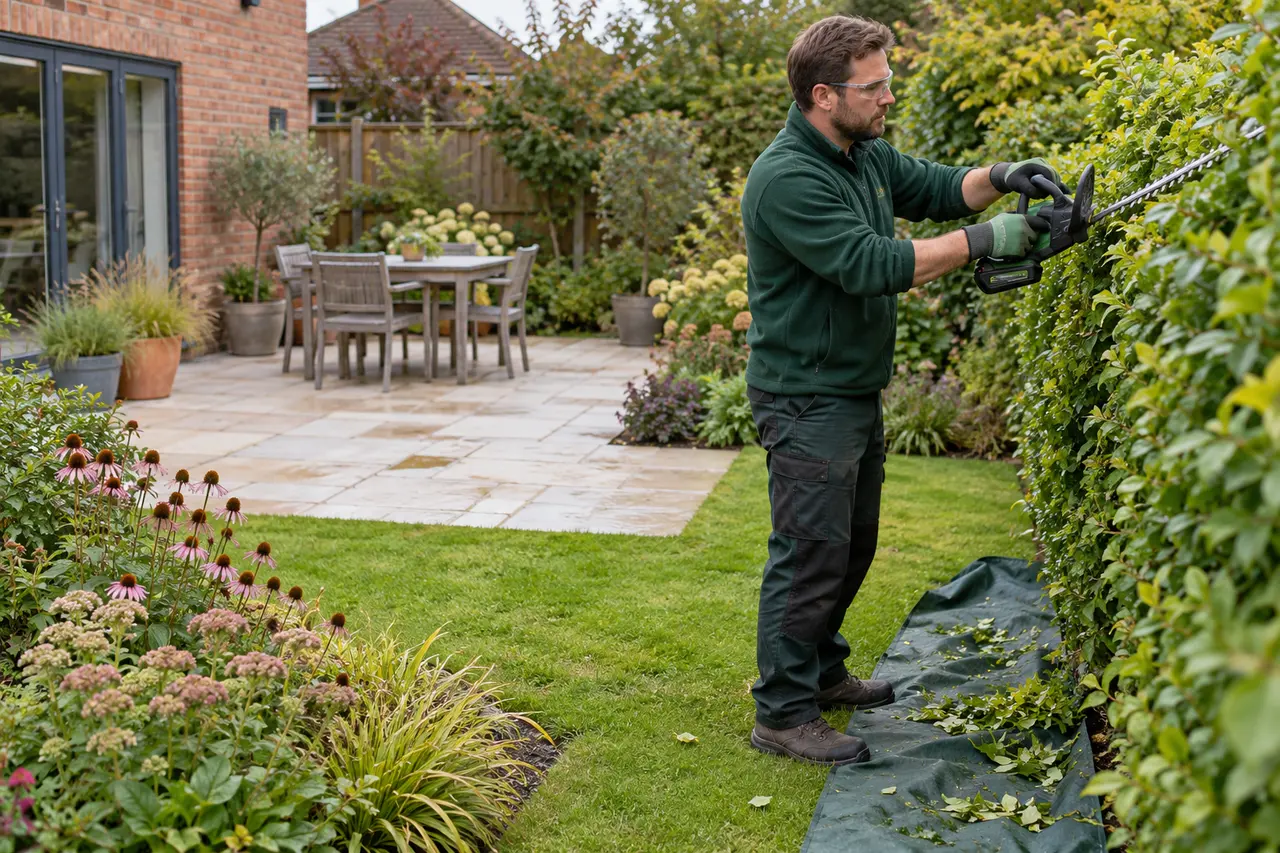
Our gardeners identify stems obstructing the passage and select suitable attention for the plants carrying them. Short work on that particular growth can improve movement while the hedge continues to provide its intended screen. The task is related to the actual obstruction and usable space, with the remaining boundary structure kept in view as the selected portion is attended.
Appropriate young shoots can receive individual cuts while the useful framework remains. Where suitable, the accessible hedge face is trimmed from a controlled position with a receiving arrangement below it. Fragments caught around posts or retained climbers are separated and gathered by hand, connecting the outer finish with the close collection needed at the boundary’s lower and more detailed points.
The suitable trim follows the plant, growth stage and practical reach available. Nesting checks cover the affected vegetation, with disturbing work postponed where nests are being built or used. A substantial reduction or large limb receives its appropriate separate assessment. This leaves the routine route improvement with a clear extent and any larger boundary change distinguishable alongside it.
Ongoing growth after the surrounding project
Returning care for new and established planting
Our continuing work follows ordinary growth as the property’s access settles. Cleared beds can develop fresh weeds and grass can extend along its existing margins, so those areas remain part of the returning sequence. We use the accessible routes and retained planting record to identify the useful next work, connecting the initial recovery with the garden’s current growing conditions.
Young additions and established plants can need different attention in the same bed. We retain suitable watering access around new stems while mature growth receives its appropriate selective care. The task sequence identifies both positions, keeping recent planting clear of repeated disturbance and leaving its establishment requirements understandable alongside the surrounding routine work completed during the visit.
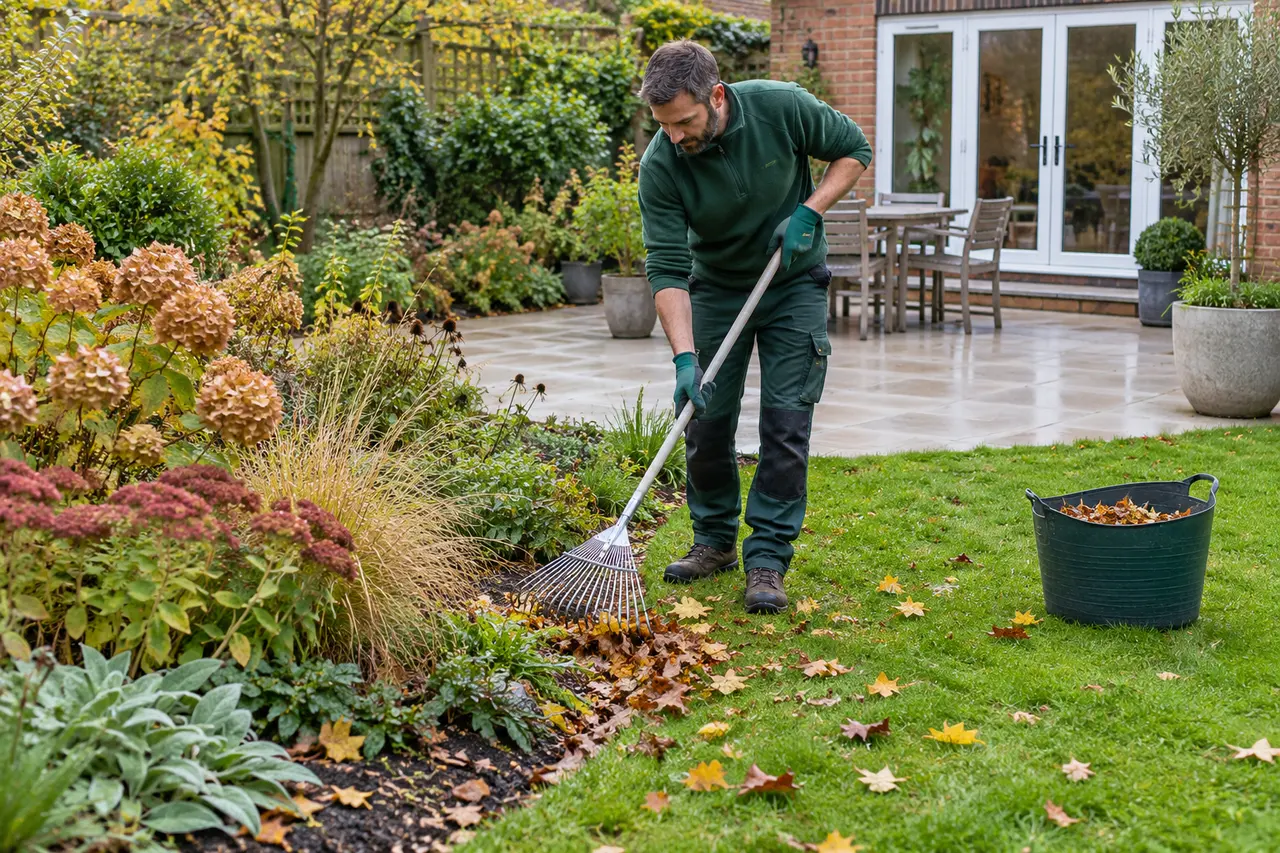
Loose leaves are gathered from suitable grass and lifted carefully around young planting. Appropriate dead seasonal material receives attention while useful retained stems remain identifiable. The seasonal garden-care guide provides wider context, and our actual sequence follows the plants and receiving ground found at the property. That keeps the visible finish connected to the next suitable care stage as growth continues.
Further services around a changing outdoor layout
Design connecting renewed paving with planting
Our Garden design can relate the house, planted areas and open space after a path or patio changes the garden’s arrangement. We include continuing access and mature plant spread within that proposal, giving retained beds and new features a workable relationship. The resulting layout can then support routine care as the remaining space is developed and the introduced planting occupies its intended positions.
A defined ground result after stump work
A proposal for stump work identifies the retained ground needed where later planting is intended. Treatment or grinding and preparation of a receiving bed have different results, with remaining material, suitable soil work and any levelling addressed in their own stated scope. This keeps the completed tree operation and subsequent landscaping understandable, giving the next roots and watering arrangement an appropriate receiving specification.
Paving cleaning following the installer’s care information
Our jet-washing assessment includes relevant care instructions where paving has recently been laid, pointed or sealed. The actual material and finish determine its suitable approach and timing. We establish that working basis for the recently completed surface before selecting a cleaning operation, with the installer’s requirements retained alongside the receiving area and any distinct marks requiring attention.
Clearance around fitted gutter coverings
Our Gutter cleaning assessment distinguishes material on top of mesh, guards or screens from deposits inside the channel. The actual fitting guides the accessible method, with the reachable sections and any access limitations identified. Dismantling, repair or replacement remain separate requirements. The proposed result therefore follows the particular covered run and the material that can appropriately be addressed within it.
A usable room for the seasonal tree’s handover
For Christmas-tree delivery or installation, our arrangement identifies the space needed beside the intended position for controlled carrying and turning. Safely movable ornaments or light items need a suitable place outside that immediate handling area, with retained furnishings clearly identified. This gives the selected tree movement its practical route and receiving position while any separate furniture handling or protective-material requirement remains explicit.
Published time rates for garden work
Our general gardening time rates provide the guide basis for the labour proposal. Carrying distances and areas still unavailable for care remain identified, so the work relates to the actual accessible space and its included tasks.
| Gardening time | Guide price |
|---|---|
| First hour | £83 |
| Each subsequent hour | £65 |
GBP guide prices. Obtain the complete quotation, including VAT treatment, agreed waste removal and any applicable parking or access charges, before booking.
Questions about our gardening around renewed surfaces
How is gardening coordinated while other work continues?
We define the area ready for care and a suitable connecting route, with equipment, deliveries and other active work accounted for. The selected beds and turf then receive their suitable attention within that extent. The portions remaining unavailable stay clear in the arrangement, giving the visit a practical finish and later work an identifiable starting point.
How are rubble and vegetation handled separately?
We identify bricks, concrete, glass and similar contents independently from the selected green material. Suitable plant work can progress around retained or excluded objects where access and conditions allow. This keeps the vegetation load and its destination clear while any different handling needed for the other contents remains separately understood.
How are cement or building-product marks assessed for cleaning?
We identify both the receiving surface and the residue before selecting an appropriate approach. Some marks can require specialist treatment beyond a general washing task. That assessment keeps the method connected to what is actually on the paving, with suitable surface care and any separate residue-removal requirement clear within the proposed operation.
How are previously lifted plants included in the next stage?
We assess the identifiable plants, their current condition and how they have been held, then relate the next handling to the receiving bed. Any appropriate planting arrangement includes care for that actual material. This keeps retained roots and their intended positions connected through the move, with each plant’s needs considered as the garden becomes available again.
How does new edging affect the mowing method?
We use the edging’s actual condition and levels to establish the suitable grass route and margin finish. Loose or unfinished portions remain identified, and relevant installer instructions guide adjacent equipment movement. The accessible lawn receives its appropriate cut while any affected part waits for the suitable position or further work needed before approach.
A defined garden area maintained as access develops
Our Earlsfield full gardening service range can begin with the beds, grass and routes already ready for care, completing their appropriate growing work and collection. Later layout or specialist tasks remain identifiable, allowing the next operation to follow the garden’s actual condition as the surrounding project progresses and more of the space becomes available.