

Continuing garden care with a practical finish
Gardeners Sutton
Our Sutton gardening service follows what has grown, finished flowering or gathered since the previous visit. Lawn cutting, close bed work, suitable hedge maintenance and collection are brought together in a useful sequence. The balance changes with the garden, giving each return a clear result while keeping larger clearance or specialist work distinct from the routine care that maintains the progress.
- How do you collect leaves across different surfaces? Our team selects the method for the grass, paving or planted bed beneath the load, protecting retained shoots during close collection.
- How is a multi-tree collection arranged? Our collection proposal follows the actual number and sizes, with suitable holding and handling space rather than an unspecified single-tree load.
Returning care for the garden’s next tasks
How does the work change between maintenance visits?
Our gardeners assess fresh grass, weeds, spent flowers and fallen material before selecting the useful balance of work. A visit can concentrate on mowing and border detail, while a later return can need more leaf collection or suitable pruning. The completed result follows that changing growth and the working conditions.
How does your team move an overdue garden into upkeep?
An initial recovery can remove the specified vegetation and make the lawn, borders and boundaries accessible for continuing work. Our subsequent maintenance addresses the retained growth and new material as they develop. The two operations remain distinct in their requirements, with larger clearance, hidden-root problems and specialist tasks identified separately. This gives the customer a realistic progression.
A useful balance of tasks
The operations suited to the current growth
The work starts with the garden's present growth. Grass may have slowed while accessible weeds appear between plants, or new hedge shoots may enter a route as flowers finish elsewhere. Our gardener reviews those different stages together. This lets the available work address what has actually developed, with a considered sequence through the parts of the garden needing attention on that visit.
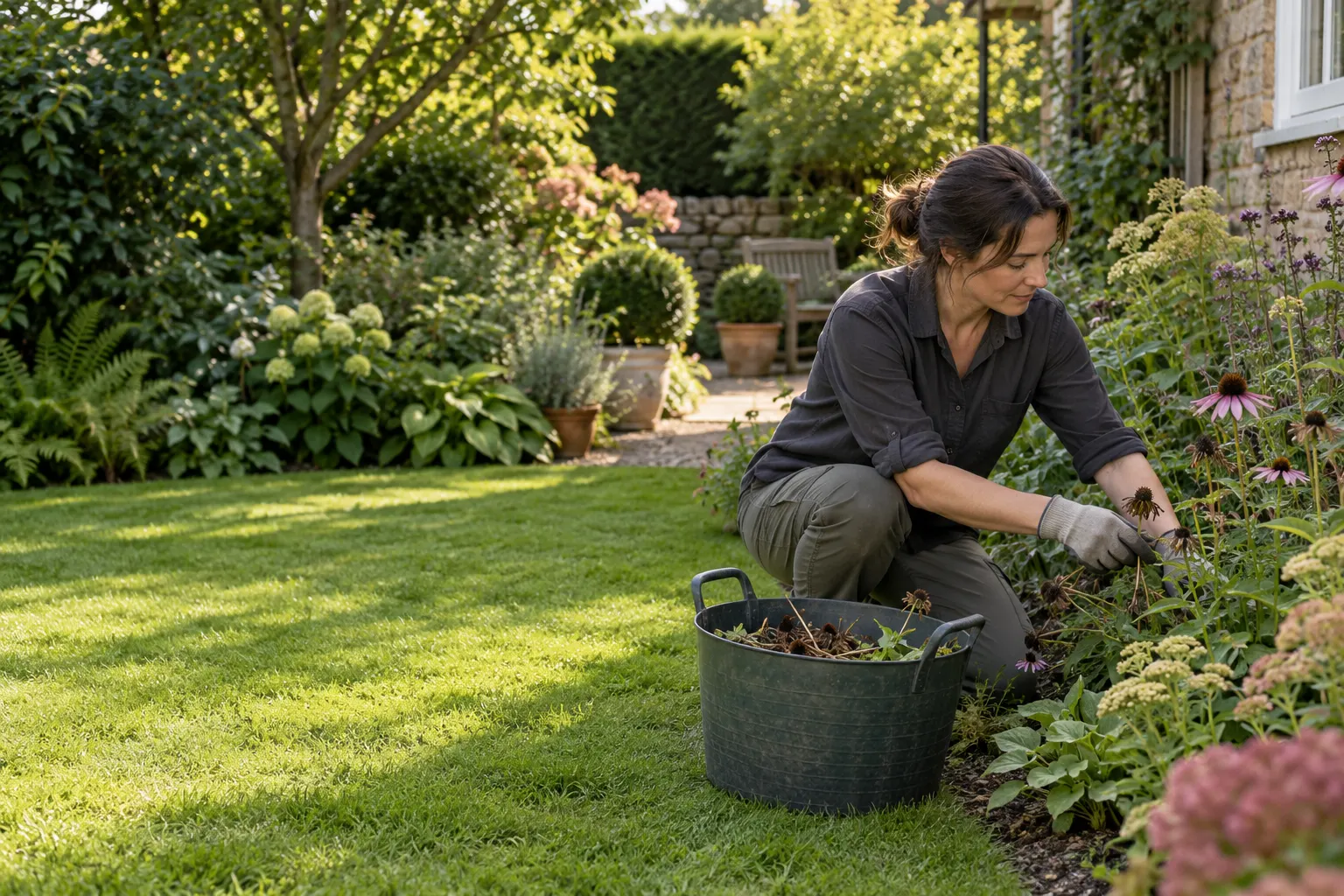
Our garden maintenance combines suitable cutting, accessible weeding, selected spent-material removal and collection. A defined worked area is finished before equipment moves to an unrelated corner, so the products of the job do not accumulate beneath every plant attended to. The customer receives a completed section with its loose material gathered.
Continuing care follows the choices made during the previous work: a stem retained for seed, grass left until a suitable stage and an identified weed needing another pass. These details give the following visit a practical reference while leaving its balance responsive to the growth encountered.
- Assessment of new growth before another full cutting pass.
- Collection of fresh fragments from each completed area.
- Retention of selected seedheads during suitable deadheading.
- Follow-up of accessible weed regrowth with controlled disturbance.
- Working routes kept available as the outgoing material is gathered.
Mowing suited to the growing conditions
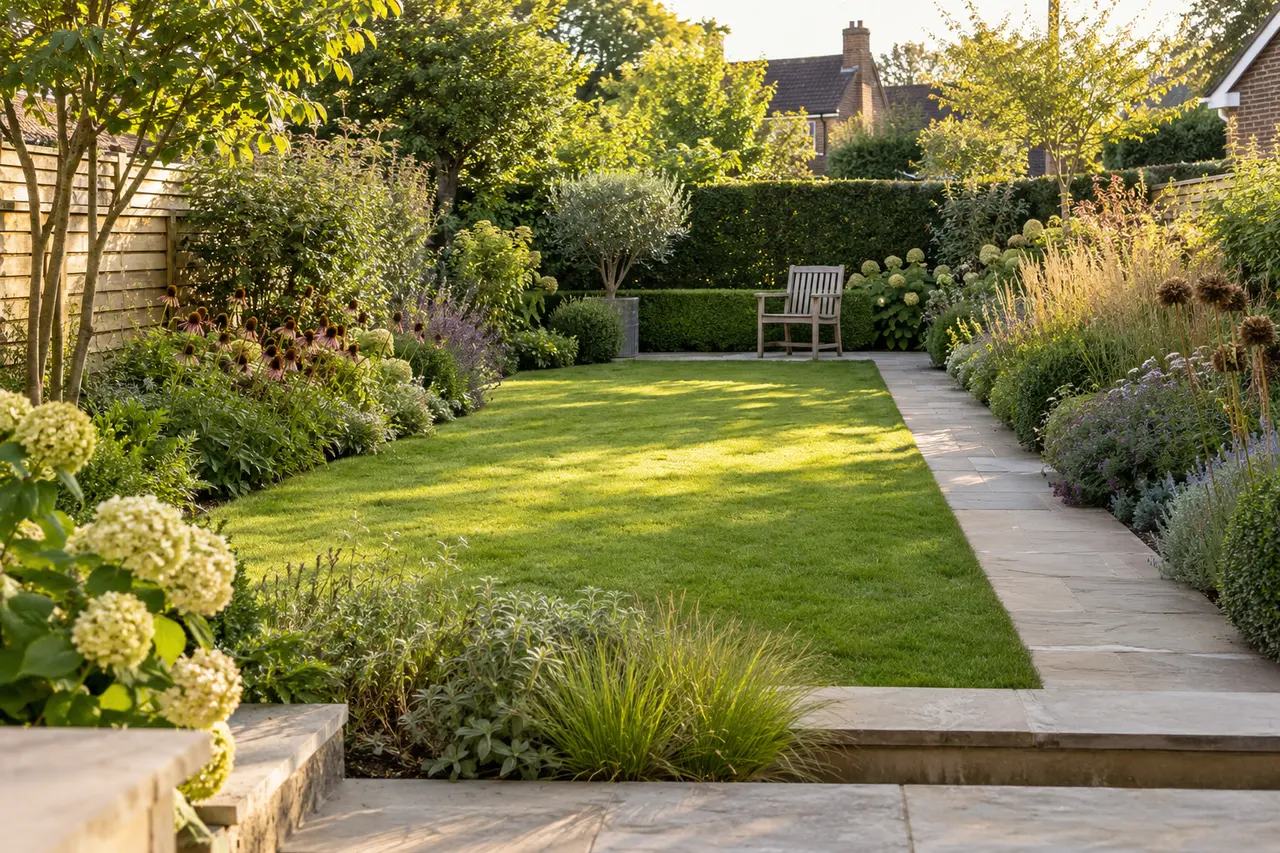
A lawn cut suited to the grass
Our gardener assesses the grass height, condition and surface firmness before mowing. Growth can be strong in suitable mild, moist conditions and slower in a dry period, so time since the previous cut is not the only reference. Very wet or frozen turf remains outside a forced mowing schedule. The service selects a suitable operation for the lawn encountered.
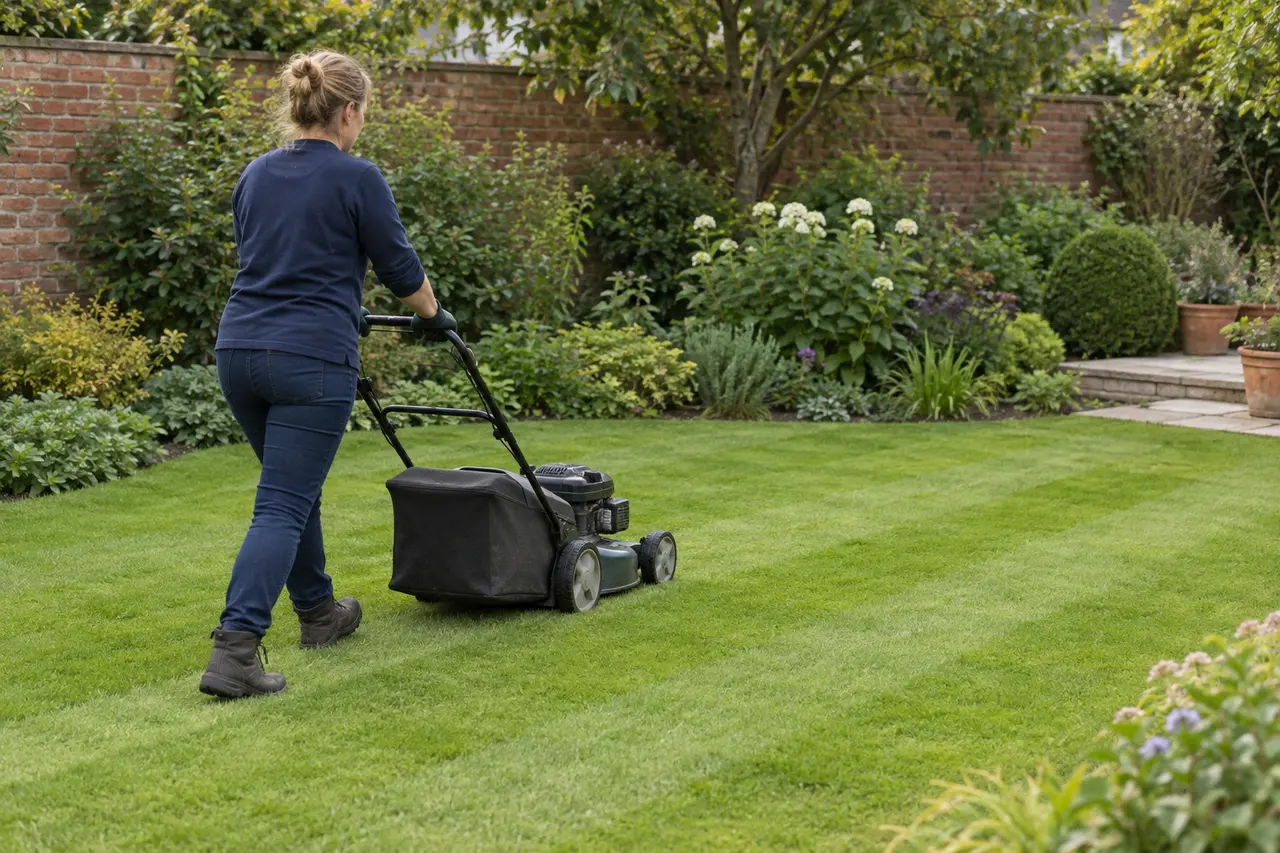
When the surface is suitable, hard objects are cleared and the cutting height is set for the grass. Consistent overlapping passes address the open area while a suitable turning position keeps wheels out of the beds. Collection prevents a full box from leaving clumps over the worked surface. Our finish also includes the accessible perimeter, with a separate tool used where the confined edge cannot be completed appropriately by the machine.
Our lawn-care service distinguishes the completed cut from issues that mowing cannot resolve alone. A bare route, persistent standing water or exposed unevenness can require its own assessment while suitable growing grass continues to be maintained. This keeps the service's immediate result clear, with the following proposal related to the actual cause of a weak area.
Detailed work among continuing growth
Individual selection of finished flowers
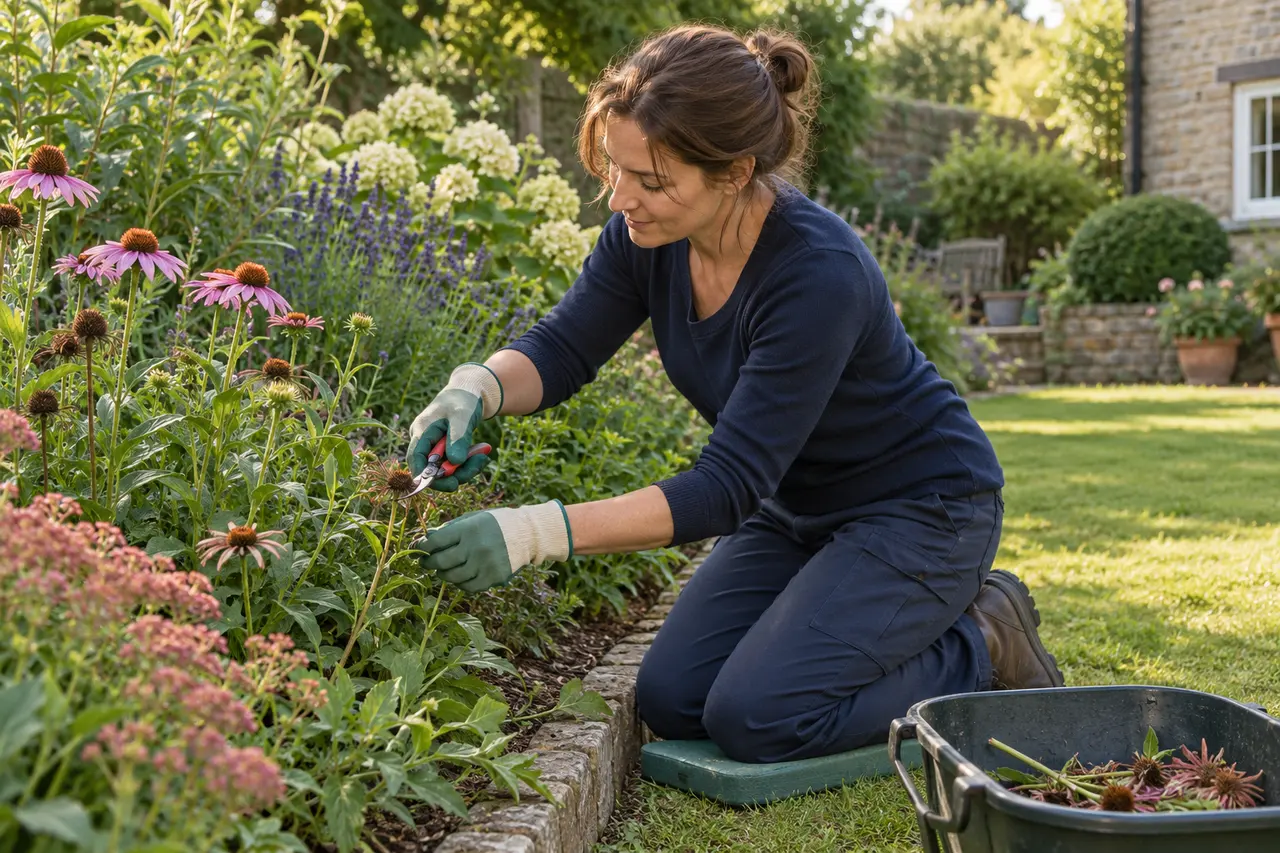
The gardener follows a finished flower stem far enough to identify the living leaves, buds and shoots beside it. Its suitable cutting point depends on the plant, while stems deliberately retained for seed remain outside the removal. This lets our service improve the current appearance selectively. A neighbouring plant can receive a different treatment at the same visit, with the border's continuing growth preserved instead of a uniform cut imposed across its top.
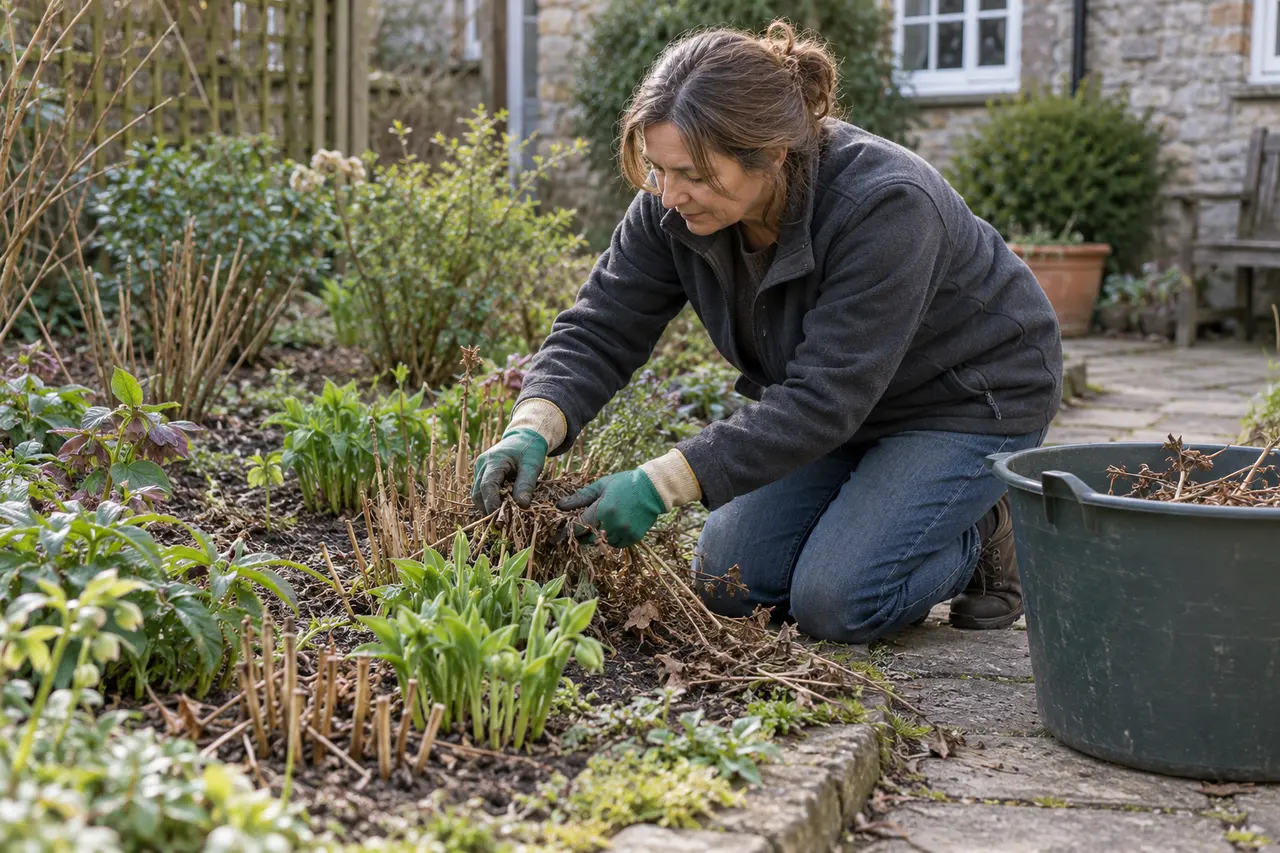
Removed material is gathered as the hand work progresses, keeping it from being dropped into the lower foliage. Accessible small weeds can be lifted from the revealed patches without disturbing the wanted plants around them. Our finish leaves the retained base visible and suitable access for water to reach the soil. Several close tasks can therefore be completed together while each plant remains outside cuts inappropriate to its current growth.
A plant repeatedly crowding its neighbours can need a different proposed operation from more frequent deadheading. Our ongoing care keeps useful structure and developing growth intact while suitable division, replacement or a changed arrangement is considered for its own timing and purpose. This prevents the maintenance from making that larger planting decision gradually through repeated cuts along an arbitrary line. The customer retains a clear distinction between routine flower work and actual renewal.
Maintenance of the existing hedge line
Fresh extension and heavier boundary growth
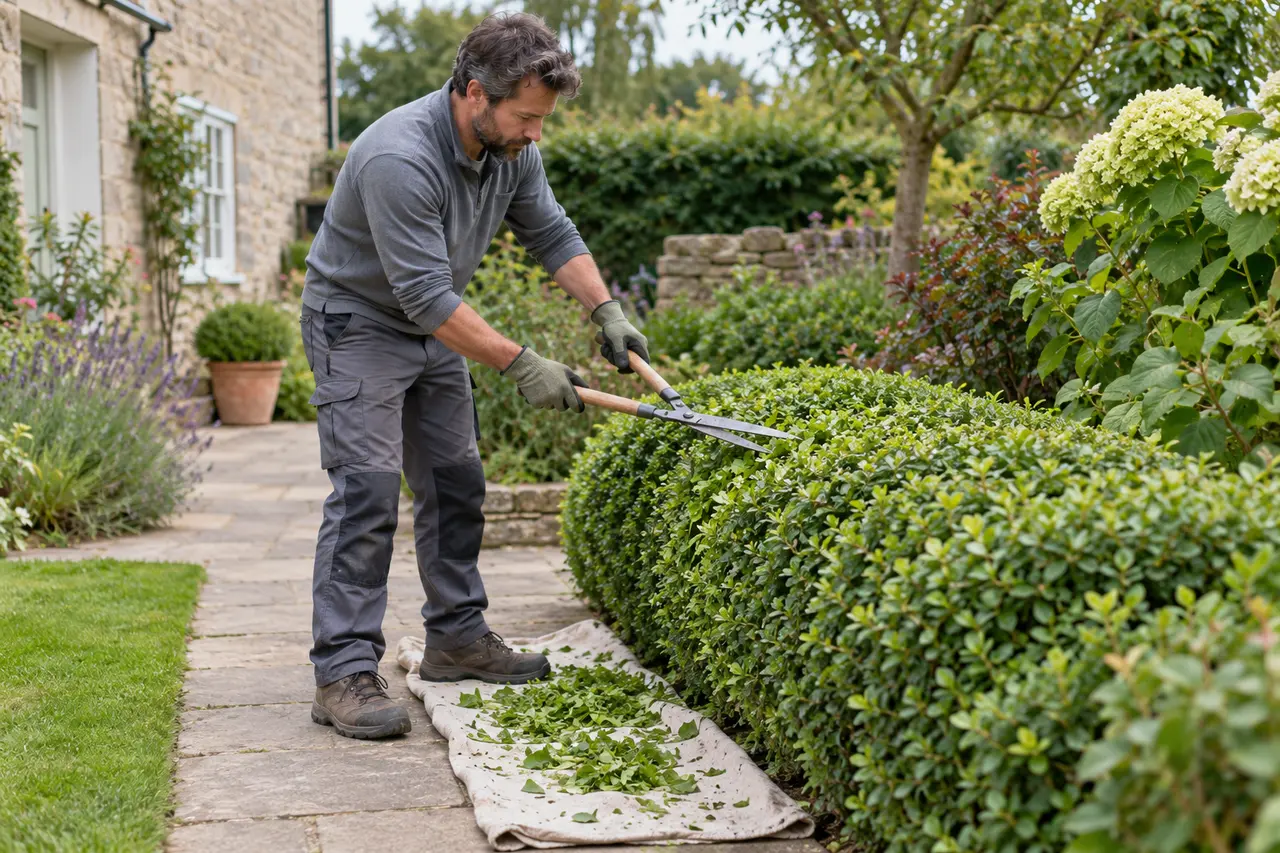
A maintained outline provides a reference for suitable light trimming of a new flush. Our assessment changes where that line lies deep inside several seasons of woody growth, because the operation is no longer a quick surface touch-up. Species, condition and earlier cutting determine the reasonable proposal. This gives the customer work suited to the actual boundary.
Reachable trimming is followed by collection of fine fragments as well as larger pieces. Our gardener checks places where clippings lodge, including gravel, the hedge base and the lower leaves of neighbouring plants. This finishing attention removes the material produced by the cut from its actual receiving areas. The result is more complete than a clean upper face above a fresh layer of fragments still waiting to be gathered below it.
Nest checks and a controlled working position remain part of the operation, with affected cutting postponed where birds are building or using a nest. Heavy, unstable or unreachable growth needs its own approach. Suitable maintenance also attends to accessible return ends and the adjoining worked path. These details give the reachable boundary a complete, practical finish within the identified task.
Collection between cutting stages
Tools suited to the uncovered surface
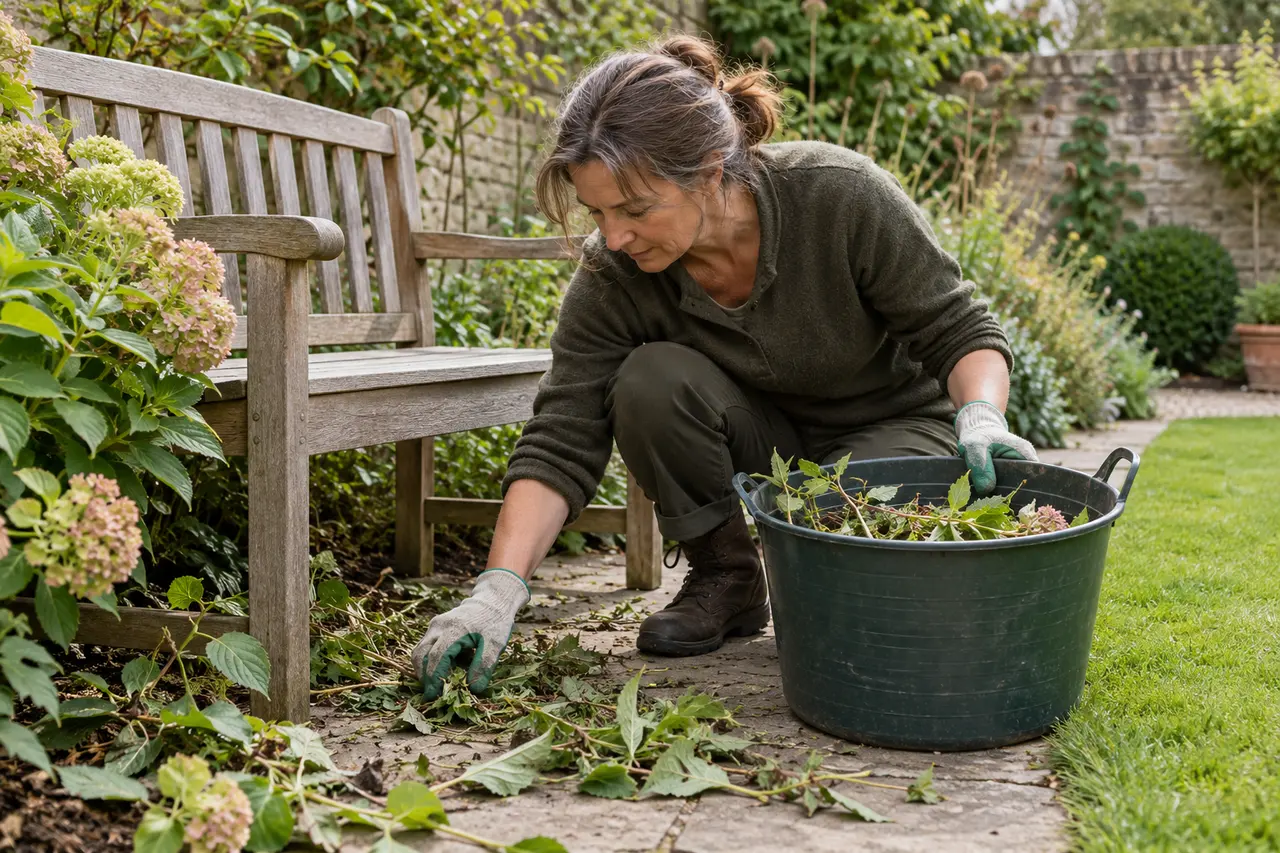
A visit can need significant collection even where little growth requires cutting. Our team distinguishes suitable lawn raking from the closer handling needed around low shoots and tender planting, with paving receiving its own pass. The visible layer is therefore not removed by one broad movement across every surface. This protects the plants below it while collecting the actual deposits that change how the garden can be used and maintained.
During seasonal leaf work, the carrying routes are cleared alongside the appropriate planted areas. Suitable material intentionally retained in a bed remains distinct from deposits obstructing access or covering low growth. The collected load goes to its stated destination, away from living stems and the path already finished. This relates the collecting sequence to both the garden's plants and the way material leaves the work, keeping completed surfaces usable as the visit continues.
A separate starting operation where needed
A recovered starting area for maintenance
A garden with dense weed stems, accumulated branches and concealed edges can need an initial recovery beyond ordinary grass and bed care. We begin within a defined area, removing the specified obstruction while retaining wanted planting and any deliberately undisturbed wildlife space. This opens the work progressively, giving later maintenance access to the plants and surfaces it needs without treating the entire garden as an indistinct load for removal.
As the area becomes visible, the team distinguishes surviving weed roots, shrub stumps and objects uncovered beneath the vegetation. Those different findings do not receive one automatic treatment or disappear into the green collection. Suitable handling and the route out remain part of the progress, with unidentified hazardous material kept outside routine work until its appropriate response is established. The finished recovery therefore reveals the following tasks.
Our garden clean-up service provides that larger initial operation, followed by care of accessible grass, returning weeds and restored margins. The handling of garden waste supports the distinction between collected vegetation and unrelated refuse. This gives the customer a defined starting result and an appropriate basis for continuing visits, with the work performed and the material removed both identifiable instead of a routine maintenance allowance being expected to cover an unmeasured backlog.
Additional projects around the maintained garden
Planting changes developed in suitable stages
Our garden design can separate retained planting from the sections proposed for change, relating new additions to the care continuing around them. The stages and their requirements remain clear within the proposal. This gives a bed needing more than upkeep a considered direction. The resulting arrangement connects the actual planting operation with how the rest of the garden remains cared for.
Garden finishing sequenced around tree work
A separately planned tree-surgery operation can influence when the lawn or beds receive their final attention. Larger branch handling may need working space nearby, so our routine gardening sequence can finish those areas afterwards where appropriate. Each service retains its own work and safe limits. This avoids completing delicate bed detail immediately before material must pass through the same area, while keeping maintenance from quietly becoming an unspecified part of the tree operation.
Pressure cleaning with a suitable return to use
Our jet washing leaves a surface whose return to ordinary use follows the material, weather and any separately applied treatment. The clean is not presented as an immediate grip guarantee or a universal drying period. The completed operation and appropriate surface information guide the replacement of furniture and normal use. This keeps the service's result realistic for the actual patio, including the wet condition that follows a suitable wash.
Gutter work subject to actual nesting activity
Our affected gutter-cleaning work waits where birds are building or using a nest, with the work resuming only when it is lawful to proceed. A nest is kept distinct from loose channel debris. The operation follows the actual activity. This preserves the relevant protection while keeping the customer's proposed clear-out identifiable as a task still awaiting suitable conditions.
Christmas-tree collection for the stated number of items
Our Christmas-tree collection proposal includes the actual number and sizes of trees contributing to the load. More than one household or display changes the holding and handling requirements, so an unspecified group is not treated as a single-tree item. The arrangement remains related to the trees involved, with any combined price addressed in its own quotation.
Guide rates for the work within the visit
These published general rates are a guide to gardening time. The balance between cutting, hand work and gathering material determines the practical scope of the visit.
| Gardening time | General guide price |
|---|---|
| First hour | £83 |
| Each subsequent hour | £65 |
GBP rates. The complete quotation accounts for agreed work, waste handling, VAT treatment and applicable access or parking charges.
Questions about our continuing gardening service
Does each maintenance visit include another hedge cut?
We trim when the plant, fresh growth and suitable timing justify the operation. A hedge with little appropriate extension can receive less attention than weeds, fallen material or grass elsewhere. The recurring service adjusts that balance while retaining nest checks and controlled access, giving each return a useful result.
What result does your deadheading provide?
Our suitable removal can improve the current appearance or prevent unwanted seed formation while retaining useful leaves and buds. The flowering response depends on the plant and stage, so the service does not attach repeat bloom to every tidied stem. The gardener selects the appropriate cut and material to remain, giving the customer the actual flower-care result.
How does the service address weeds returning after clearance?
New seedlings or growth from surviving roots can become visible after the first operation. Our follow-up identifies that growth and uses suitable accessible hand work, with a persistent root issue kept distinct for its own treatment. Ordinary clearance is not represented as permanent weed prevention. This allows continuing care to address the real regrowth without obscuring the difference between a new small task and a larger remaining problem.
How is the first visit sized for an overdue garden?
The proposed work follows the starting condition and the selected area. A defined smaller section can be appropriate, while a substantial backlog requires a larger initial operation before routine upkeep can work effectively. Our service distinguishes that recovery from the subsequent maintenance, giving the customer a realistic first result instead of applying a maintained-garden timetable to accumulated vegetation that has yet to be opened and collected.
What finish does your team leave in the worked area?
The cut or weeded section has its specified loose material gathered and adjoining worked paths attended to, with usable collection positions maintained. Retained plants and any specialist work left for a separate operation remain identifiable. This gives the completed area a clear result while accurately showing the parts still outside that visit's task.
Continuing care that builds on the completed work
Our complete gardening service range relates a larger initial operation to the care needed afterwards. A finished edge, tended bed or recovered starting area provides a useful basis for the next round. The team carries that progress forward through appropriate new work, keeping the garden's changing growth and the completed collection in view.