

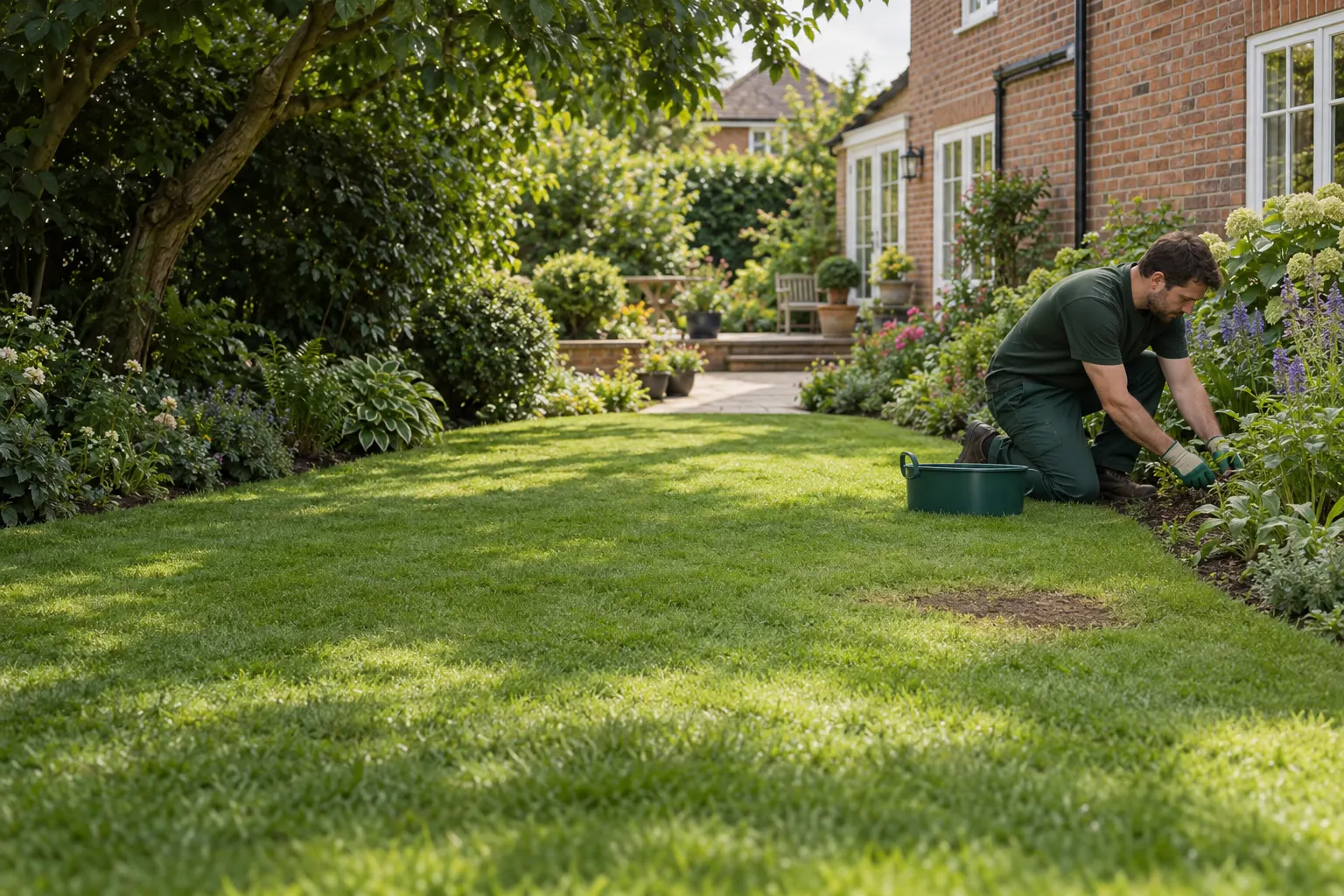
Finchley · Keep establishment separate from routine cutting
Finchley lawn and garden care
Give an agreed seeding task room to establish while the rest of the garden stays cared for. Prepare the lawn appropriately, protect the new work and organise the adjoining beds and boundaries around it.
Different stages need different lawn decisions
Is overseeding included automatically with a Finchley mowing visit?
No. Overseeding introduces new grass seed into an existing lawn and needs its own agreed preparation, materials and follow-up. Routine mowing maintains the grass already present. A useful booking distinguishes those purposes, rather than assume that a cut also supplies seed or establishes what care the emerging grass will need afterwards.
Can other gardening continue while a seeded patch establishes?
Suitable adjoining work can continue where the route and method leave the new area undisturbed. Hand weeding from a firm path or trimming an accessible boundary may be possible. The task list should account for equipment movement and material collection, so the establishing grass is not used as the convenient shortcut or storage position.
The operation before establishment
Give the seed a prepared surface rather than a covering of litter
Overseeding concerns the existing lawn and the new grass intended to join it. Seed needs appropriate contact with the prepared surface; scattering it over loose leaves and cuttings does not create that contact. Select the preparation for the actual lawn and the proposed work, with the seed mixture and supplies identified before application. An apparently simple packet of seed still belongs to a sequence of work rather than a finishing sprinkle over whatever the mowing leaves behind.
The lawn-care service distinguishes routine cutting from recovery operations such as overseeding. Keep that distinction in the scope: which area is being worked, what preparation is proposed and how the following care will be handled. Additional feeding or soil work should have its own reason instead of becoming an automatic bundle. The desired result is a suitable establishment opportunity, not a promise that seed alone will deliver one particular colour or density everywhere.
- Remove loose litter before the agreed seed preparation.
- Keep the seeded area separate from equipment turning.
- Identify the seed mixture and its care instructions.
- Collect hedge material without laying it over new grass.
- Direct routine mowing to grass that is ready for it.
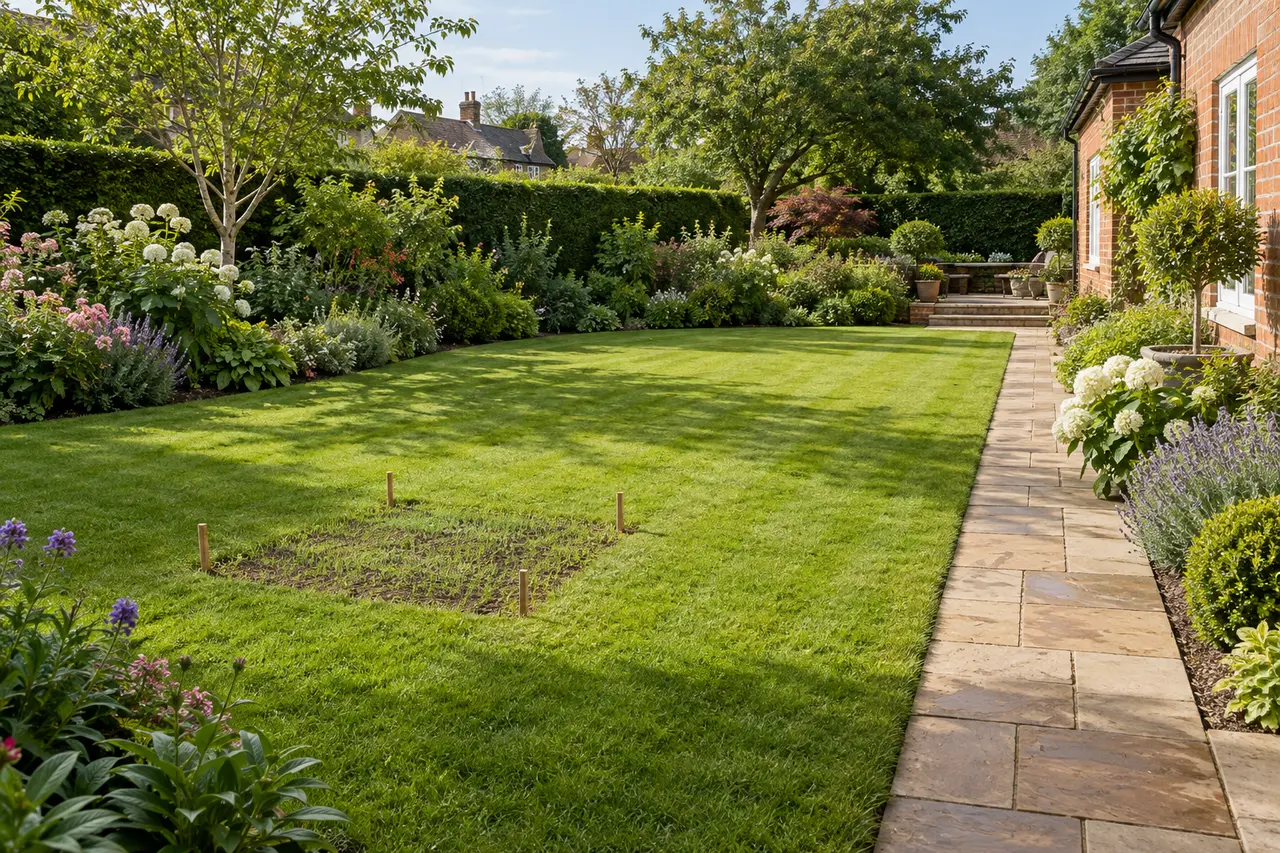
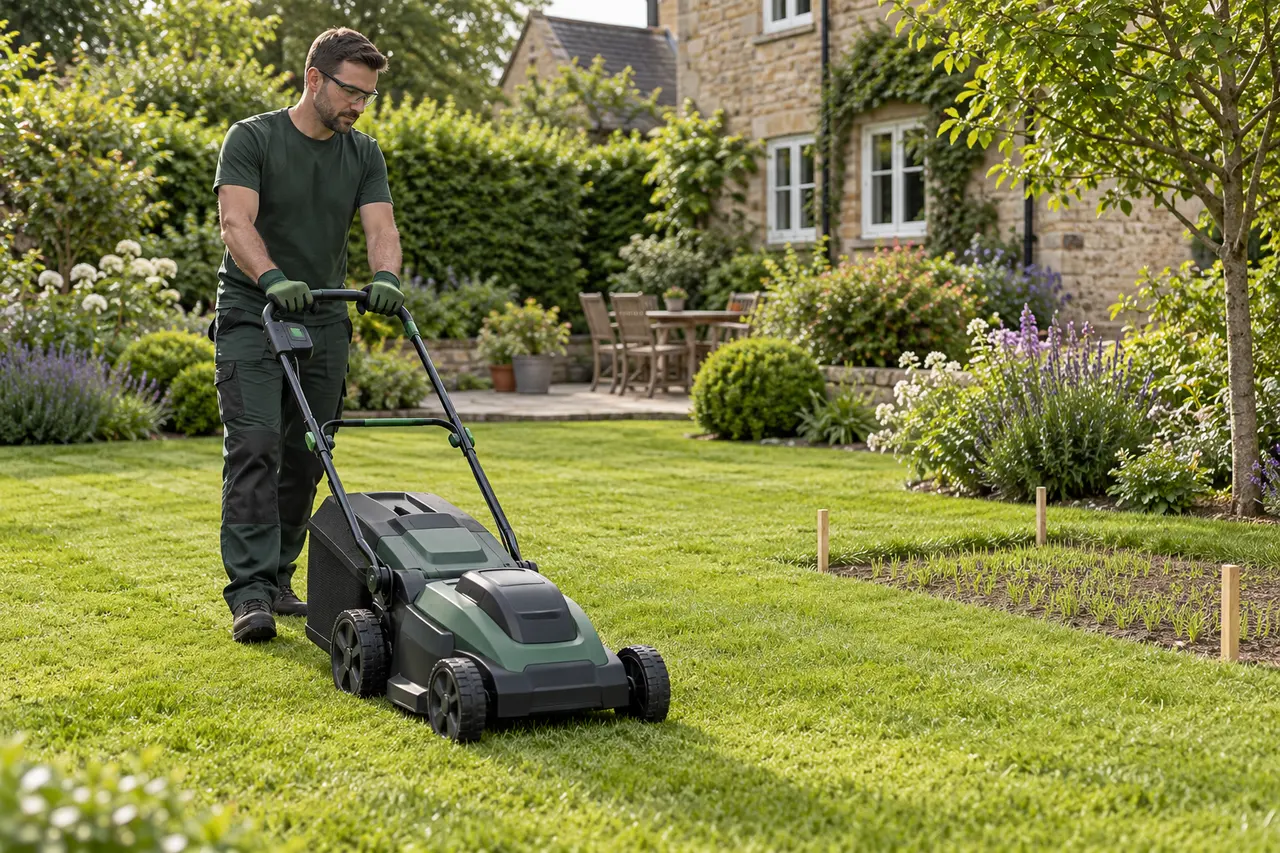
The grass already growing
Treat the preparation cut and later mowing as different stages
Where a suitable cut forms part of preparation, its purpose is to ready the existing lawn for the chosen operation. That is not the same decision as the first cut after young grass has emerged. Follow the actual growth and appropriate aftercare instructions at the later stage, rather than keep using the previous setting merely because the machine and garden are familiar.
An adjoining established area may still need mowing while the new work is left alone. Keep the route to it outside the seeded surface and allow a suitable place to turn. Clippings from that cut should not be tipped over the new area. Different grass stages within one property can receive different attention, with the protected patch deliberately absent from the mower’s route instead of treated as something accidentally missed.
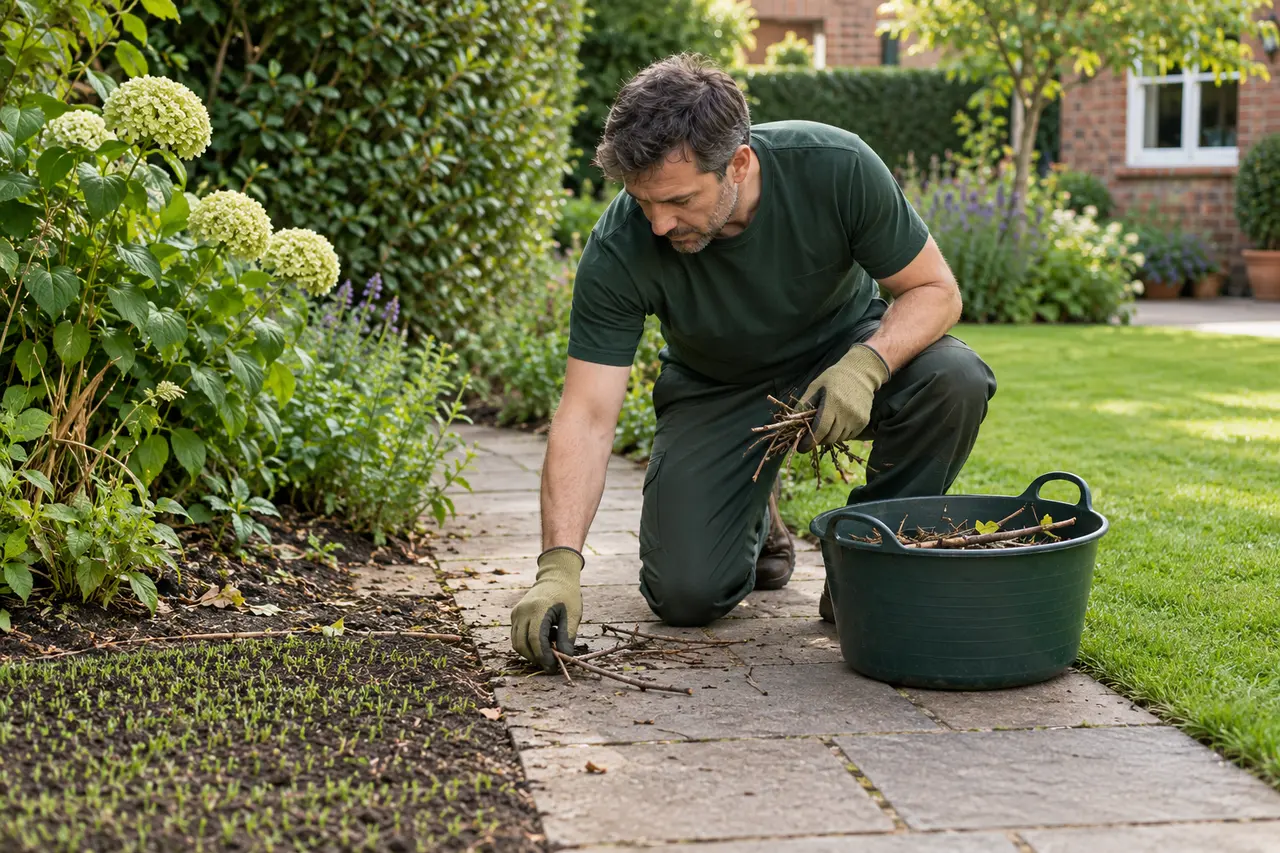
Material before and after sowing
Finish the heavy collection before the new surface is made
Clear the agreed loose material while the ground can still receive the preparation it needs. A branch pile or old tub left over the proposed area creates another handling task after the seed work has begun. Move manageable loads by a suitable route, separating vegetation from unrelated objects. Opening space in advance is more useful than repeatedly crossing the fresh work to reach something overlooked.
A heavier garden clean-up may need to precede the lawn operation, with its result and collection position made clear. The garden-waste guide helps distinguish the material being removed from supplies that will be retained. Once seed is present, do not assume the earlier broad raking method remains suitable. Later loose pieces may need a gentler specific collection that leaves the prepared surface and emerging growth in place.
The adjoining planted areas
Keep border soil and tools within the bed task
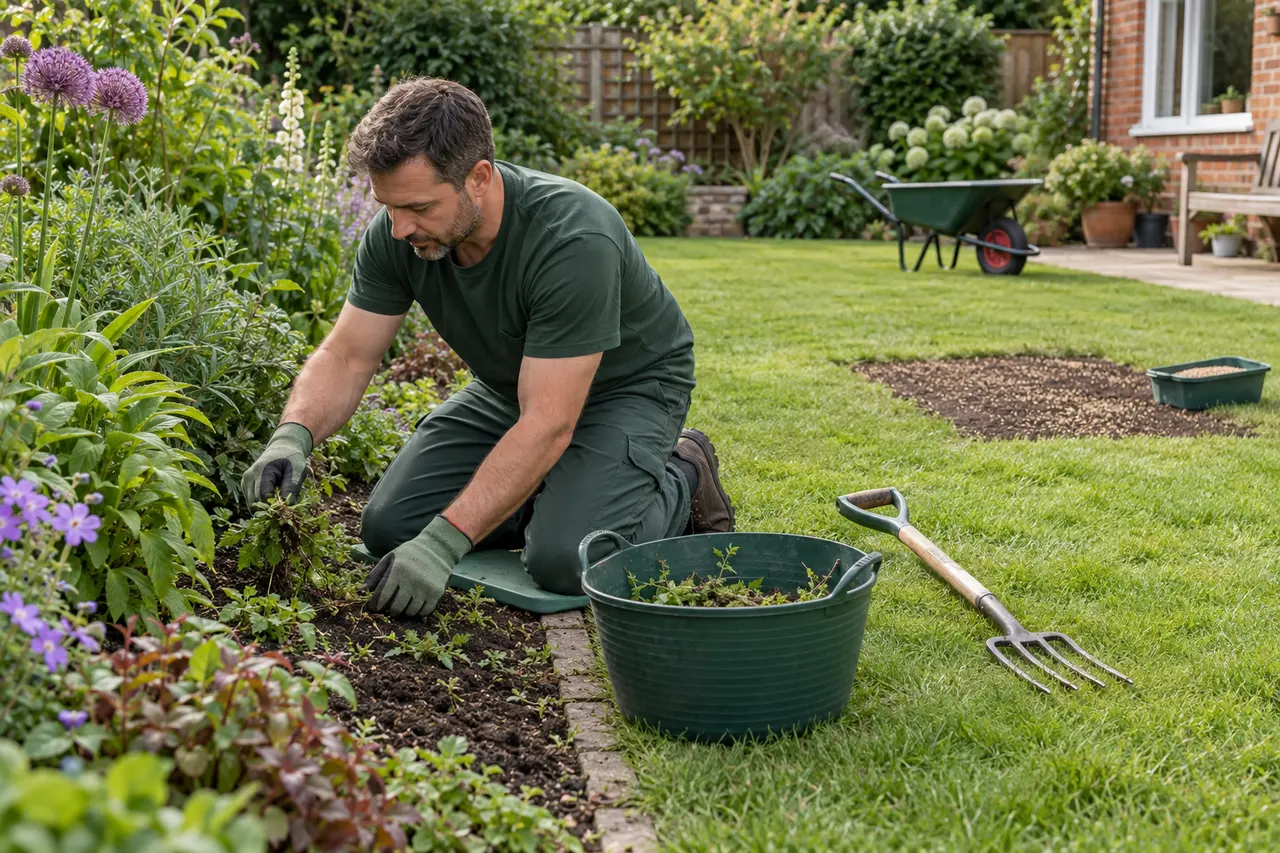
Weeding a neighbouring bed can remain useful while grass is establishing, provided the working position is suitable. Stay on the available firm edge where it allows controlled reach, with tubs and tools placed outside the protected lawn. Loosen weeds selectively among the retained plants. The seeded patch should not become the place to kneel simply because its open appearance makes it look temporarily unoccupied.
Keep displaced soil in the bed rather than spread it across the lawn and plan to rake it back later. If new plants are being added, their supplied pots and the excavation spoil also need a suitable position. Garden maintenance can coordinate those jobs, but each should leave the other’s completed work intact. A practical visit can finish a bed without turning new seeding into an incidental surface on which to store its materials.
A separate boundary task
Keep the clipping load off the establishing grass
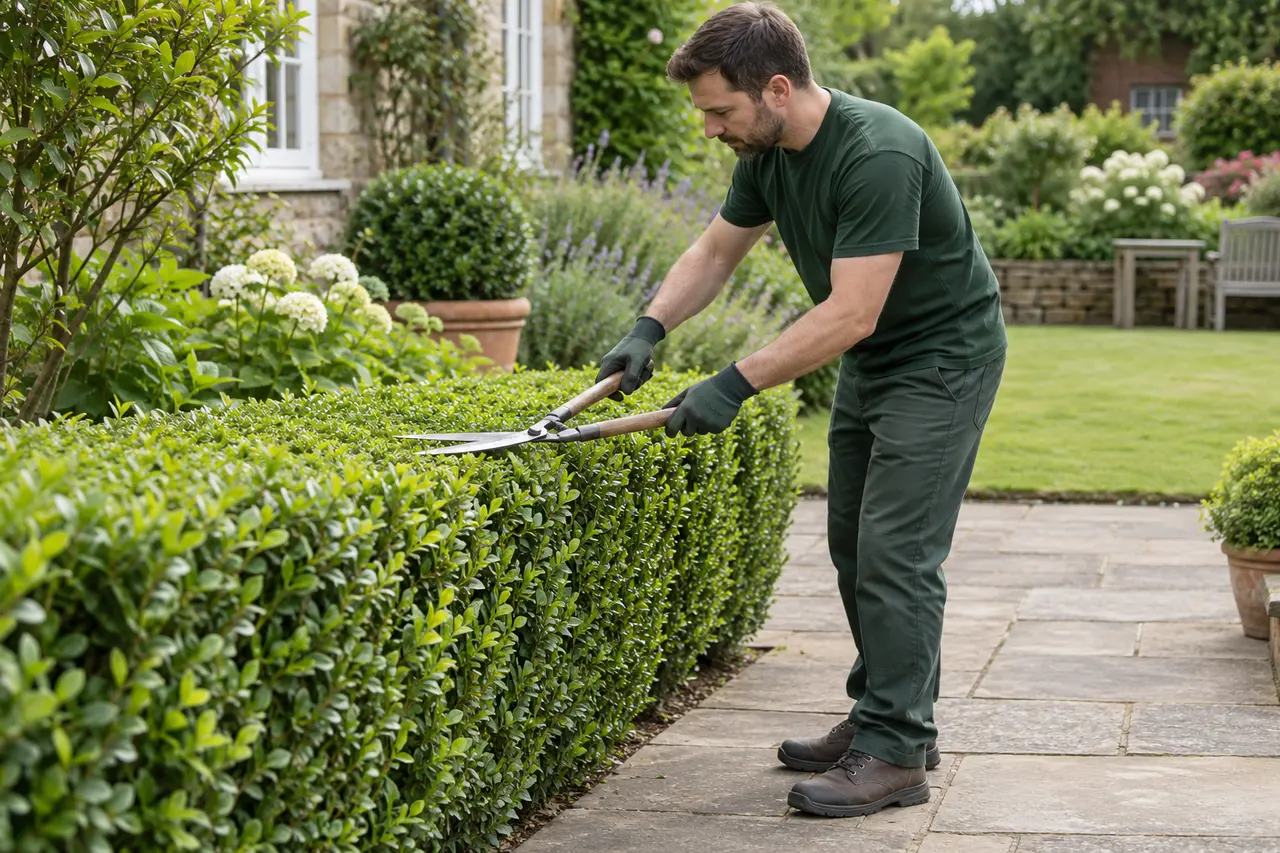
A hedge trim creates material even when the cutting is entirely outside the seeded area. Plan where it will fall and wait for collection before starting. A sheet or tub needs a suitable position that does not cover the new work; the route out should remain practical once it is loaded. Avoid solving the clipping problem by flattening the place the household is trying to establish.
Work on suitable reachable growth from firm ground, checking for nests being built or in use and postponing affected cutting. Collect accessible clippings once the tools are closed. If the available arrangement cannot keep the lawn operation protected, the order or timing of the jobs may need changing. That is a useful planning decision, rather than a reason to promise every task can proceed unchanged on the same visit.
Following the new growth
Respond to the seedbed rather than the date of the visit
Young grass needs aftercare suited to its stage, seed instructions and conditions. Check the actual area before choosing the next operation, keeping watering and access arrangements clear. Do not infer that the lawn is ready for normal traffic or mowing merely because a set number of days has passed. The instruction should follow establishment rather than a familiar weekly routine copied from mature grass nearby.
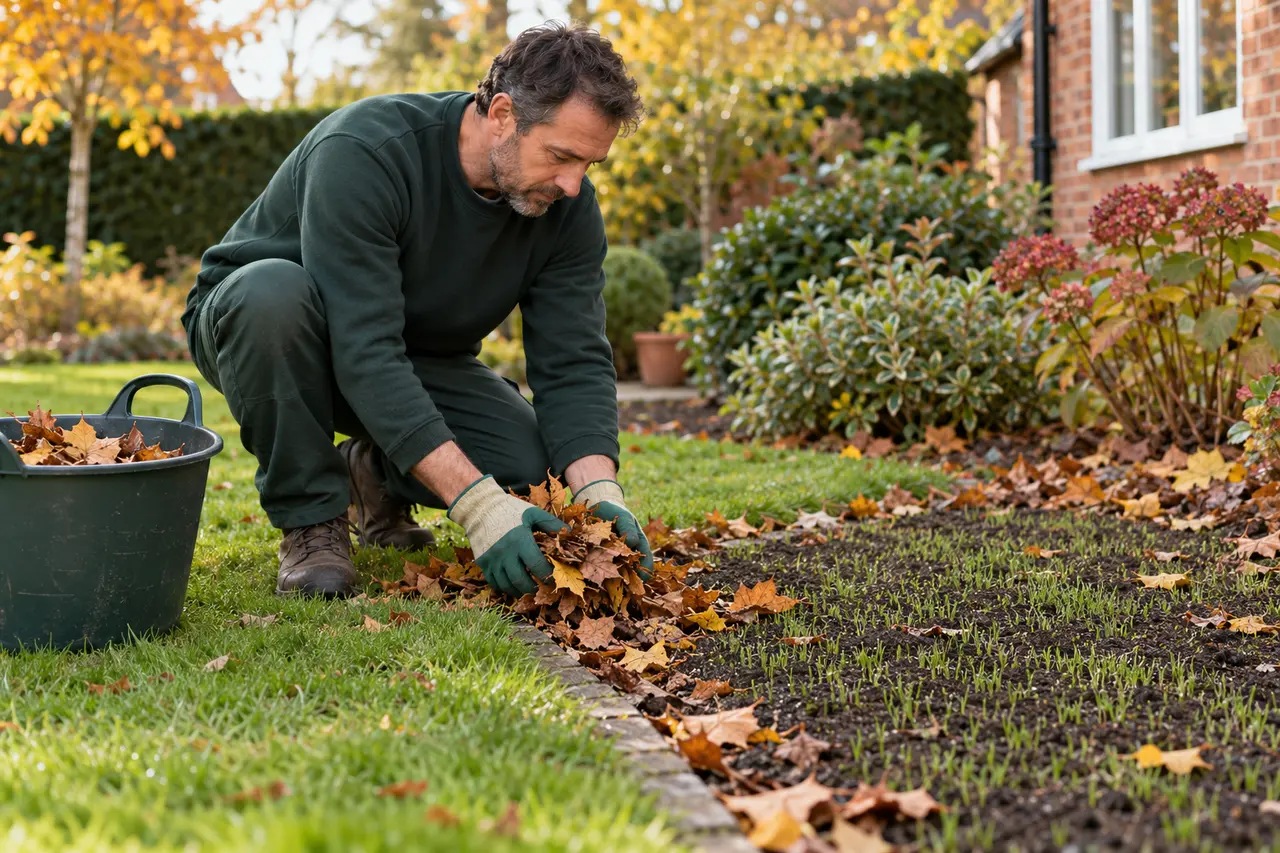
Lift accessible fallen leaves by a suitable method when they cover the area, keeping this seasonal collection work distinct from forceful raking of an established lawn. Continue observing how the surface and growth develop. If the expected progress is not appearing, revisit the conditions and care rather than simply add more seed at every appointment. A usable programme leaves room for that decision without pretending that each stage has already been completed.
Further operations with their own working detail
Decide where a lawn is genuinely wanted
A garden-design discussion can separate an area intended to remain grass from a corner that would serve the household better as another part of the layout. Repeated seeding is not a substitute for that choice. Consider how the space is used and maintained before committing more work to the same outline. A revised arrangement needs its own project; the lawn operation follows the grass area actually chosen.
Keep the pollard head distinct from the regrowth
On an established pollard, enlarged heads form part of the retained tree framework while selected regrowth is managed from them. Removing those heads is not the same operation as working on the shoots they carry. A tree-surgery proposal needs to respect that distinction and the condition of the actual tree. A generic instruction to cut everything back flat should not decide which permanent parts of an existing pollard remain.
Describe an adhered deposit, not only a flat mark
Chewing gum can remain as a raised attached deposit on paving rather than a simple discolouration within it. Identify that material when surface cleaning is discussed, including where it occurs in the booked area. The proposed method needs to suit both the deposit and the paving. Do not assume an ordinary wash includes a particular heat, scraping or chemical treatment merely because the area also contains removable loose dirt.
Settle the actual equipment’s power arrangement
Where the selected gutter-cleaning equipment requires electricity, establish its suitable power arrangement before the operation. Do not assume every visit needs a household socket or that any visible outlet is appropriate for outdoor equipment. The contractor’s actual requirements should guide the setup and cable route. A gutter-cleaning request does not promise a particular vacuum model or generator, and a convenient connection is not a substitute for suitable equipment use.
Identify the delivery property separately from who places the order
If a Christmas tree is being ordered for another household, give the actual receiving property and intended handover point as part of the arrangement. Keep that delivery destination distinct from the purchaser’s own address or payment details, so a gift order reaches the property for which the tree was selected.
Separate the routine time from materials and recovery work
The general gardening time guide below does not automatically include seed, other materials or a programme of treatments. The quotation should identify the chosen lawn operation and its follow-up alongside ordinary garden care.
| Gardening time | Guide price |
|---|---|
| First hour | £83 |
| Each subsequent hour | £65 |
GBP guide rates. Confirm the work, supplies, waste arrangements, VAT treatment and any applicable access or parking charges in the complete quotation.
Seed, existing grass and the surrounding visit
Does overseeding mean taking away all the existing grass?
No. Overseeding adds new seed to an existing lawn. A different operation may be proposed where a full area needs replacing or starting again. Keep the actual method in the scope rather than assume the word recovery means the same preparation and finished condition for every lawn.
Should spare seed be scattered over every thin-looking spot?
Only include areas selected for suitable preparation and aftercare. A visible gap may have a different cause or an unsuitable condition for the proposed work. Using up the remaining packet is not a reason to extend the operation into unprepared ground without deciding what result is realistically intended there.
Can the first new shoots be treated like established grass?
New emergence does not mean the lawn has reached every later stage. Follow appropriate establishment care and the seed instructions before deciding about traffic or cutting. A neighbouring mature lawn may be ready for its usual work while the new area still needs to be left out of that routine.
Where should the unopened seed and supplies wait during other work?
Use a suitable agreed storage position outside the active cutting and material route, following the product’s storage instructions. Keep the supplies identifiable rather than mix them into clearance items. The prepared lawn should not become their temporary depot merely because it has been cleared and looks like an empty space.
Leave the new grass room to become a lawn
Set out the seeding operation and the care needed afterwards, then choose the surrounding tasks that can proceed without disturbing it. The garden-service range can keep the wider space maintained while the establishing area receives its own appropriate decisions.