

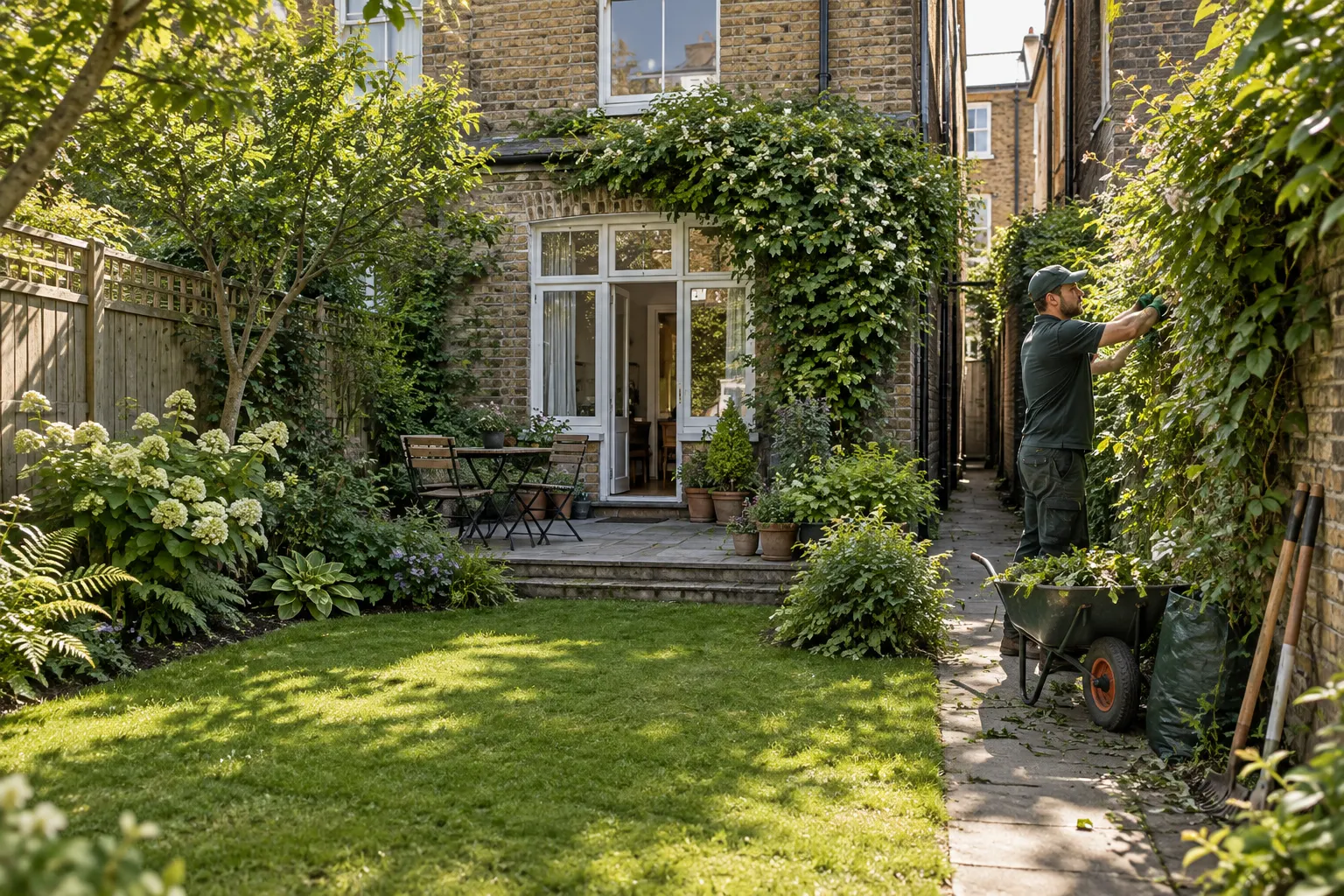
Garden maintenance organised around the available route
Gardeners Tooting
Our Tooting gardeners maintain grass and planted areas where the route into and through the garden needs close attention. We open suitable working space, separate retained climbers from unwanted growth and collect the material in manageable loads. Equipment and the order of work follow the available passage, allowing the service to care for the garden without repeatedly carrying tools or cut stems through the planting.
- How do you retain climbers within tangled growth? Our gardeners follow the stems and their support, separating selected unwanted growth while keeping the chosen climber and neighbouring shrubs identifiable.
- How is tree material handled through a passage? Our tree-work plan accounts for turns and handling space as well as width, including the journey taken by cut material leaving the garden.
Garden work within the available access
How is gardening arranged through a narrow side passage?
The team assesses the passage width, turns, surface and gate or step arrangement alongside the actual garden tasks. Those features determine suitable equipment and how material can be carried out. Restricted access can still accommodate appropriate routine work, with its method related to the available route. This keeps the proposed service practical instead of treating a straight width measurement as a complete description of access.
What does your team do with overextended climbing plants?
We identify the plants and growth to remain before selecting suitable pruning, tying-in to sound existing support and weeding below. These operations can recover usable space while retaining the climber's place in the garden. Damaged support, heavier woody material and major removal receive a different proposal, keeping ordinary care of the established planting distinct from more substantial work that its current condition may require.
A route for the following work
A first route into the planted areas
Where long stems and self-seeded growth cover the path, the initial work opens a suitable position from which the following tasks can proceed. Our gardeners recover that strip before detailed work farther into the garden, allowing equipment and material to move with less disturbance to the planting beside it. The first completed section therefore contributes to the whole operation.
Unwanted growth is cut and gathered in manageable sections while retained plants remain identifiable. As the surface opens, the team can see edging, old pots and loose objects previously hidden beneath it. Cables, broken glass and unstable items change the immediate handling before work progresses there. This gives the next stage a clearer route and prevents clearance continuing into an obstruction simply because the vegetation above it has already been selected for removal.
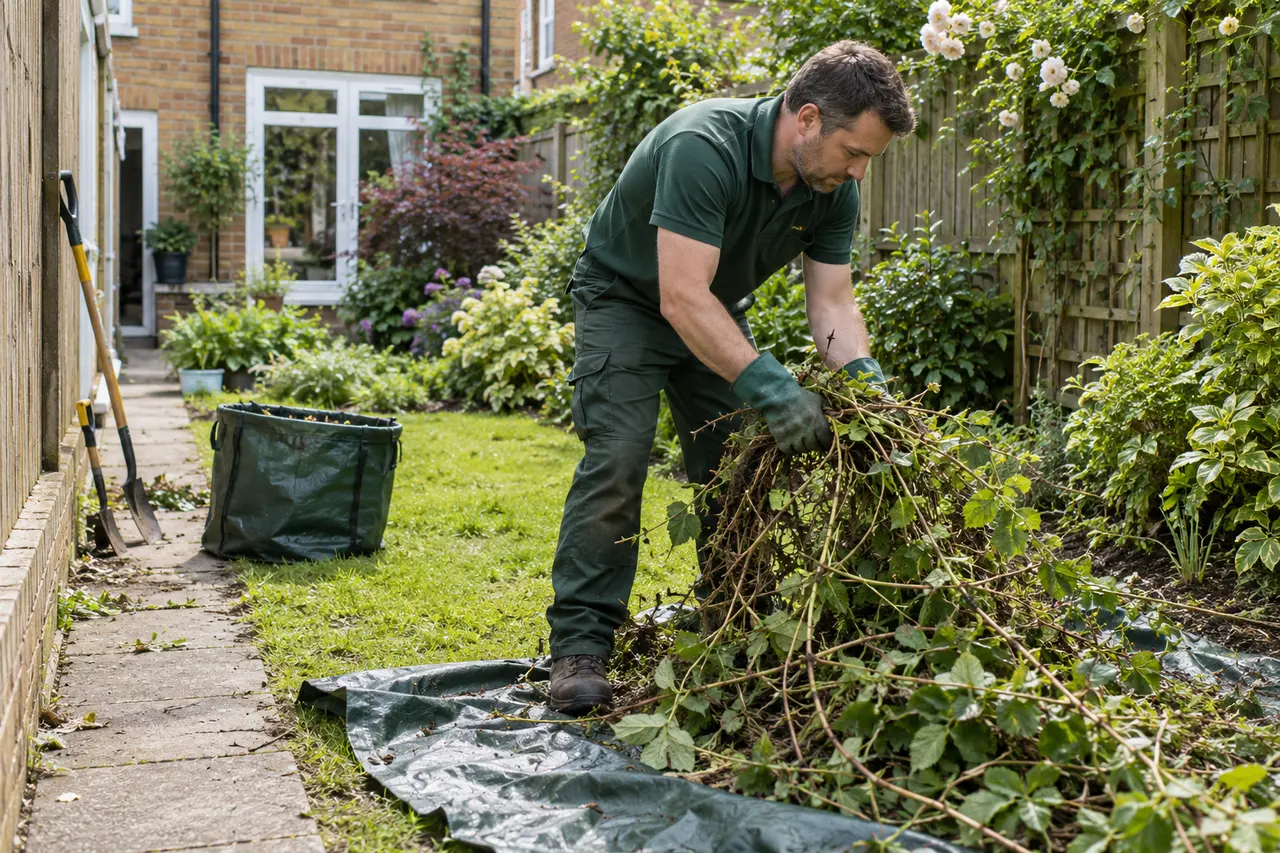
Our garden clearance includes a practical receiving position for its cuttings while the job continues. The only passage is kept outside a blocking temporary pile, with outgoing material handled according to its type, quantity and carrying route. The garden-waste guide supports separation of vegetation from unrelated discarded objects. Collection therefore progresses with the cutting, keeping the rest of the garden reachable instead of leaving the entire load across the route until the final movement.
- Assessment of the narrowest clear point along the equipment route.
- Temporary collecting positions kept outside the sole exit.
- Identification of retained climbers before tangled material is separated.
- Grass-edge finishing suited to the accessible working width.
- Controlled carrying of stems past the surrounding low planting.
Separate treatments for interwoven plants
Climber connections identified before cutting
The gardener traces long climbing growth back from the area it has entered to its parent plant. This identifies what remains before cuts are selected among nearby shrubs and other stems. A single cutting position across every visible strand could remove wanted growth or leave the wrong connection in place. Our method therefore follows the plant through the tangle, producing a defined removal while keeping its retained structure and neighbours recognisable.
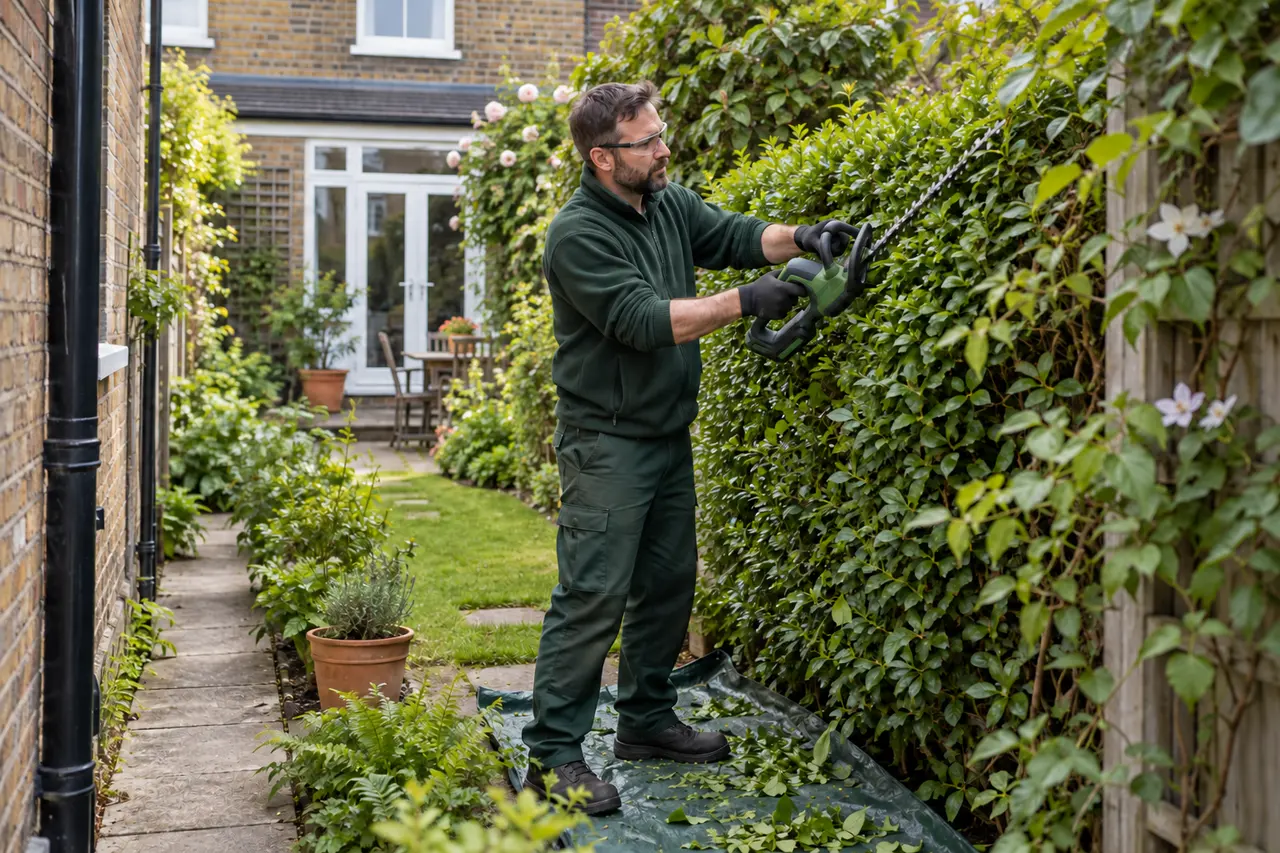
Suitable shoots can be redirected towards existing sound support, with the pruning chosen for the plant and its condition. A neighbouring hedge can receive its own appropriate face and extension trimming where it narrows the route. Our working positions account for both operations without confusing their different outlines. This lets the garden gain space while the climber remains trained and the hedge receives a treatment suited to its separate role at the boundary.
Disconnected stems are withdrawn with their entanglements visible, keeping the support and surrounding boundary available to the gardener's view. We check for active nests before affected cutting, postponing disturbance where birds are building or using them. Larger woody growth and work beyond an appropriate controlled reach receive their own assessment. The finished removal follows the suitable task.
Mowing within the usable width
Lawn finishing within confined margins
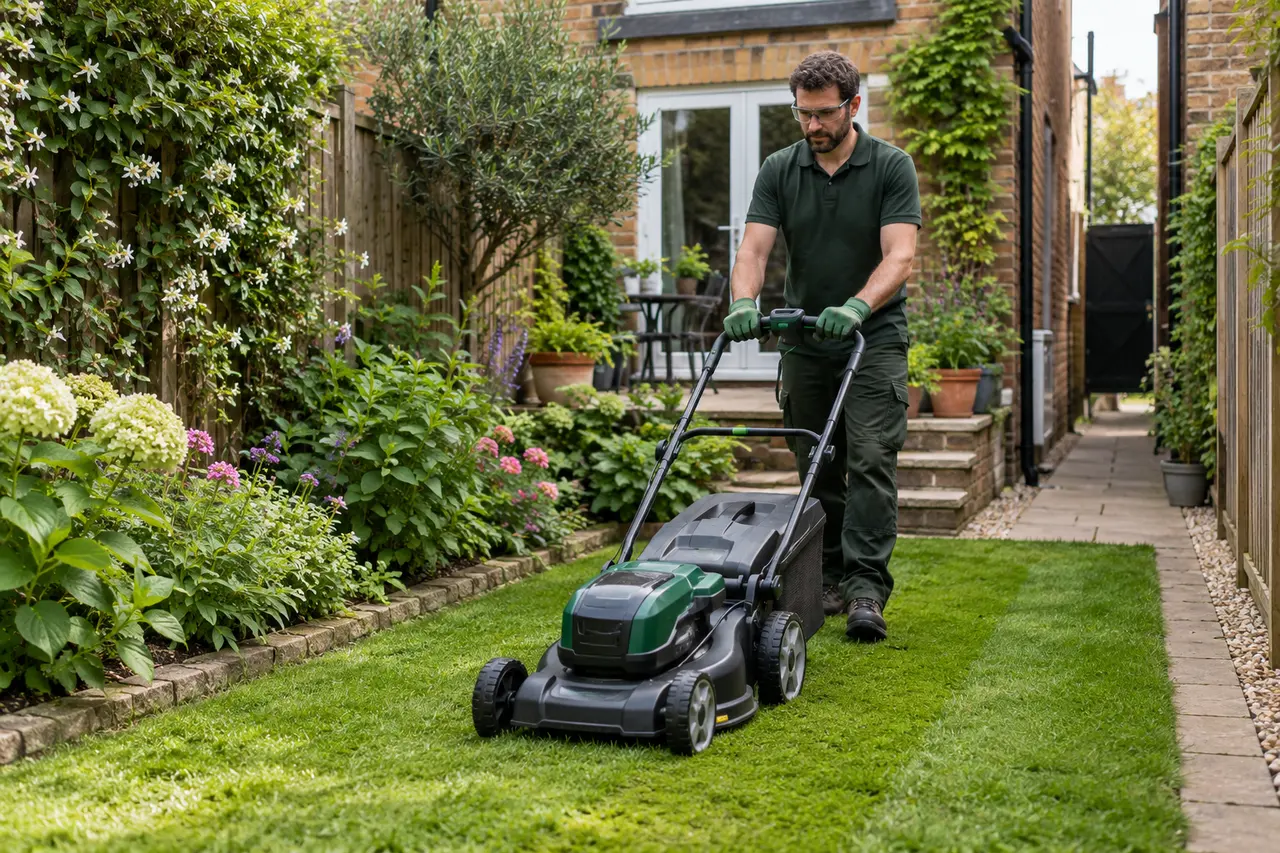
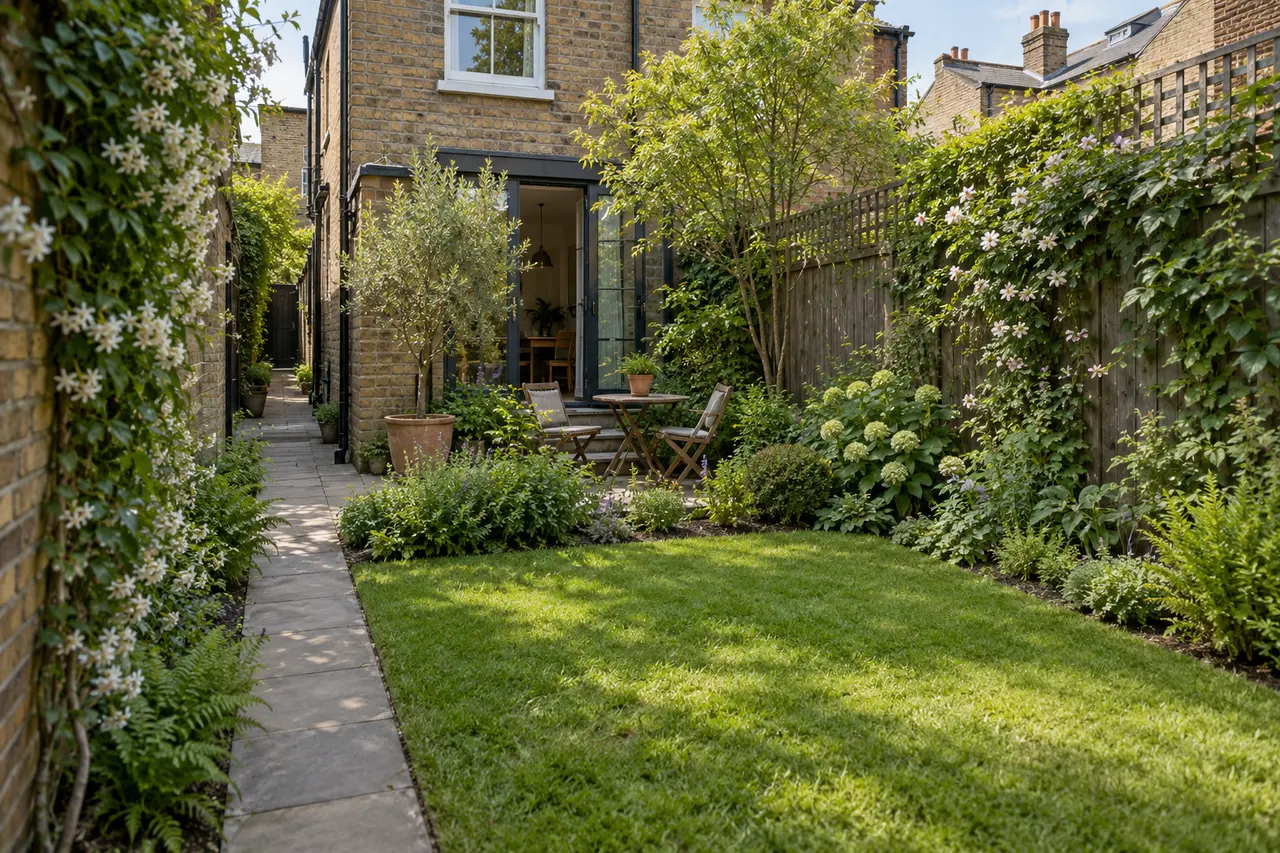
A narrow lawn receives a working plan suited to its shape and obstacles, not only its measured area. Pots, steps and projecting beds can reduce both the machine route and turning positions. Our team first establishes how the appropriate equipment reaches the grass and moves within it. This allows the open strips to be cut without repeatedly forcing a turn into the same restricted corner or relying on the border for extra manoeuvring room.
The main passes follow the available width, with a suitable separate tool used at confined fences and planter bases. The team clears loose stones and other objects before equipment starts, including pieces hidden along the edge. Finishing keeps adjacent surfaces and plant stems outside damaging contact. This gives the narrow grass area a considered perimeter as well as a cut through its centre.
Our lawn-care service leaves a practical distinction between grass, paving and planted bed. Long growth can need staged reduction, while persistent bare areas or unevenness remain identifiable for their own appropriate response. These issues are not answered by progressively lowering the cut across the whole strip. The customer receives the suitable mowing and edge work completed, with the surface and any separate recovery needs still understandable afterwards.
Detailed care at the path's planted edge
Hand work in the existing root space
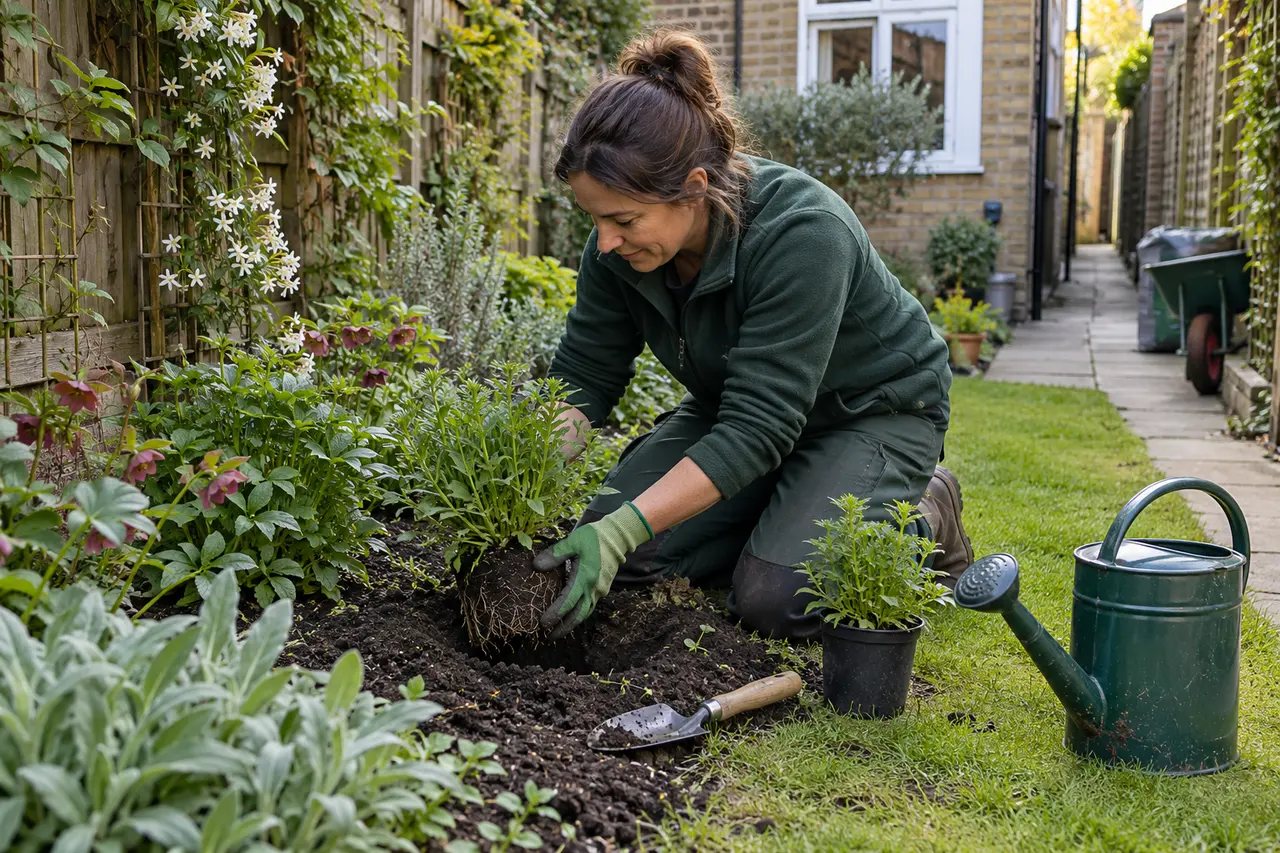
In a confined border, our gardener uses close hand work to distinguish unwanted roots from the plants occupying the same area. The method loosens accessible weed growth without drawing a broad tool through the entire bed. Soil is kept within its appropriate position. This tends the planted strip while preserving its neighbours, giving the customer a more controlled result than simply stripping the narrow surface of everything growing there.
Containers are treated as part of the actual working layout. Their weight, stability and possible receiving position determine whether suitable movement is appropriate, particularly where wet compost makes a large item heavy. Our work can instead follow the reachable soil and foliage around fixed pots. The service therefore does not depend on every container becoming a movable obstacle, with its surrounding care planned from the standing space genuinely available.
Suitable new planting follows its eventual use of the space as well as its current pot size. Positions near the only passage take account of later spread, watering-in and access for subsequent care. These new areas can join the ongoing maintenance alongside established beds once they are planted. This relates the addition to the garden's continuing use.
Maintenance after the first opening
Following the different returning growth
A recovered garden does not automatically need the same extensive cutting at every return. Our team can attend to new weeds in an opened bed while the hedge still holds its outline, or redirect suitable climbing shoots before they again cross the path. This keeps the subsequent work connected to the growth actually developing. The customer receives useful continuing attention.
Retained plants and areas outside the current cut remain identifiable through the service. New planting, dormant bulbs and a corner kept for wildlife can each affect nearby weeding, leaf removal and equipment movement. Our approach carries those choices into the following work instead of treating a temporarily quiet patch as empty ground. This allows routine care to continue consistently around the garden's less visible plants as well as its obvious boundary and lawn surfaces.
Carrying and final collection remain part of the recurring work, particularly where the restricted passage requires several smaller loads. Material moves through that route as the job progresses. Maintaining the opening, planted edges and accessible grass in this way reduces repeated recovery of the same space. The next visit can then spend its attention on the growing garden instead of beginning by shifting yesterday's unfinished load.
Seasonal work in the smaller gaps
Collection behind pots and supports
The team collects accessible seasonal material from pockets behind containers, around climbing-plant bases and below hedge edges. A smaller tool or hand movement can be appropriate there even where open turf suits a rake. The method removes the loose deposit without pulling on established stems or scooping useful mulch from the bed onto the path. The finish follows each receiving surface.
As new plants emerge, the gardener keeps a clear view of the shoots in those same narrow corners. Suitable weeding and cutting leave them space to develop, with the working method adjusted to their position. Very wet or frozen ground can shift useful attention away from the lawn to accessible hard surfaces or bed tasks. This keeps the seasonal service practical without forcing an unchanged mowing routine across conditions unsuitable for the equipment.
Our seasonal garden care also responds to changes in how the space is used. Additional pots, moved seating or a changed gate can alter the route and the available standing positions since the previous visit. The following operation reflects that arrangement. Plant care, suitable cutting and collection stay connected to the actual garden, with its current access considered throughout the seasonal work.

Further services for space and access
Design that keeps the route maintainable
Our garden design can examine the relationship between the path, storage and planting where the existing arrangement no longer works well together. Space for tools and ongoing access to the beds remains part of that layout. This connects a proposed planting position to how it will be cared for after installation, giving the customer a considered change.
Tree work with room for the outgoing lengths
Our proposed tree surgery assesses the bends, doorway turns and receiving space at each end of a restricted passage. Equipment can fit through a straight gap while a long cut length lacks room to change direction there. The handling plan therefore includes both the inward journey and the material coming out, with a suitable collection position. Access adequate for ordinary mowing is not treated as a complete method for the separate tree operation.
Pressure cleaning sequenced along the paved strip
Suitable jet washing can progress through a narrow paved area in manageable sections. Our hose route stays outside the section being cleaned, while the working direction follows the available water route and the movement of loosened dirt. This keeps the finished area from being repeatedly crossed by the following load of debris. The operation is organised around the actual strip and its drainage arrangements.
Gutter work with an appropriate pole position
Where ground-operated vacuum equipment is suitable, our gutter cleaning method considers the passage into the property alongside the space needed at the channel. The pole's working line must account for overhead growth and fittings as well as a suitable ground position. This relates the equipment choice to the gutter being worked.
Christmas-tree orders for the selected service stages
Our Christmas-tree service distinguishes delivery-only work from installation with a stand and any separately included collection. The relevant sizes and service stages provide the basis for the order. Current stock and dates follow the particular request. This gives the customer a defined supplied item and handling arrangement, with the required stages identified.
Guide rates for the gardening operation
The gardening rates are the site's published general guide. Restricted access, the amount of vegetation and separately required removal or specialist work affect the complete scope and quotation; these figures are not a special Tooting tariff.
| Gardening time allowance | Guide price |
|---|---|
| First hour | £83 |
| Each subsequent hour | £65 |
GBP guide rates. Check the full total, VAT treatment and any applicable additional charges when arranging the booking.
Questions about our work in confined gardens
How is the access route assessed for the service?
We assess its narrowest clear width, gate opening, steps and changes of direction alongside low fittings or overhead growth affecting carrying. These details help select equipment and handling suited to the actual garden job. The available route is considered with the task, so a workable passage supports the service without being treated as proof that every machine or outgoing load will fit in the same way.
Can your gardeners maintain a climber within a tangle?
The retained plant and its existing support are identified before we select suitable separation and care. The treatment follows how its growth is intertwined with neighbouring plants, with the parts to remain kept distinct from the material being removed. This gives the climber a deliberate place in the finished garden.
How do you work around large planted containers?
Heavy or fixed items can remain within the working arrangement while our gardener attends to their accessible surroundings. Suitable lighter pots can be moved where a safe and useful position is available. The service does not rely on shifting a heavy planted container without an appropriate method, keeping the actual access and condition of the item part of how the work is carried out.
How is material collected when there is only one path?
Our temporary receiving point stays clear of the working and exit route, with its position related to the space and the material involved. Smaller loads can be carried out as the work progresses where appropriate. This keeps the remaining tasks reachable instead of allowing a single large pile to close the passage, with collection treated as part of the operation.
What work can a small grass strip require?
Our lawn proposal reflects access, shape, obstacles and edge condition as well as area. The open grass may take less cutting than its planted margins and confined turning points take to finish. The service therefore gives those details a place in the operation, providing a suitable complete result.
A usable route through a maintained garden
Our service recovers the working passage, cares for the retained planting and finishes suitable grass within the space available. The completed collection keeps that route useful for the next maintenance round. Where the property needs a separate design, tree or cleaning operation, the wider gardening options can bring that work alongside the continuing care without treating it as an incidental part of the original clearance.