

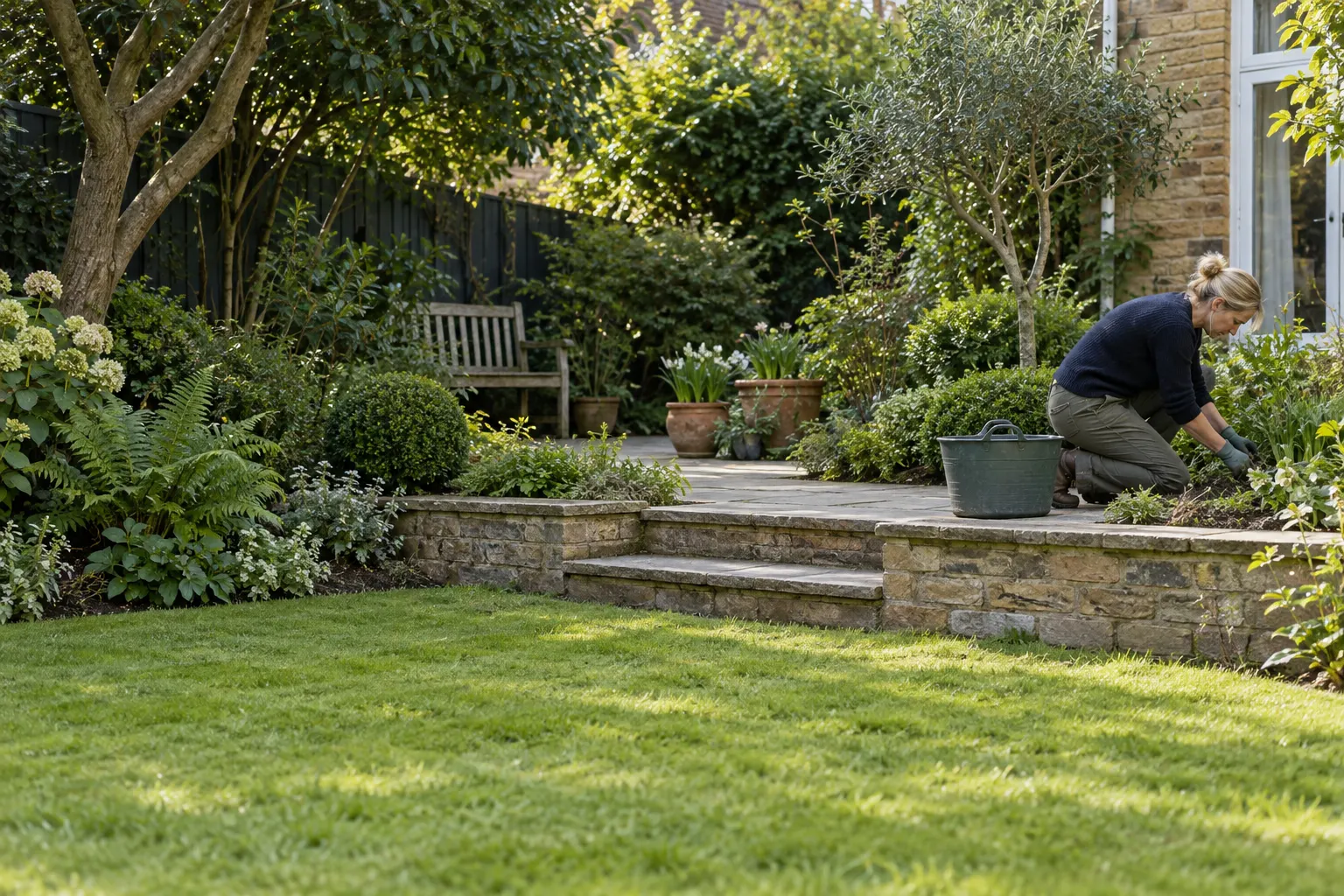
Garden maintenance across separate levels
Gardeners Walthamstow
Our Walthamstow gardeners maintain planted terraces, level grass and the steps connecting them as different working areas. We combine suitable mowing with close bed care and controlled collection, keeping material from the upper work out of completed areas below. Equipment, standing positions and carrying loads follow the actual layout, so the service leaves the levels connected and usable.
- How is mowing handled beside connecting steps? Our machine works from the supported lawn level, with its cutting and turning route kept separate from the steps between the garden's areas.
- How is cleaning sequenced between paved levels? Our working order follows the rinse-water route, preventing another upper discharge from undoing the final clean completed on the connected lower surface.
Garden care across the stepped layout
Can the service combine different work on each level?
Yes. Our team separates the mowing surface, planted ground and connecting steps before selecting suitable tasks for each. Hand weeding and collecting can proceed alongside the appropriate grass cut, using supported positions on the actual surface. The service keeps the connection between those areas available as material moves, giving the customer a considered finish across the layout.
How does your collection support work between levels?
We establish suitable receiving positions and manageable loads while the job progresses. Cuttings are kept from occupying the landing needed for the next operation or falling into a finished section below. This lets the team move material without using the steps as storage, with equipment handling related to the actual access.
Different surfaces within one visit
A suitable working position at each level
The gardener distinguishes the planted ground behind a wall from the firm lawn and steps beside it, even where the view from the house makes them appear continuous. Each receives an appropriate working position. The overall finish comes from attending to those areas individually while controlling the material between them. This prevents an apparently tidy upper section being completed simply by sending its soil or cuttings onto the surface below.
Hand work in an upper bed separates accessible weeds from the retained planting while the gardener stands appropriately beside it. Suitable soil remains within the planted area, with the roots kept covered as the selected growth is removed. Pulling material over the edge is not used to create a superficially clean top. Our method keeps the bed settled and gives the lower paving a genuine finish.
Our garden-maintenance visit combines these different operations in a sequence suited to the property. Work can pass through selected plants, suitable grass cutting and collection while preserving an available position for the next task. The order follows the relationship between the levels instead of progressively filling every landing. This lets the customer receive a connected service in which finishing one area supports completion of the next.
- Connecting step treads kept clear of tubs and fresh cut material.
- Suitable standing positions used beside each planted section.
- Loose soil collected before it reaches a lower surface.
- Mower wheels retained on the supported lawn level.
- Material moved in controlled loads suited to the route.

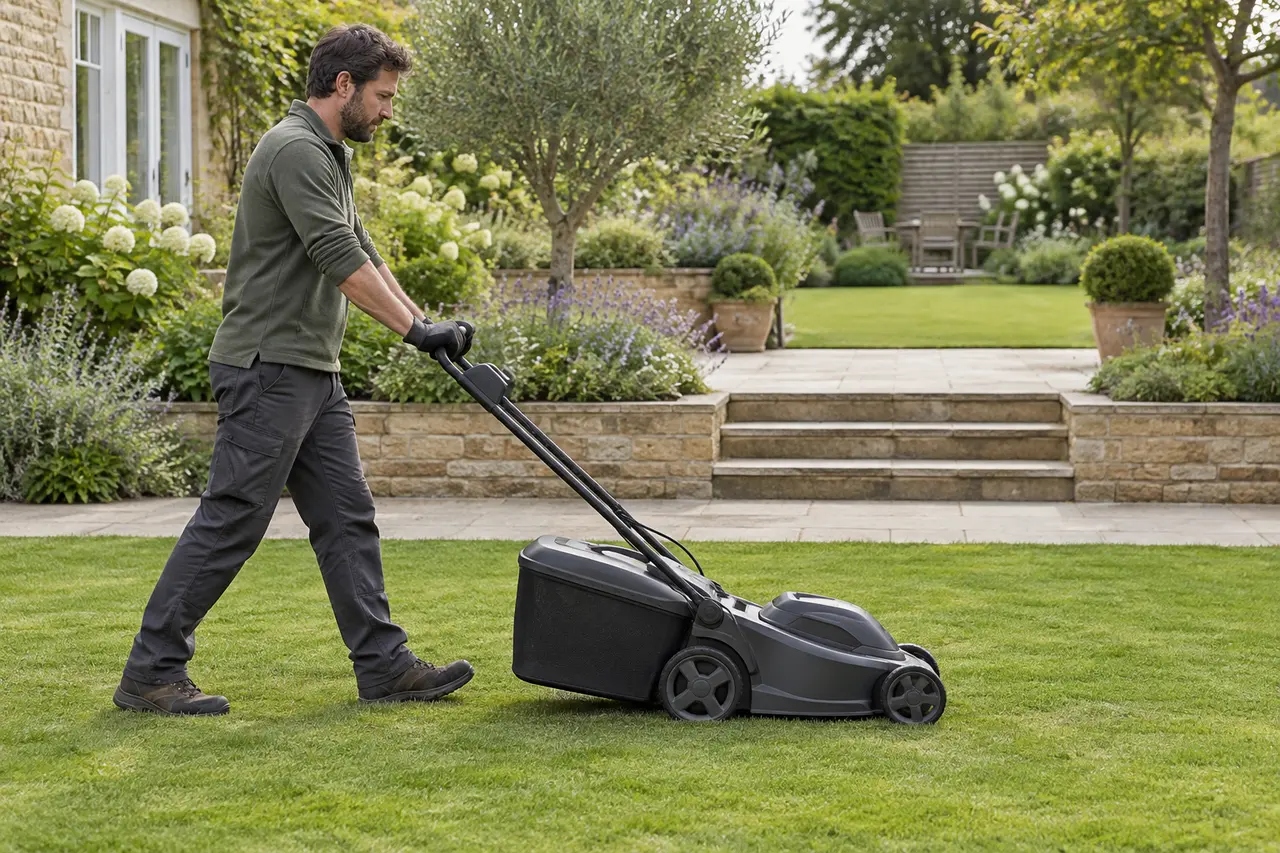
The supported lawn surface
Cutting within the supported machine route
Where grass ends above paving or a retaining edge, our route separates the visible grass margin from the limit supporting the equipment. Wheels remain properly supported throughout the pass, with the tool kept from leaning over the drop to reach a protruding tuft. This gives the lawn an appropriate cutting method at its boundary. The final line follows the actual surface.
Small stones, detached sticks and other loose items are cleared before cutting, including material arriving from an adjacent raised bed. Suitable margins receive a controlled separate finish around the existing edge and retained overhanging plants. The team does not scrape the surrounding structure for a closer-looking result. This leaves the worked grass and its boundary recognisable, with the machine and finishing tool used for the appropriate surface each can reach.
Our lawn care distinguishes ordinary cutting from recovery of a worn or failing patch. A heavily used step approach can need its own considered treatment where grass is missing or damaged. The proposed service follows that condition. Altering the level or its retaining structure remains a separate requirement, keeping the lawn operation distinct from construction work not established by a maintenance visit.
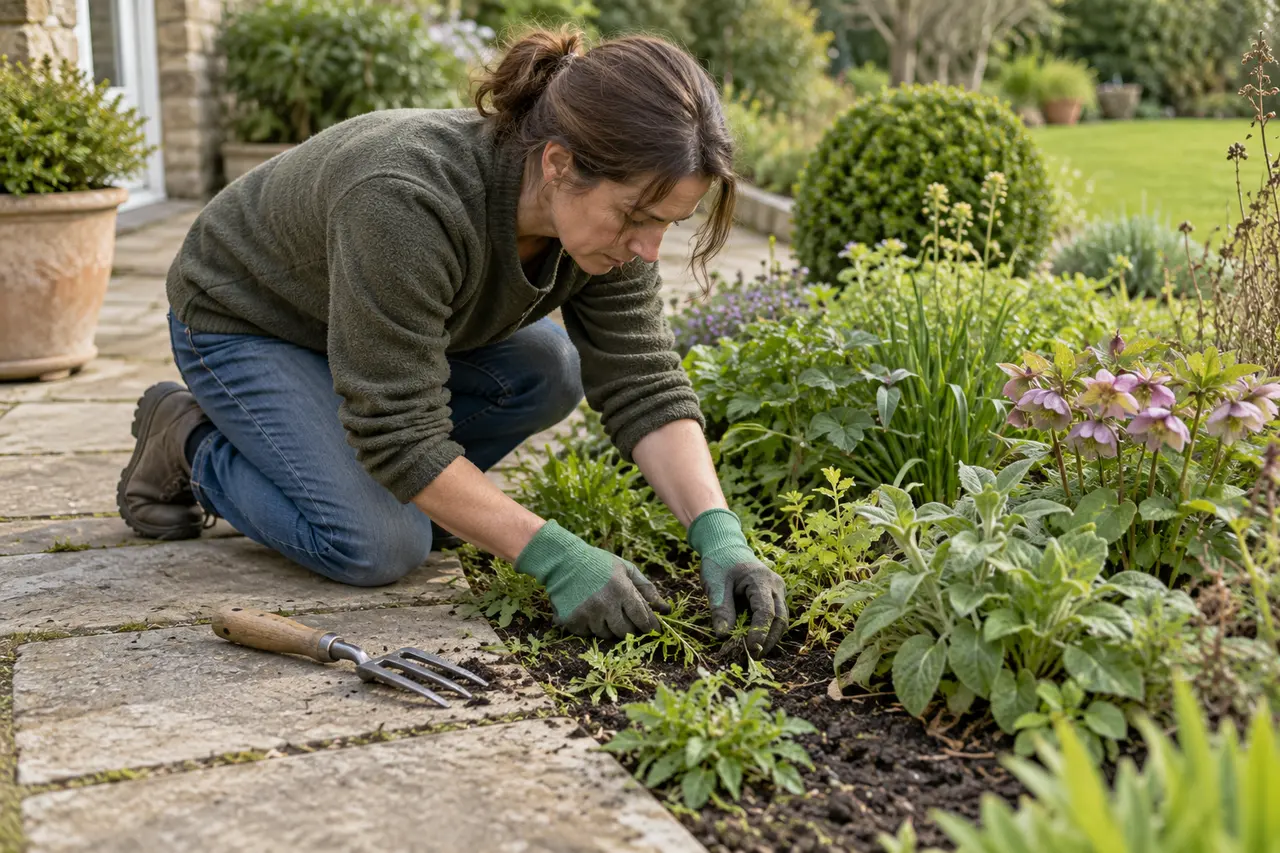
Soil retained within the planted terrace
Close weeding within accessible planted areas
Retained crowns and labels are identified before the gardener works through the terrace's surface. Suitable weeds are lifted with accessible roots while the surrounding soil remains supported. This separates the removal from the planted area staying in place. The customer receives a tended strip with its shrubs and perennials still settled, and the soil held at its appropriate growing level.
Near the front of the bed, our lifting movement follows the space available around the unwanted plant. Smaller controlled removals keep soil and retained shoots from being dislodged by an outward tug. Where roots are entangled, the next action changes to protect the wanted plant. This lets the team address the accessible problem without treating a completely bare surface as more important than the established growth within it.
Removed material goes into a suitable nearby receptacle, keeping the wall top out of the temporary collecting arrangement. This distinguishes lifted growth from the soil remaining in the bed. If additional planting is included, its position follows available roots, growing conditions and the chosen plant's requirements. The exposed corner is assessed as a real planting space.
Collection along the connection
Collection that keeps the connecting route usable
Our garden clean-up uses receiving positions appropriate to the separate levels. Containers stand on suitable ground outside the route where space allows, with material gathered as the section is worked. The service does not build a continuous heap along the steps for one final move. This keeps the connection available for the following operations and gives the collection its own controlled progress through the stepped garden.
Load size follows weight and shape as well as visible volume. Damp leaves can become heavy, while flexible stems can project beyond the tub holding them. Our team controls those contents before movement, using loads that suit the actual treads and surrounding plants. The result keeps the route visible and material contained.
The garden-waste disposal arrangement separates vegetation from stones, broken pots and other objects uncovered with it. Its stated destination follows what the team has actually collected. Gathering the bed material and removing it from the property remain connected but different parts of the service, so filled containers at the exit are not described as completed off-site removal. This makes the final position of the outgoing load clear alongside the surfaces already finished.
Boundary work from a suitable stance
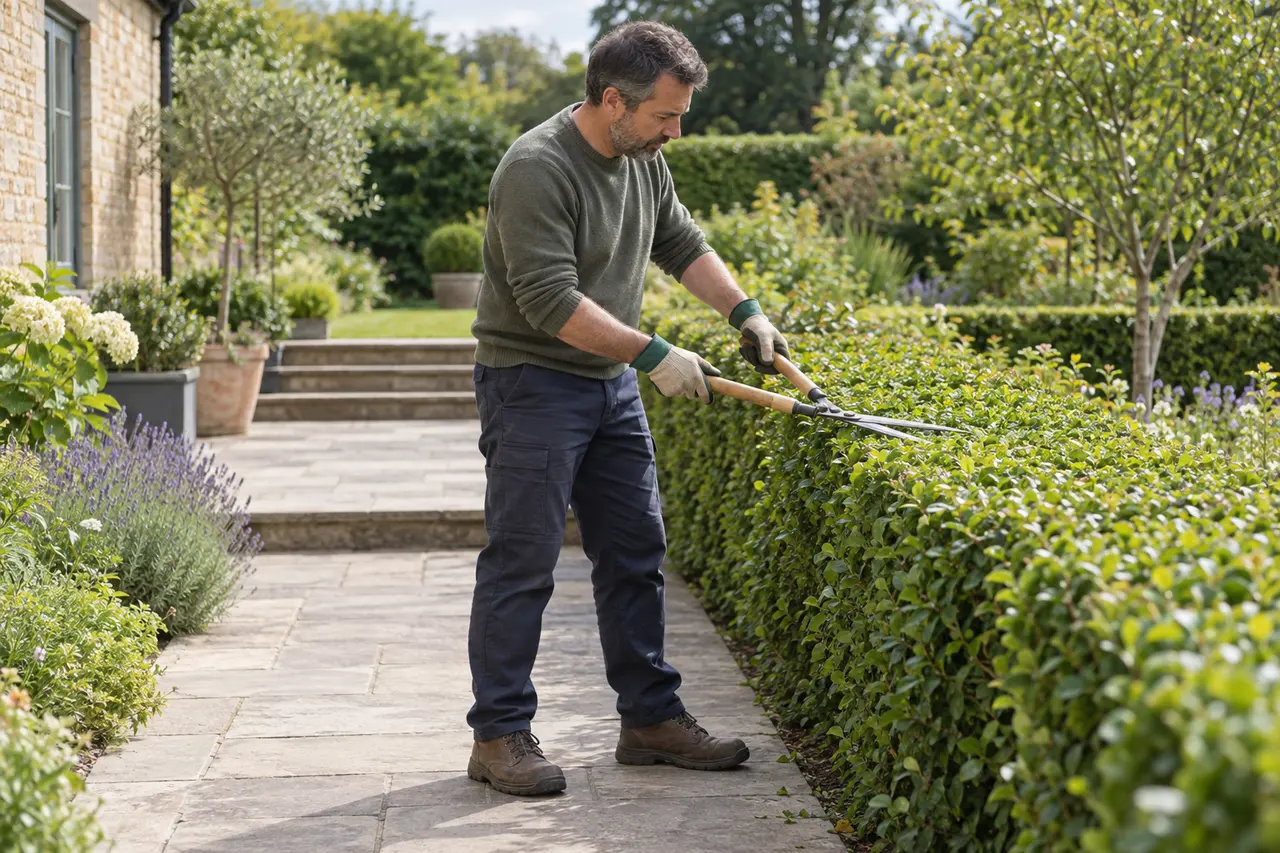
Hedge work from the appropriate level
A hedge can have an appropriately reachable face from one terrace and a less suitable position on the other side. Our method assesses the stance for the actual cutting area instead of borrowing an isolated step for the last part of the reach. This keeps the intended outline related to a controlled operation. An unsupported perch is not used to extend routine trimming into a section that needs a different approach.
Suitable trimming follows the hedge's species and retained leafy growth, with the line established from an appropriate viewpoint. A view upward from a lower patio can make the top appear uneven because of the angle. Our selection distinguishes that impression from growth actually needing removal. The completed cut therefore relates to the intended boundary.
The team collects fresh fragments from the receiving area before they enter the route or settle among lower plants. Nest checks precede affected cutting, which is postponed where birds are building or using a nest. More substantial reductions and work beyond a suitable reachable position remain separately assessed. This gives the hedge an appropriate finish within its actual conditions, with the loose products of the trim gathered along the levels below.
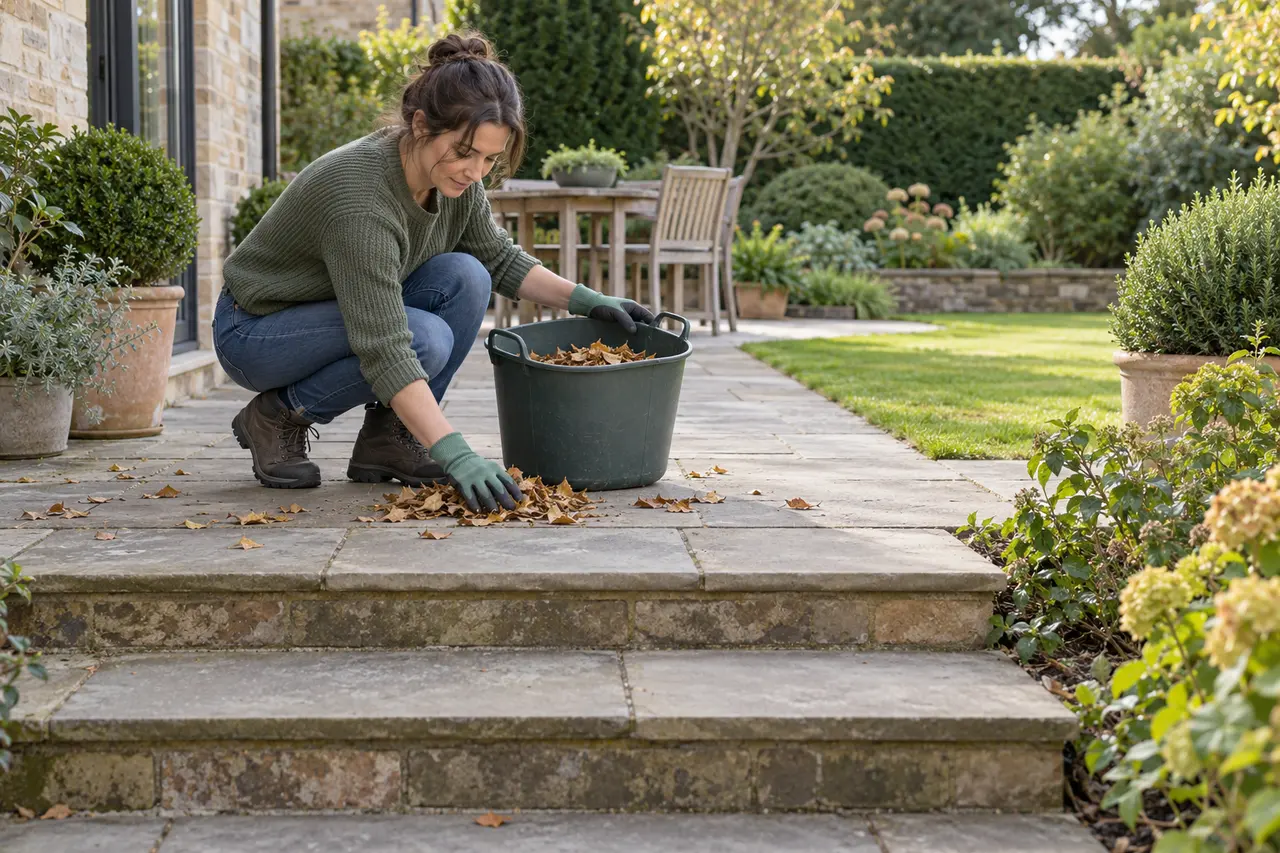
Returning collection at the receiving areas
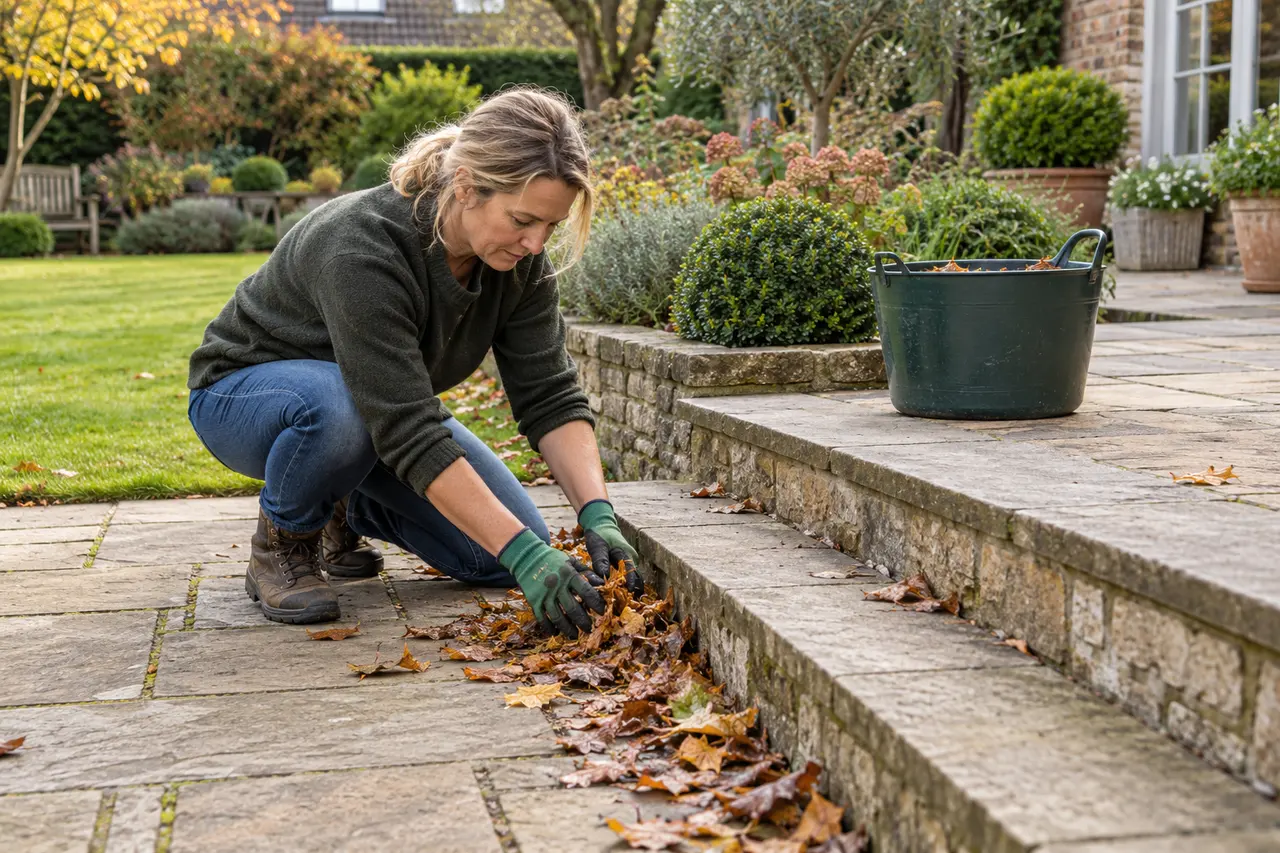
Returning collection in the lower receiving areas
Leaves can move from an upper planted area onto a lower landing after the original bed work is complete. Our next useful operation can therefore concentrate on collection. The team attends to the actual receiving places, including sheltered step corners, according to the deposit present. This keeps the service responsive to the movement of material through the garden instead of treating every quiet-looking corner as another cutting task.
Loose material is lifted from treads and the base of the steps with a method suited to their surface. Our collection avoids forcing dirt into joints or scraping plants at the edge as the route is cleared. An ingrained surface mark remains distinguishable from a deposit that can be brushed away. Where appropriate, a separate hard-surface cleaning proposal addresses that different task.
Our seasonal maintenance can give these receiving areas more attention as growth elsewhere slows. The upper bed retains its suitable soil and wanted plants, while the connection below is cleared of material produced during the work. This links the seasonal visit to the movement through the layout, allowing the different surfaces to remain in order without giving every level the same operation at the same stage.
Additional services around the stepped garden
Planting design related to the actual levels
Our garden design considers how the levels are viewed and connected as well as their flat footprint. A plant seen at eye level from the lower route can play a different part from the same planting beside an upper seat. Those viewpoints inform the revised arrangement and suitable additions. The proposal stays related to the design work specified, without treating ordinary planting maintenance as an automatic structural-design or construction service.
Tree work based on the response to earlier pruning
Our tree work takes account of vigorous upright growth following a severe cut. A dense flush is a response requiring consideration, not proof that repeating the reduction will create a compact crown with little continuing work. The proposed management follows the actual tree and regrowth. This keeps the longer-term operation distinct from judging success only by the small outline immediately after the earlier cutting.
Pressure cleaning across the connected paving
Our pressure cleaning sequence accounts for dirty water passing from an upper surface to a lower one. The final finish below follows the relevant work above, with appropriate collection and a suitable route for the loosened material. The garden underneath is not assumed to be a disposal area. This treats the terraces as connected working surfaces, keeping the next wash from undoing a completed lower section.
Gutter collection with functioning equipment
Where vacuum equipment is suitable for our gutter cleaning, the completed run is checked through an appropriate working method. Material stopping at the collector can indicate an equipment blockage as well as an empty channel. Our operator distinguishes those possibilities. The actual accessible gutter and functioning equipment determine the result, without implying that one vacuum arrangement can serve every roofline.
Cut-tree care at the actual trunk end
Our delivery and installation care for a cut Christmas tree follows the appropriate water-holding arrangement. The trunk end needs to remain in contact with the water, rather than a reservoir simply containing some below it. Drilling a hole does not improve uptake. The selected preparation and supplied instructions therefore relate to the actual standing tree, giving the household the relevant care information without treating a fitting alteration as a substitute for water contact.
Guide rates for gardening and controlled movement
The general gardening guide rates cover agreed gardening time. Hand work in a planted terrace and moving collected material between levels both contribute to the work required.
| Gardening time | Guide rate |
|---|---|
| First hour | £83 |
| Each subsequent hour | £65 |
GBP guide rates. Establish the complete scope, waste-removal arrangement, VAT treatment and any applicable access or parking charges for the quotation.
Questions about our stepped-garden service
How are filled tubs positioned between levels?
Our collecting position uses suitable level ground where the container stands securely and the route remains clear. Narrow wall tops and step edges are not substituted for that working area. The team keeps the load within controlled reach and moves a suitable amount before projecting contents or weight make handling awkward. This supports the collection.
How is displaced soil distinguished from route waste?
Our collection keeps suitable soil separate from stones, unrelated rubbish and contaminated sweepings. A mixed load from the paving is not automatically returned over the retained bed. This preserves the intended growing level while distinguishing the material that can appropriately remain from what needs another destination. The service therefore finishes the lower route without using the upper planting as a convenient place for everything gathered below it.
Does your gardening include repairs to steps and walls?
Routine maintenance does not establish a structural-repair or construction service. A loose tread or unstable edge affects where the team can work and must receive its appropriate response before it supports the operation. Cleaning beside that feature is kept distinct from demonstrating that it is sound. This gives the customer a clear gardening proposal without an ordinary booking implying the repair of the retaining structure.
How is the work ordered between terraces?
The sequence follows their connections. Material from above can be gathered before the final finish below, with a usable route maintained throughout. This reduces repeated handling and keeps the following operation from undoing work already completed. The customer receives a coherent finish across the layout, not just a succession of individually tidy patches receiving deposits from the next task.
Connected levels with their own appropriate finish
Our gardening services relate the planted terraces, supported lawn and connecting steps within one practical visit. Close bed work and suitable cutting are completed with the collection they produce, keeping the lower route available as material leaves the upper areas. Each surface retains its own treatment while the garden remains usable as a connected space.