

Richmond · Maintenance within established planting
Gardeners Richmond
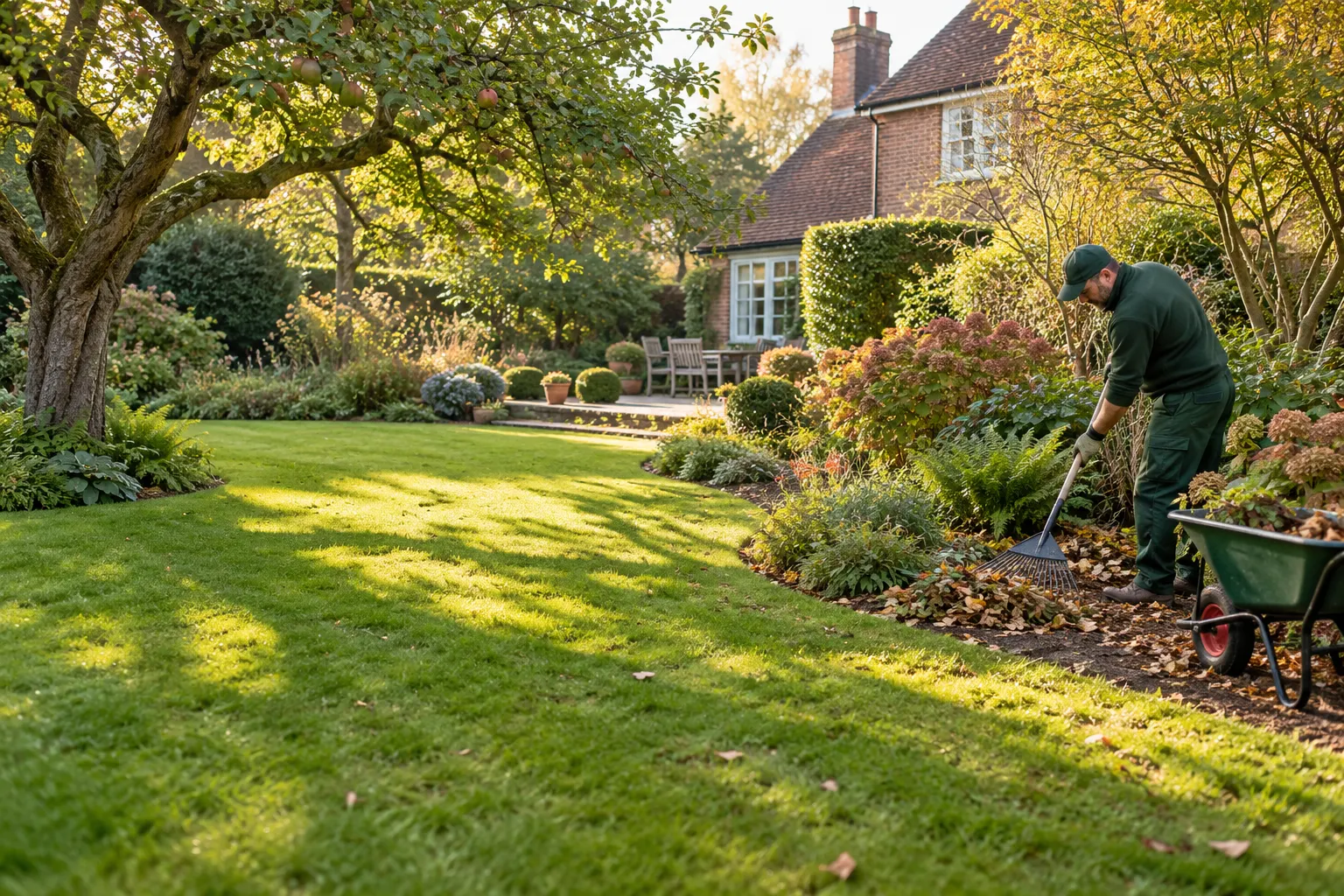
We maintain lawns, hedges and established beds with the existing plants clearly identified. Selective weeding and collection reveal useful structure, while cutting follows the different roles of screens, flowering shrubs and low cover. The work leaves access for continuing care and keeps larger changes distinguishable from the ordinary maintenance of the garden.
- How do you choose additions for established beds? Our planting proposals consider mature spread, existing roots and watering access, giving a new plant appropriate room beyond its supplied pot size.
- How do you assess a request for a smaller tree? The proposed outcome distinguishes selected pruning, a crown change and removal, keeping the tree intended to remain part of the decision.
Established plants kept recognisable during maintenance
What does your established-garden maintenance cover?
We can combine lawn cutting, appropriate hedge maintenance and close attention within existing beds. The gardener identifies dormant plants, recent additions and other planting that will stay before work begins around them. Tasks follow the growth and available access, with the completed area made easier to maintain. This gives regular care a defined purpose within the existing garden’s structure.
How do your gardeners restore order in a full border?
Selective weeding, leaf lifting and attention to congested growth can reveal useful plants while preserving the bed’s planted character. Wanted seedlings or particular areas being kept are identified before the surrounding work. The operation then follows that boundary and the plants’ needs. A clearer border can retain its density and seasonal appearance, with close hand work providing room for the continuing planting.
The useful structure already in the garden
Plant layers identified before unwanted growth is removed
The gardener works through the different layers of an established bed: spreading shrubs, weeds in open gaps and lower plants hidden beneath them. Useful growth remains identifiable as material is collected around it. This reveals the existing arrangement in manageable portions, allowing the next plant task to follow what is actually there. The work gives attention to the continuing bed beyond the first impression of dense foliage.
Plant roles inform the selected maintenance. A screening shrub, a flowering specimen and low ground-cover each receive their own decision. Appropriate pruning can release a path or clear neighbouring plants, while larger reductions are separately considered. The completed work preserves that purpose within the garden. Its plants can therefore retain different forms while the routes and spaces needed for their care are opened.
Our recurring garden maintenance carries plant decisions between visits. Records of flowering, shoots kept and recent planting locations help the next operation begin with the right subject. The programme can move from lawn and weed work into leaf collection or particular pruning stages as growth changes. This continuity keeps established planting understood over time and allows the maintenance sequence to develop with the garden.
- We identify dormant planting before clearing apparent gaps.
- Appropriate pruning can release low growth from paths.
- Weeds are loosened individually among established clumps.
- Mowing preparation identifies spreading stems and labels.
- Loose fallen material is separated from useful mulch.
The lawn among the borders
Mowing follows the existing bed boundary
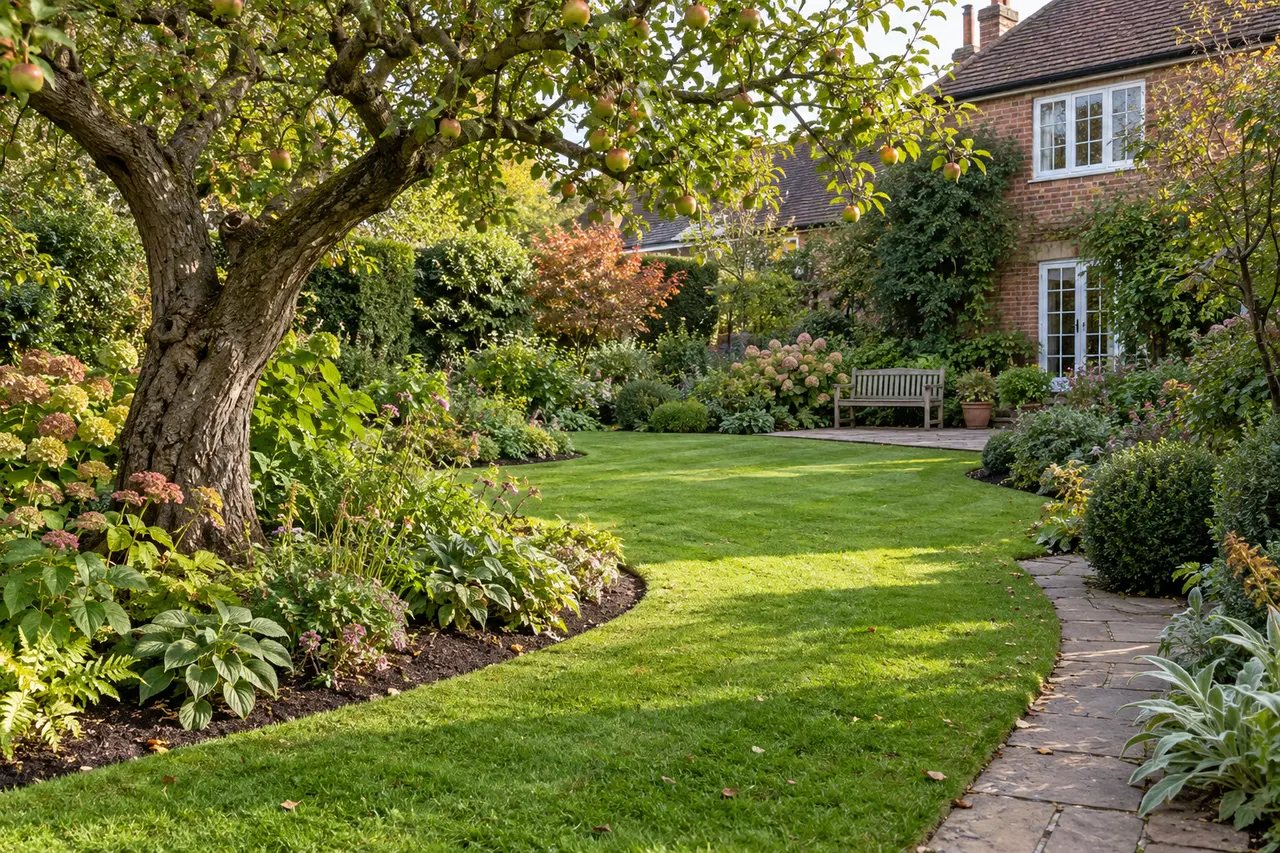
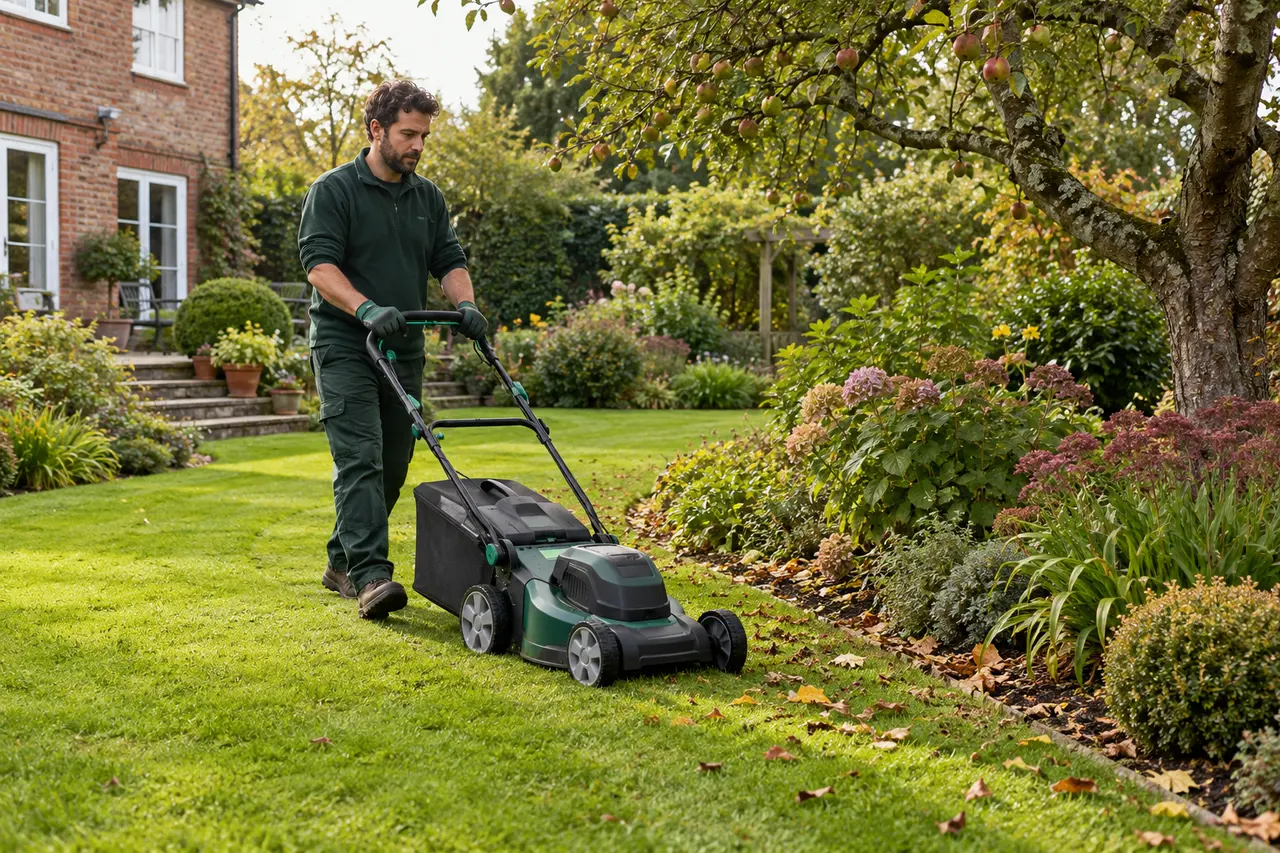
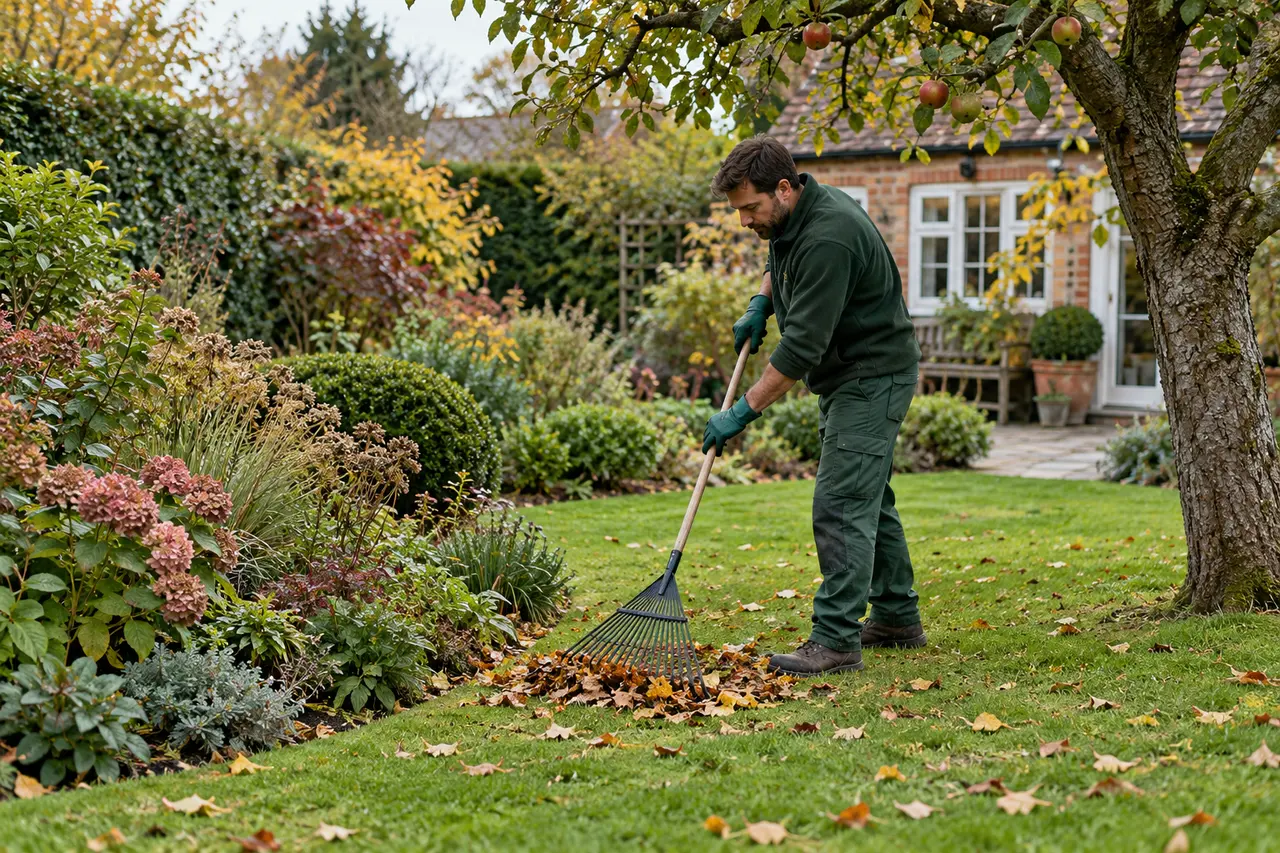
Where foliage softens the lawn outline, we expose the grass edge before the mower approaches. Accessible growth is moved clear with attention to the plant, keeping wheels on the lawn. This establishes a readable route beside the bed and avoids using the machine’s pressure to define the boundary. The cut can then follow the existing layout with the planted strip outside its movement.
Grass height, firmness and obstacles inform the mowing operation. Movable furniture has a safe holding position, while twigs and stones are collected beforehand. Small grass islands around trees or ornaments receive the additional finishing their shapes require. This includes the close work within the task description, giving the maintained lawn attention across its accessible perimeter as well as through an open central rectangle.
Loose clippings are collected where required and grass swept from adjoining paving. The finished edge meets the current layout. Further lawn-care attention can address a persistent weak area after light, wear and surface condition are considered. Wider views and the affected patches together inform that proposal. This keeps the additional operation attached to its actual position while normal mowing continues on the grass ready for it.
Hedge growth beside planted beds
Boundary care restores access while preserving its role
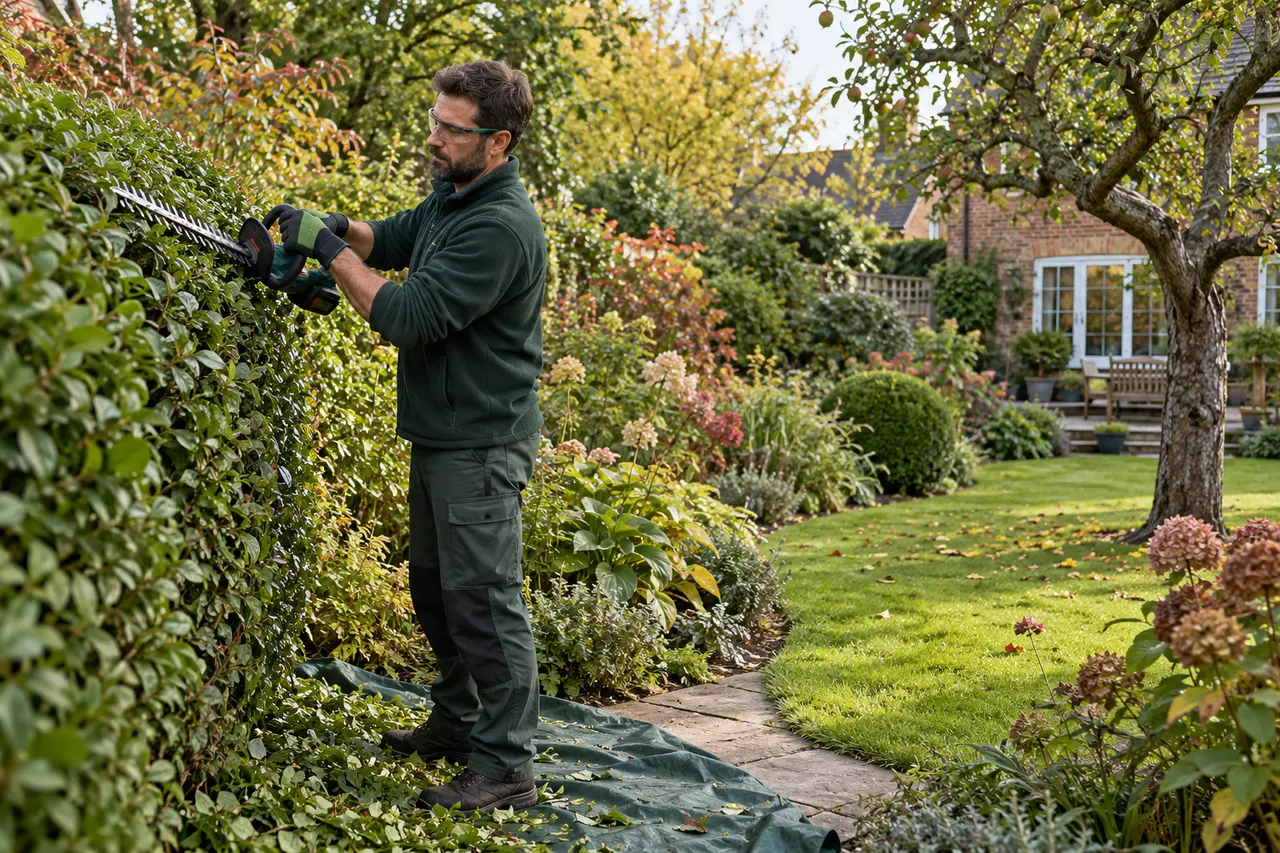
We identify where hedge extension has reduced space at a fence, across a bed or beside plants needing care. The selected trim follows the screen and shape intended for that boundary. Opening the working approach is therefore considered alongside the living hedge remaining in place. This gives the operation a practical purpose within the garden, beyond measuring the amount projecting from its original planting line.
The accessible face, top and return ends are reviewed before cutting. A narrow gap behind the hedge or delicate planting beneath it informs the approach and collection position. Where appropriate, clipping sheets receive material before it settles among plants at the base. The setup gives the team both a controlled cutting area and a route for the outgoing load, supporting the finish from top to ground level.
Cut selection follows the plant, including individual attention to broad leaves where appropriate. Soft extension and older woody growth are treated distinctly. Nesting activity leaves affected work undisturbed, while substantial branches, uncertain stability or inaccessible growth receive a separate tree-work assessment. This keeps the routine hedge operation clear and places heavier work within the method and assessment it requires.
Collection around continuing plants
Build-up removed through manageable sections of the bed
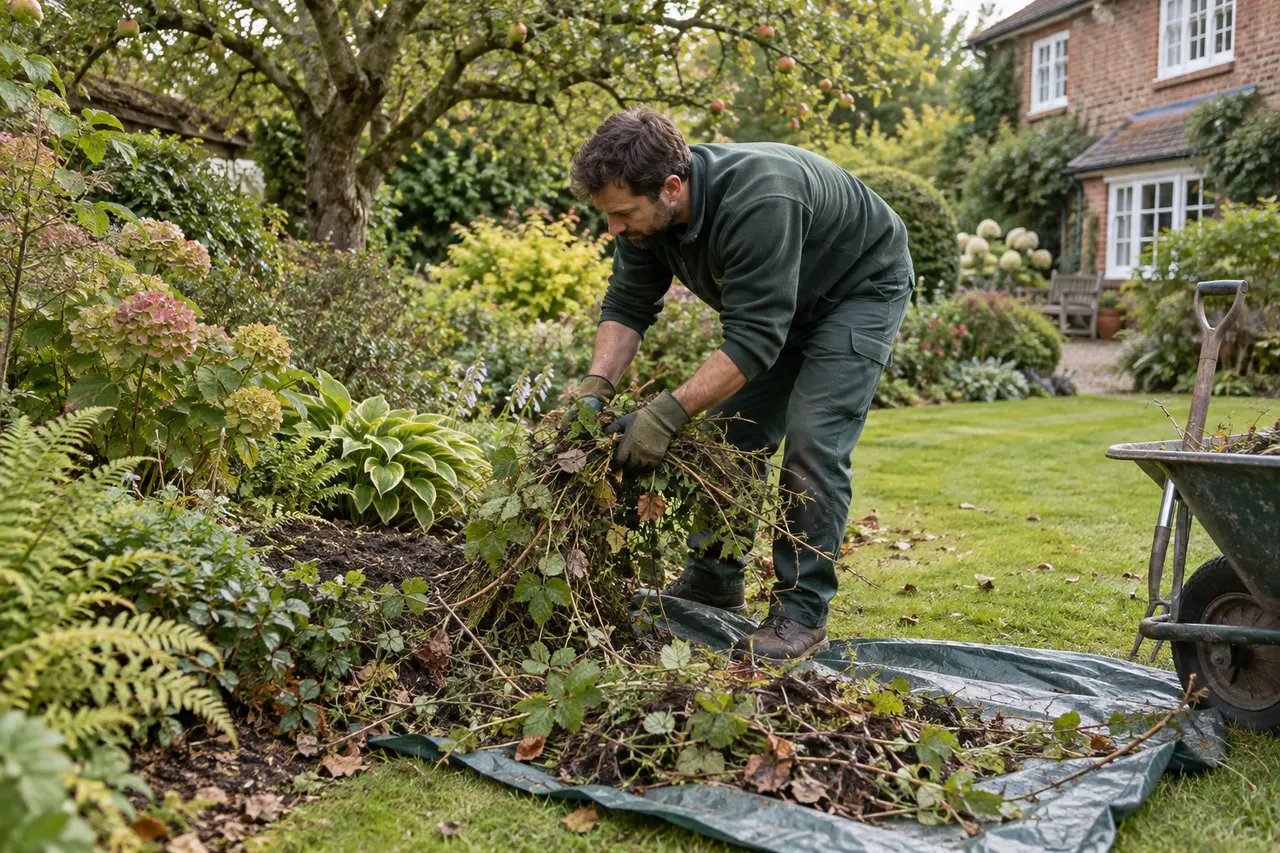
Our gardeners gather old stems, climbing weeds and fallen material while keeping useful planting identifiable. The bed is opened in manageable portions so each layer can be understood. An unfamiliar plant or concealed obstruction prompts a specific decision before that section proceeds. This gives clearance a controlled pace through the established garden, preserving the plants that only become apparent once the upper material is lifted.
We establish a collection position that keeps carrying practical and reduces repeated movement over soft lawn. Green material is separated from wire, broken containers and household items, with different handling arranged where necessary. The route remains available as the load develops. This completes recovery through its outgoing arrangement, leaving the accessible bed and the means to continue working around it clear.
Our clearance service addresses larger recovery around established planting. The waste-disposal guide identifies the outgoing material and its arrangements. Roots or subsequent growth can require further attention after the surface is visible. The first result leaves useful plants apparent, with the worked area accessible and any next operation identified. This gives continuing maintenance a clear beginning within the space already recovered.
Close attention within established beds
Weeding and collection around individual clumps
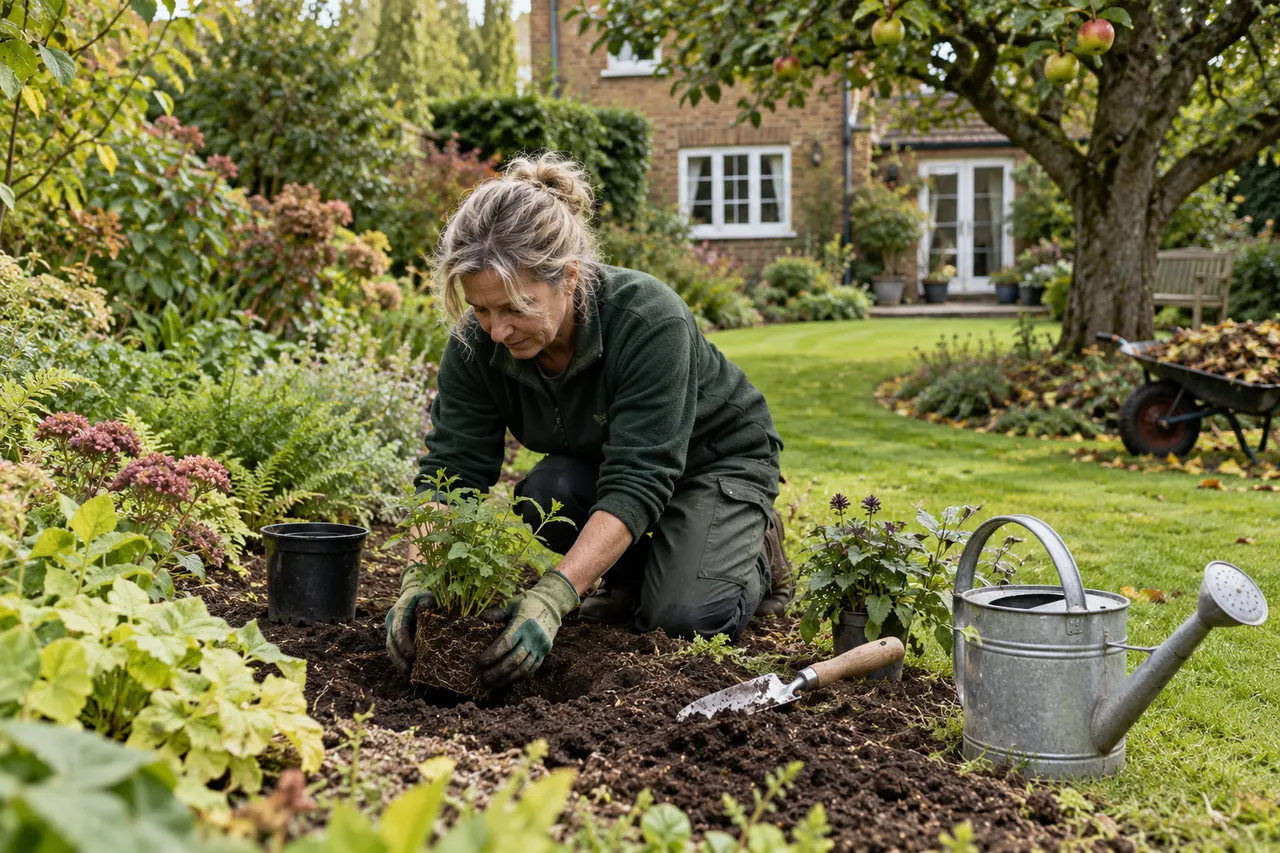
A weed within a perennial crown, dead material covering a low plant and growth obscuring a path edge receive close individual work. The gardener separates unwanted roots and loose pieces from the useful planting around them. These small operations reveal the bed’s arrangement while preserving its existing structure. The result can restore access and order without requiring a new planting scheme simply because the original border has become difficult to read.
Where additions are commissioned, we consider mature spread alongside the position available now. Existing roots and foliage, light and soil conditions all inform the receiving space. Access for watering remains part of that proposal, particularly while the new plant establishes. This gives the addition room to develop within the established bed instead of using its current small size as the sole measure of whether another plant will fit.
Our regular bed work can include deadheading, hand weeding and plant-specific seasonal removal. Larger division, substantial soil preparation or a revised planting arrangement receives its own description, including materials and aftercare. The completed bed remains maintainable with accessible stems and care positions. This keeps close routine attention available while larger renewal work is understood as another defined operation.
A programme following growth
Each visit selected for the stage of the garden
Early shoots can require careful hand collection, while later lawn and hedge growth can take more cutting time. Leaf fall brings another workload across grass, low foliage and everyday paths. Our recurring care follows those stages within the agreed areas. The programme preserves an overview of the established garden while allowing the practical work to change as different plants and surfaces become ready for attention.
Leaf collection uses the method appropriate to the surface below. Low crowns can receive hand work where a rake used on open grass would be too rough. Paving is swept with loose stones and edging understood. Material kept for composting has an identified collection position. This leaves the worked surfaces clear while maintaining the distinction between useful organic material, planted growth and the route used during the visit.
Ground and weather can change the task order. Soft lawn may be left while accessible work proceeds from a path; dry conditions can give new planting greater priority. The year-round care guide includes that range of seasonal attention. The actual programme selects the operations needed at the property, giving its plants and surfaces useful care without treating the original task list as fixed for every subsequent visit.
Additional services around the existing garden
Design creates space for planting and its maintenance
Our garden design can review bed arrangements where plants have become difficult to reach. Working access, the planting structure and the relationship with the lawn are considered together. The project identifies a permanent layout change, distinct from a maintenance visit caring for what is already there. This gives a congested garden another route where close gardening alone cannot resolve the way its growing areas are arranged.
Tree proposals distinguish pruning from complete removal
Our tree-surgery service identifies the intended result, including the tree that is to remain. A particular obstruction, crown change and complete removal describe different operations. That outcome guides the appropriate pruning or removal proposal alongside the individual tree’s condition. The work is not selected by assuming more extensive cutting is necessarily better, keeping the useful result central to the decision about size.
Surface cleaning beside established planting
For jet washing along a planted border, preparation includes the low foliage beside the paving and the direction of spray and displaced dirt. Accessible growth can be held clear or protected through the operation. The working position provides control at the bed edge, keeping the cleaning task on the intended hard surface. This accounts for the plants sharing its margin while the paving receives its own method.
Gutter debris collected before the outlet is checked
Our gutter cleaning collects loose leaves and twigs from the channel before checking the outlet. The clumps are taken into the outgoing arrangement, with their receiving position clear of planting below. This gives the operation a defined route for material removed from the system. The channel and outlet can then be considered from the condition exposed by the collection already completed.
Living seasonal tree choices include their later growing position
The Christmas-tree options distinguish a pot-grown plant from a cut display. Where the living tree is intended to be kept, its proposed outdoor growing position is considered before selection. A gap beside existing plants must provide appropriate conditions for a continuing plant, not merely enough room for the temporary display pot. Later care therefore has its own identified arrangement alongside the seasonal purchase.
Gardening time for established planting
Our quotation includes detailed work among the existing plants and the collection and movement of their cut material. The published general gardening rates below guide time for that visit, accounting for close border attention alongside the more open grass-cutting operations.
| Gardening time | Guide price |
|---|---|
| First hour | £83 |
| Each subsequent hour | £65 |
Prices are in GBP. The complete total identifies commissioned work, waste removal, VAT treatment and applicable access or parking charges. Separately proposed tree, layout or planting changes remain clear within the full arrangement.
Existing plants and the continuing work around them
How can I show which self-seeded plants should stay?
Our plant record can use a discreet marker or clear photograph to identify wanted self-sown growth and dormant planting. That information is carried into the selective weeding so the team can distinguish those positions from weeds. The choice remains recognisable throughout the task, giving later operations an understood group of plants to preserve as the established bed becomes more visible.
Does a regular visit include redesigning an overfull border?
Our routine maintenance works within the existing arrangement. Major moves, new planting choices or revised access receive a separate design or planting proposal. That wider operation can consider the structure and later care together, while ordinary gardening keeps the current layout attended to. This distinguishes a recurring visit from a redesign, even where both contribute to the same overfull border over time.
Can cuttings be kept for my own compost heap?
Green material can be kept for the household’s compost arrangement where that is part of the work and a clear receiving position is available. Its amount, condition and type guide selection, with woody lengths or problematic weeds considered separately. The collected batch therefore follows an actual intended use. It is not simply transferred into the nearest bed because no outgoing destination has been identified.
Will one visit deal with weeds growing through dense planting?
A recovery visit removes the accessible growth within its task while preserving useful roots and stems. Dense planting can call for slower separation and further attention to hidden roots or later regrowth. We distinguish that opening from the smaller care jobs that follow. This gives the completed work a realistic result and identifies the next maintenance stage within the recovering bed.
What should happen to furniture before lawn work starts?
Small movable items use a safe holding position outside the mowing route. Heavy or fixed furniture is accounted for when selecting the working method around it. Delicate planting is kept outside temporary storage. This prepares the grass actually available for cutting and makes the location of displaced items part of the visit, without assuming every object must be moved to expose the largest possible lawn area.
Established structure revealed and ready for continuing care
Our gardening services leave the chosen bed or boundary more accessible, with useful plants apparent and the outgoing material gathered. The work record carries those positions and selected treatments into later attention. This gives recurring care a clear starting point within the established garden, preserving what continues to serve it while any larger change remains separately identifiable.