

Wimbledon garden maintenance and clear-ups
Gardeners Wimbledon
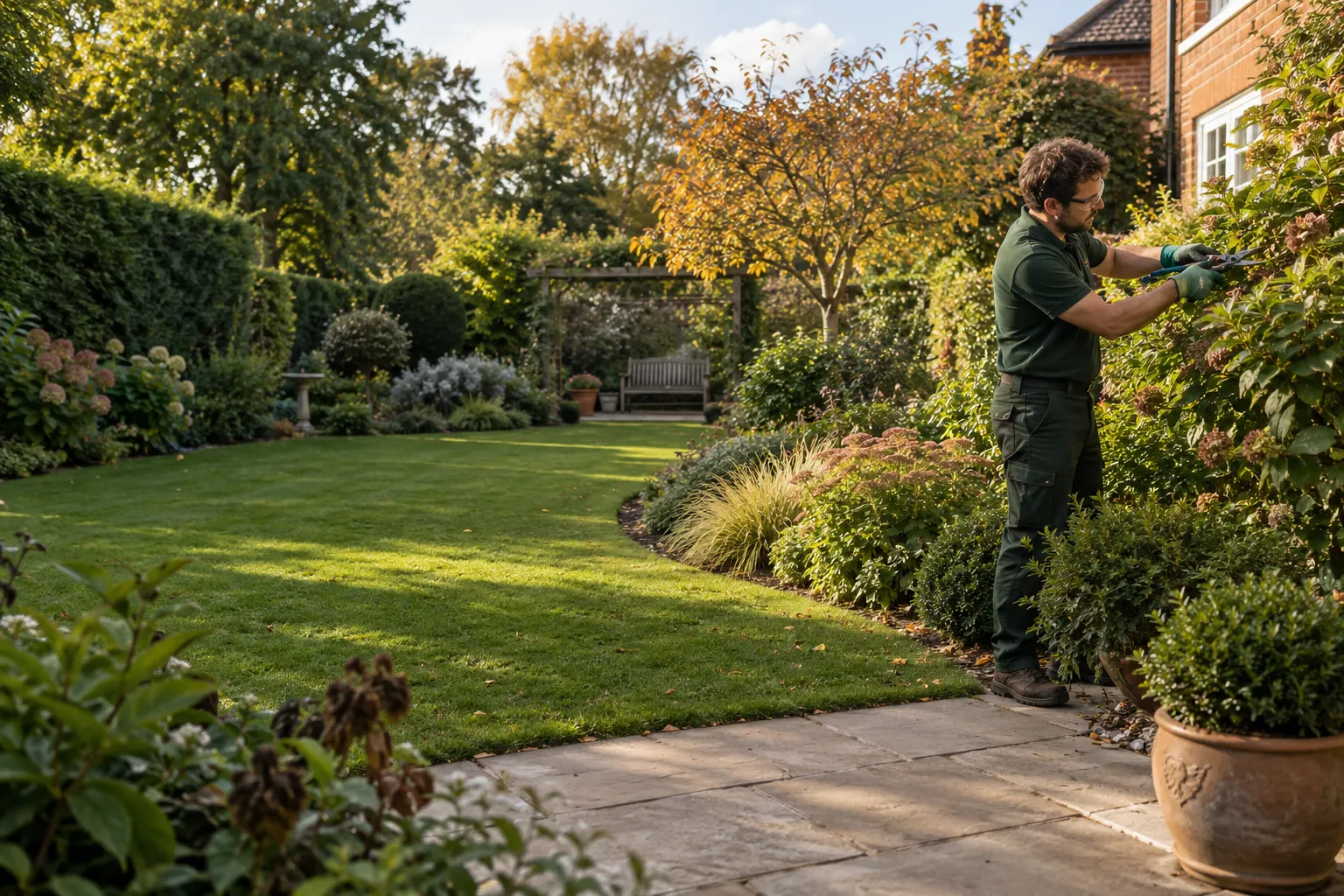
Our Wimbledon gardeners maintain the lawn, planted beds, hedges and routes that make your garden useful. A one-off operation can recover an area needing more attention, while returning care deals with the growth that follows. The work is organised around the actual plants, available access and condition of the space, with cut material collected as each section is finished.
- How does your team choose work after changing weather? We check each working area separately: a shaded bed can retain damp leaves after paving has dried, changing the suitable task there.
- How are tree permissions addressed at a Merton property? We relate the proposed work to the particular tree and address using relevant council information; the Wimbledon name alone does not establish its protection.
The gardening work suited to the space
Which jobs does your Wimbledon maintenance cover?
Our maintenance can combine mowing, edging, hedge trimming, weeding, suitable shrub pruning and planted-bed care. The gardener follows the selected tasks and their actual condition, whether the visit concentrates on one part or several areas. Design, tree work, paving washing and gutter clearing retain their separate scope, so the proposed operation and its resources relate clearly to the service being completed at the property.
How does your team approach an initial clear-up and continuing care?
Where accumulated growth obstructs entry, planting or a suitable mowing pass, our initial operation establishes access and deals with that build-up. Returning care follows the manageable area left afterwards, attending to the next grass, hedge and bed tasks. The interval and balance reflect actual growth, weather and use. This connects the larger starting job with useful maintenance as the garden develops.
Coordinated care for different growing areas
Appropriate maintenance for each planted section
Grass, shrubs and low beds rarely need the same operation at the same time. Our gardener checks those differences before the day's suitable tasks proceed. A lawn can be ready for another cut while flowering growth remains on a shrub, and a shaded bed can still hold damp leaves beside dry paving. The service accommodates those conditions across the working area.
Mowing and edging establish a practical finish to suitable open grass. In the beds, hand weeding loosens accessible unwanted roots around retained plants, while appropriate light pruning attends to selected wayward growth. The tools and timing follow the plant and task. Loose clippings are gathered from the adjoining worked paths, keeping the route back to the house useful as each area is completed.
Our returning routine garden care follows new growth and the tasks becoming appropriate after the previous visit. Recent planting, fragile stems and retained wildlife patches stay identifiable within that work. Larger repairs, removals or layout changes have their own proposed operation. This gives continuing care a practical direction while preserving the intended planting and distinguishing the next substantial change from ordinary maintenance.
- Grass edged beside paving with its planted margin retained.
- Accessible unwanted seedlings lifted around identified plants.
- Suitable reachable hedge growth trimmed and loose pieces gathered.
- Narrow routes opened before equipment moves through them.
- Loose edge leaves collected with useful bed mulch retained.
A complete cut and edge finish
A cut and edge finish for the lawn
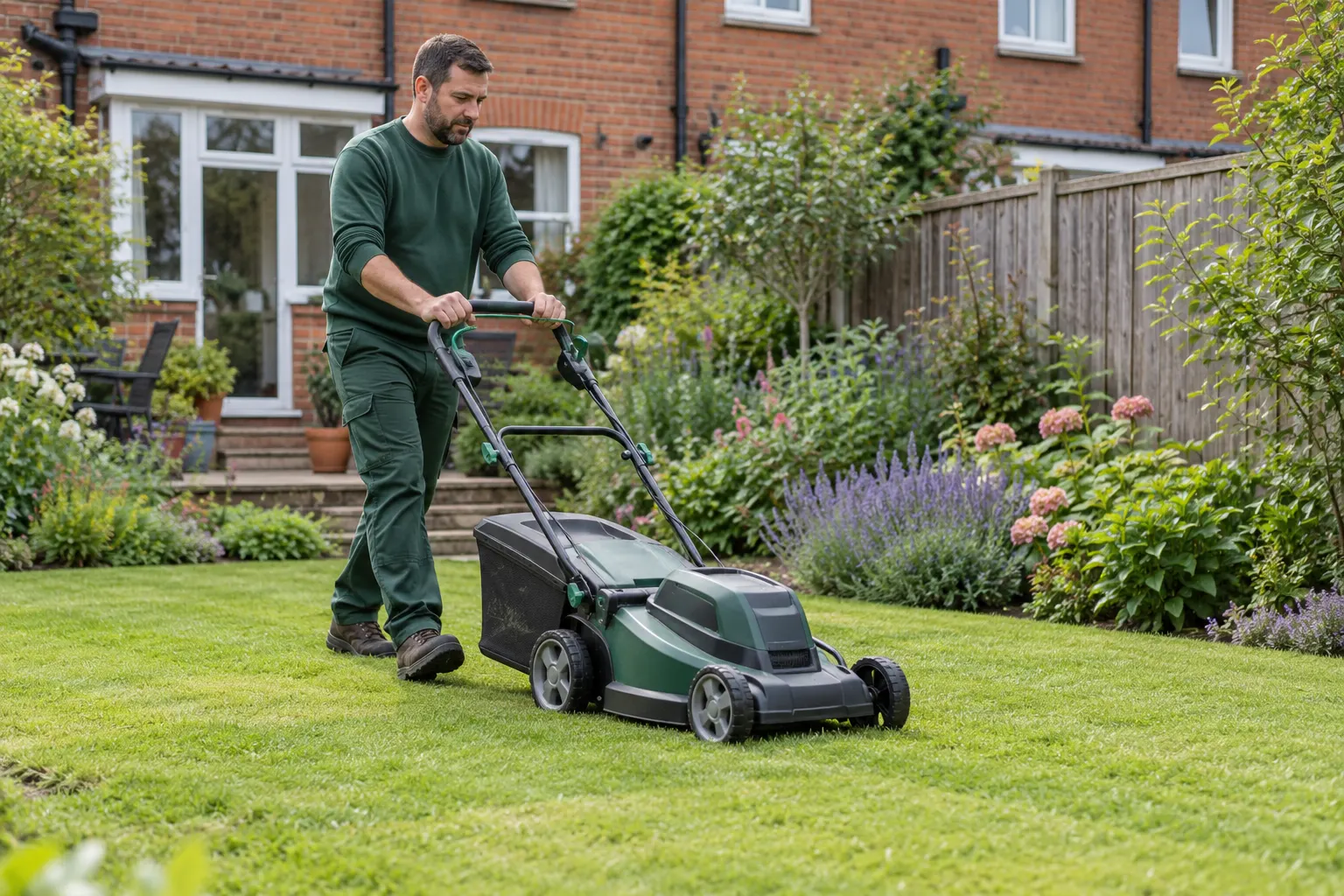
Preparation clears toys, fallen branches and stones from the intended mower route. The gardener also identifies low edges, shallow steps and watering fittings that affect the pass. Narrow strips beside raised planting can require a smaller tool and closer handling. This establishes the available supported surface and turning positions before the machine begins the open portion of the cut.
The mowing approach follows the actual grass height and growing condition. An area left long can need staged reduction, with a suitable amount removed during each operation. Saturated or soft ground changes the work available and can require traffic to wait for better conditions. Our service therefore selects the pass for the surface encountered, preserving its condition while completing the appropriate reachable grass.
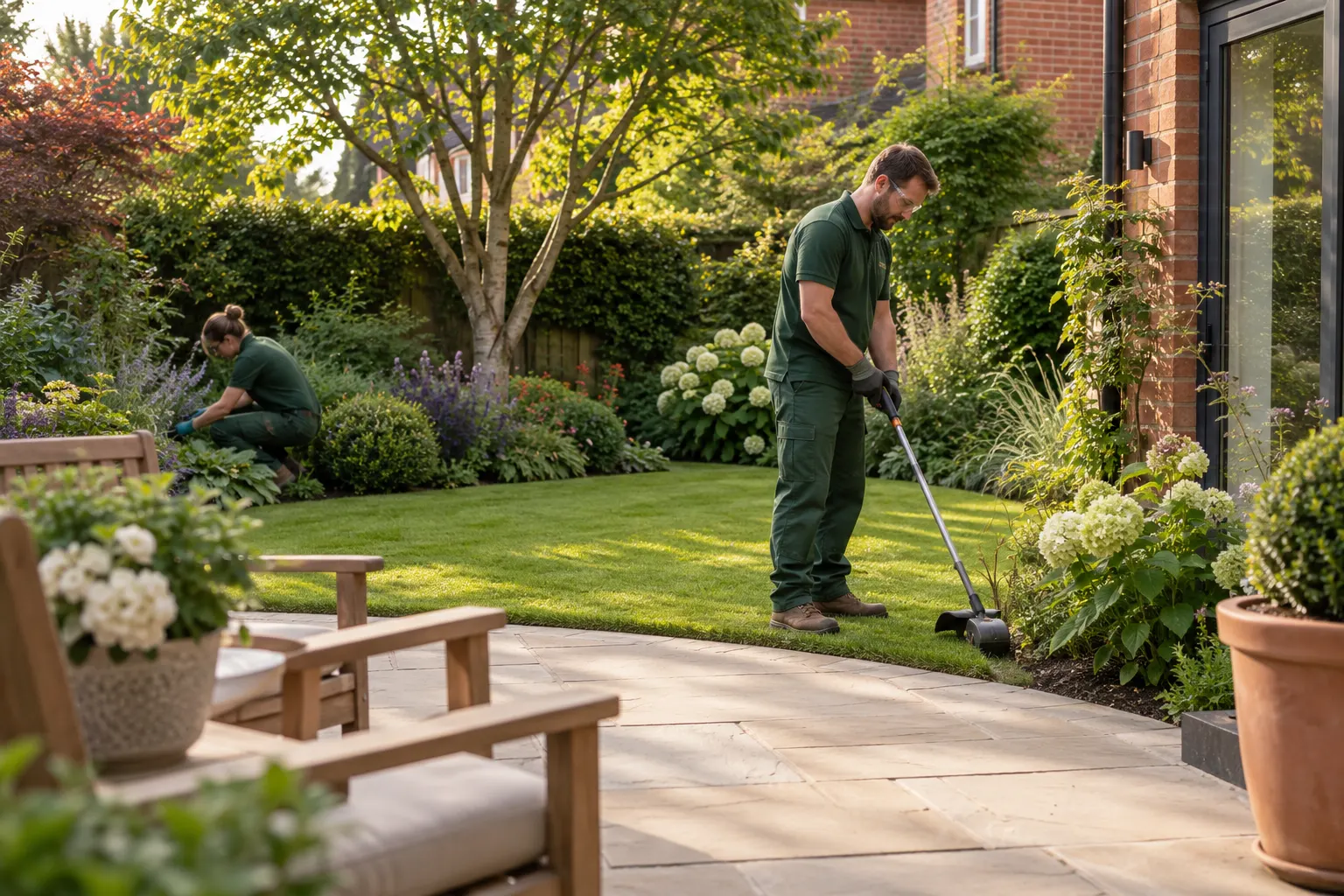
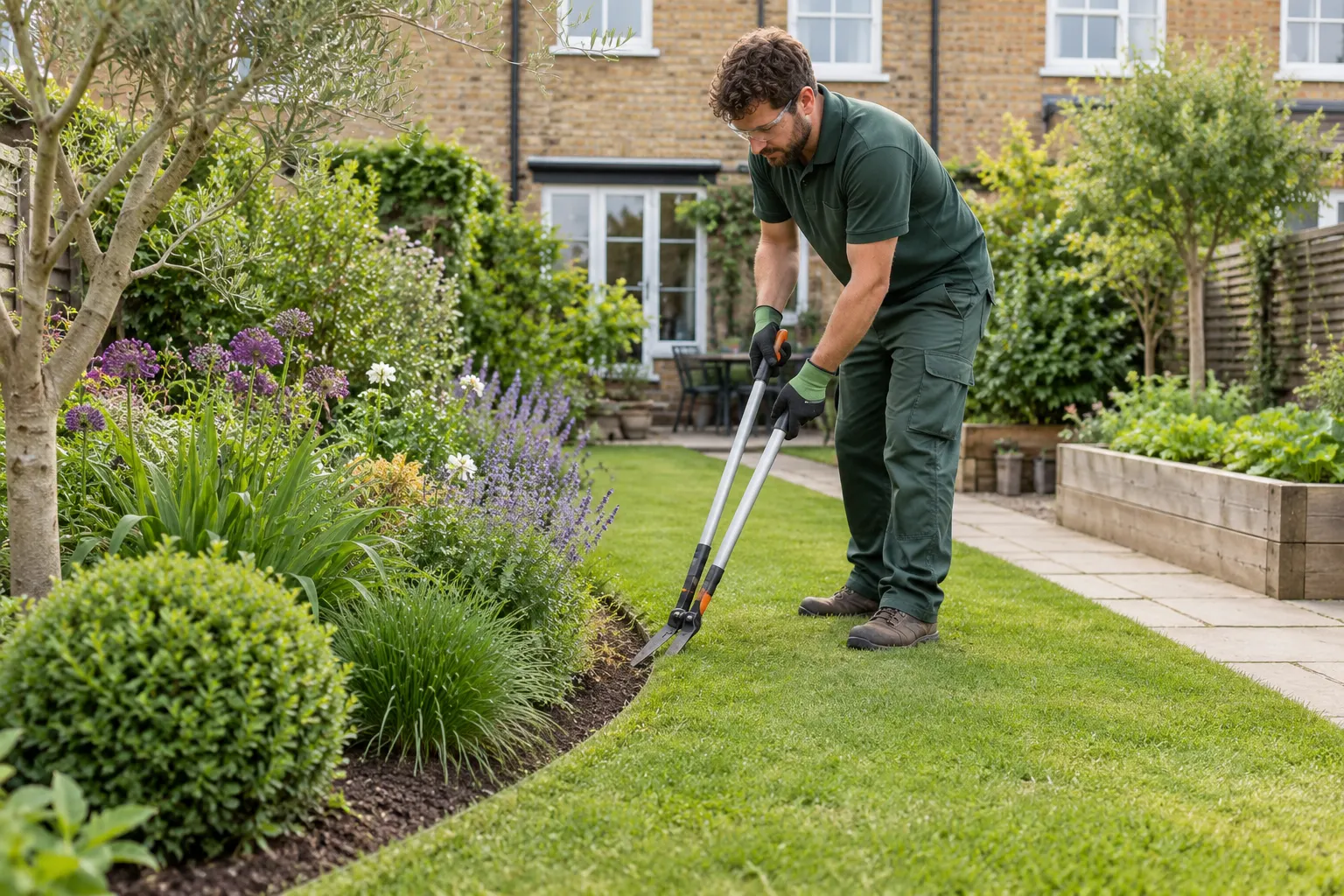
Our edge finish separates the turf from paving and planting while retaining a useful grass boundary. Clippings are gathered and the adjoining worked paving swept after cutting. Persistent moss, bare patches and compacted areas are distinguished for assessment before additional lawn-care work is selected. The ordinary cut can still be completed on suitable grass while those separate recovery requirements remain clear.
Suitable control of boundary growth
A useful opening beside suitable boundary growth
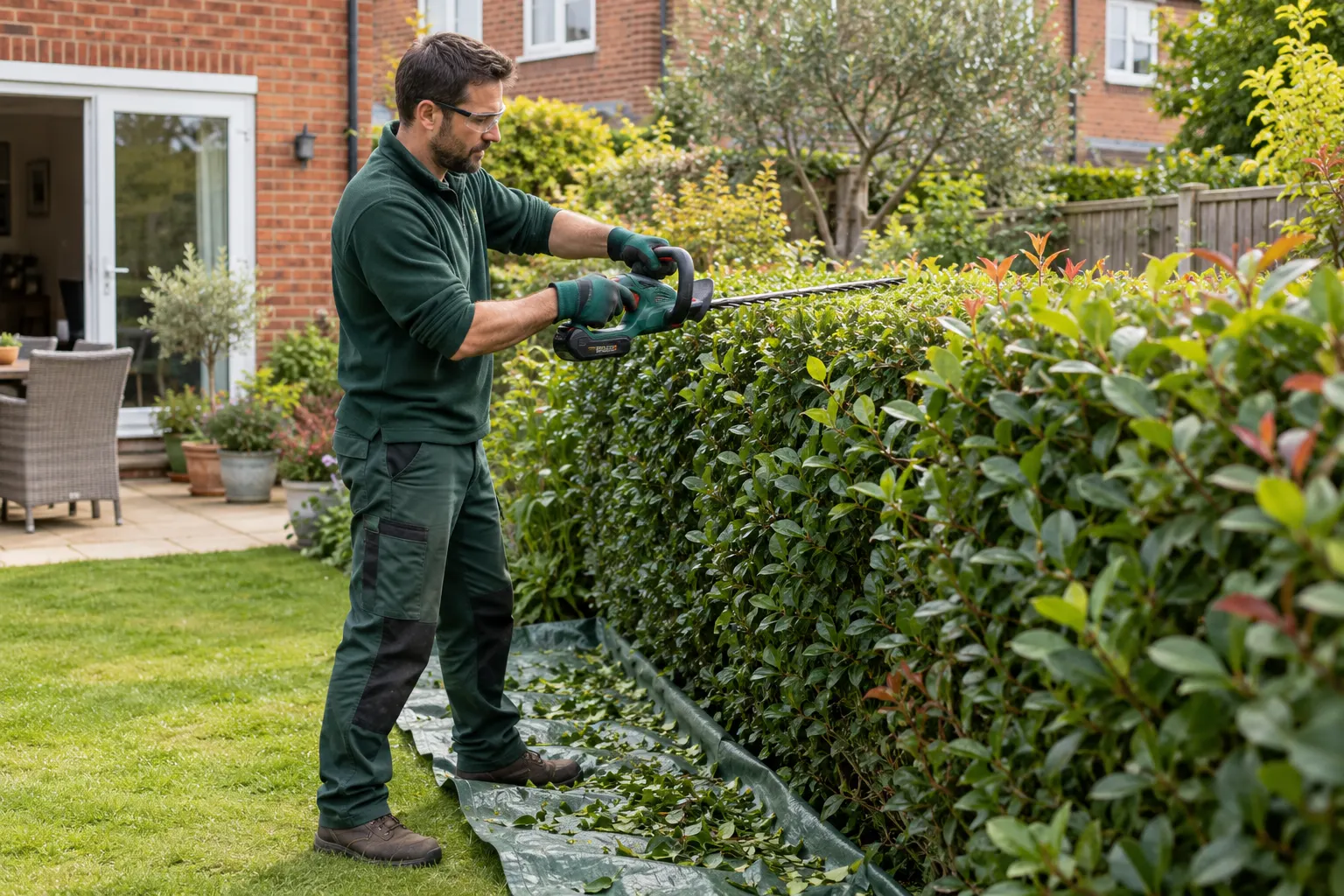
The gardener relates the hedge's present height, spread and growth to the path, gate or seating space beside it. Privacy can remain part of the result while suitable projecting material is trimmed. A light extension cut and a substantial neglected-boundary reduction require different consideration, especially where one face has restricted access. The proposed operation follows the actual growth and available working position.
Reachable faces receive a controlled line, with suitable receiving sheets used where they can catch fragments without harming the planting below. Large-leaved shrubs can need individual secateur cuts to preserve the leaves' appearance. Buds and the plant's growing cycle inform appropriate timing. This gives each retained plant its own considered finish within the boundary operation and supports collection as the cutting progresses.
Nest checks affect the work being proposed, with relevant cutting postponed where birds are building or using a nest. Our suitable trim follows RHS hedge-trimming guidance while preserving that protection. Heavy limbs, unstable material and work beyond appropriate ground-level reach remain separate tree-work requirements. The team keeps those different operations identifiable as the accessible hedge faces and suitable shrubs receive their specified attention.
An accessible starting point for an overgrown area
A recovered route through accumulated growth
The first operation in a difficult-to-enter space creates a suitable route for viewing the ground and carrying detached material out. That access lets the gardener identify features underfoot while keeping the load clear of retained planting. Wire, damaged paving or household objects uncovered beneath growth can change the method and required handling. The service responds to those actual findings as the working area opens.
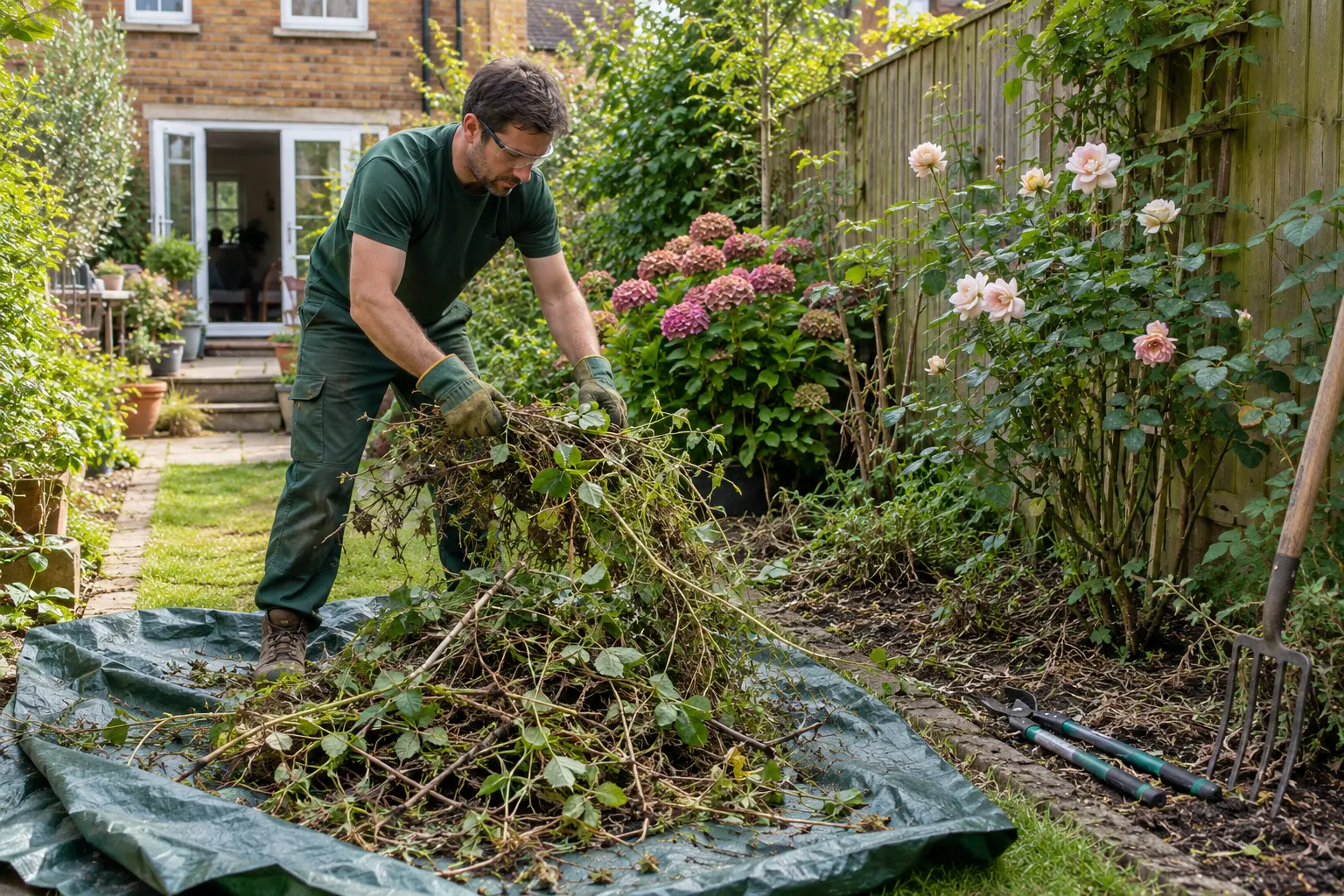
The retained plants are identified before dense growth receives a cut. An established rose under competing weeds calls for different handling from unwanted brambles, while a self-sown woody sapling differs from a soft annual weed. The gardener follows those distinctions through manageable sections. This recovers useful space while keeping the planting selected to remain recognisable throughout the removal and final collection.
A receiving position near the exit can reduce repeated crossings with cut vegetation where the actual route permits it. Our Garden clearance follows the larger accumulation and its available handling space. The garden-waste handling distinguishes suitable green material from objects needing a different destination. The resulting load is related to the amount and mixture encountered, with the recovered garden kept usable as it leaves the property.
Care around the intended planting
Close weeding within the established bed
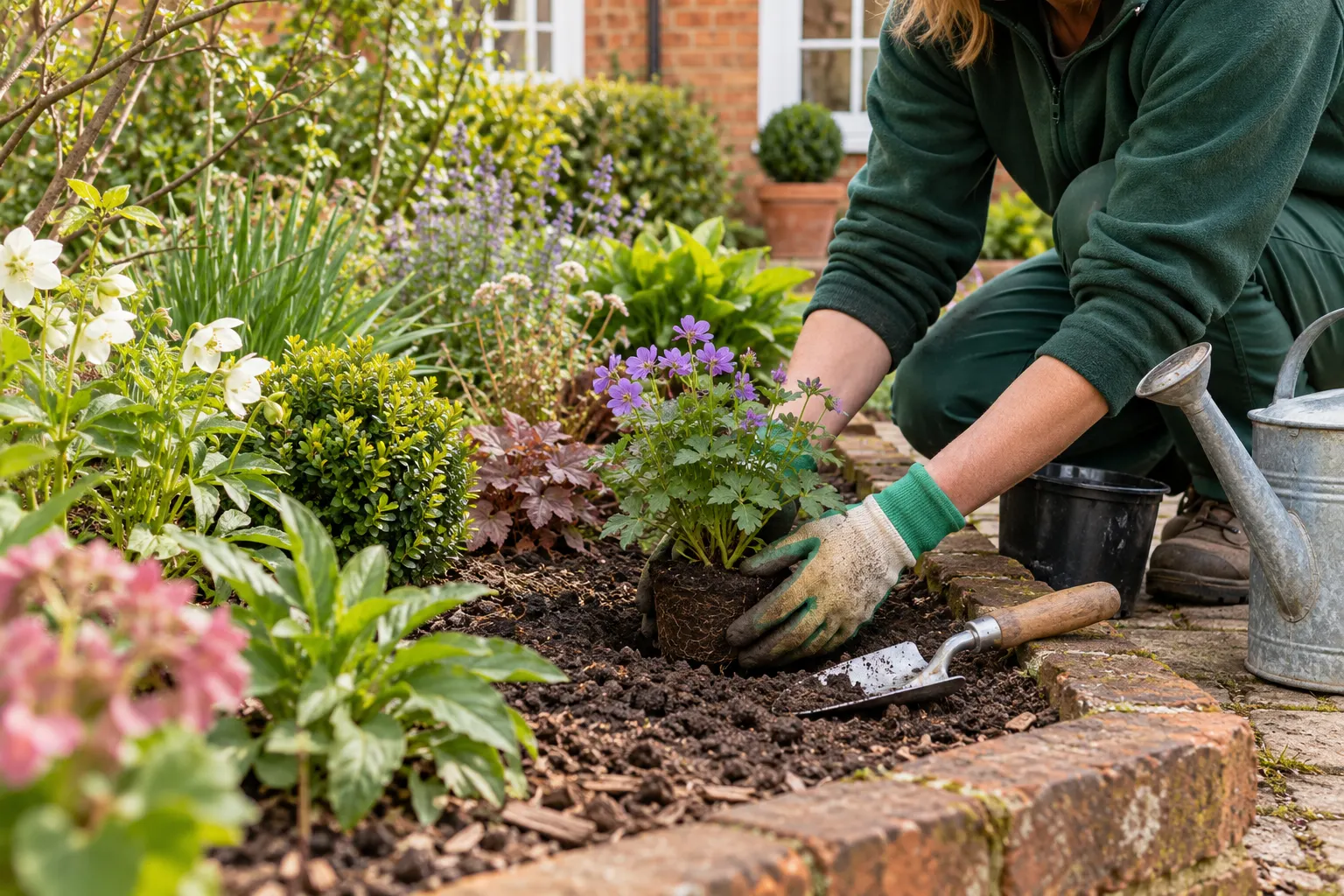
A full-looking border can contain competing seedlings around plants that are meant to remain. Our gardener works by hand through accessible gaps, following unwanted roots while retaining the established groups. Existing marks for dormant perennials and recently planted bulbs help identify occupied soil beneath an open surface. This gives the close work a useful target without assuming that an apparently empty position is available for disturbance.
Where new planting is included, its position follows available growing room, light and actual soil condition. The eventual spread matters alongside the dimensions of the nursery pot. Existing roots, a dry wall margin or deep shade inform the suitable selection and placement. The planting operation therefore connects the new plant to its setting and the neighbours that will continue developing around it.
Suitable watering after planting reaches the root area, with any selected mulch applied for the actual bed and kept appropriately clear of stems. Subsequent weeding, selected spent-flower removal and suitable thinning maintain useful space around the retained plants. Tired seasonal material can be removed as a defined task. A complete planting redesign remains its own project, with its intended changes distinguished from these returning operations.
The next useful seasonal operation
Seasonal work through changing growth and weather
The balance of seasonal tasks changes with the garden. Emerging shoots can need accessible surrounding weed removal, while active grass brings mowing and edges back into the workload. Suitable hedge extension receives its appropriate treatment. In dry conditions, recent planting can take greater attention; following wet weather, practical work off the lawn may be the more suitable progress. Our visit follows that actual combination.
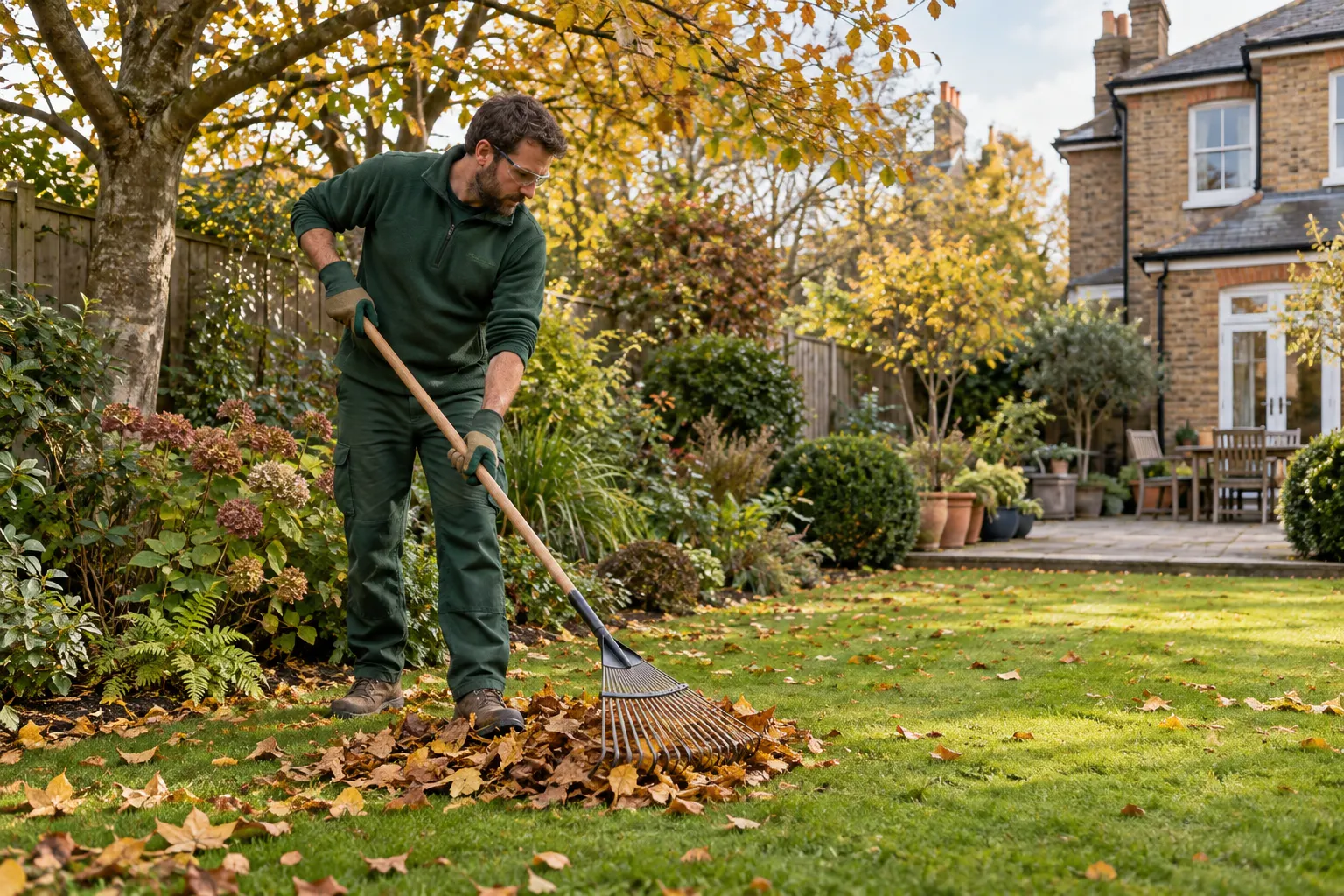
Autumn collection attends to leaves on usable paths, grass and low planting before a heavy accumulation makes the operation larger. A suitable spring-tine rake can lift loose material from the lawn. Around delicate stems, controlled hand gathering preserves the retained plant and existing useful mulch. The team uses the appropriate method for each receiving surface and brings the collected material together for its intended destination.
During colder periods, suitable work can include accessible routes, wind-blown material and appropriate dormant-season tasks. The plant still determines pruning timing, and frozen or waterlogged ground changes what can proceed. Our year-round garden care connects those conditions to the tasks coming due, maintaining the garden's useful areas while leaving unsuitable operations for their appropriate stage and keeping their intended result clear.
Separate services for a different operation
Further work for the layout, trees and building edges
Garden design for the intended arrangement
Our garden design considers how grass, beds, circulation and seating function together. A new layout or substantial planting proposal follows that arrangement before implementation begins. This gives a garden whose spaces no longer fit its intended use a considered direction for change. Ordinary maintenance can attend to the retained features while that different project establishes its positions, materials and planting requirements.
Tree surgery for the identified canopy work
Our tree surgery addresses the particular tree, surroundings and appropriate access where the requirement concerns crowded branches, damage or growth beyond its intended space. Applicable protection and conservation-area requirements are addressed before the proposed operation proceeds. The work remains distinct from suitable shrub pruning within routine maintenance, with its own intended removal and retained structure related to the plant being attended to.
Jet washing for the specified surface
Our jet washing relates the cleaned area to its paving material, joints, drainage and adjacent planting after unwanted vegetation has been dealt with. Loose or damaged sections affect whether and how pressure cleaning is appropriate. The proposed surface and its condition guide the operation, keeping the actual washing distinct from repairs or changes to the paving arrangement that need their own attention.
Gutter cleaning for accessible deposits
Our gutter cleaning removes the specified accessible debris from the rainwater channel with an approach suited to building height and actual access. Accumulated leaves can require a separate operation from those gathered at ground level. A defective joint, broken channel or roof fault remains identifiable for the appropriate repair, keeping the clearing result distinct from a promise to correct every source of water at that edge.
Seasonal Christmas-tree arrangements
Our Christmas-tree delivery and collection follow the ordered item and requested handling. Tree dimensions, the route into the property and any included installation or later removal shape the particular arrangement. These services retain their own quotation and availability, separate from the gardening visit. This keeps the seasonal request related to its actual product and tasks while the ordinary maintenance programme continues on its own defined basis.
Preparation for the actual property
Access and permissions at the particular address
Equipment and carrying arrangements follow the property's actual route. Steps in a side passage, a locked shared gate or movement through the house can affect what reaches the garden suitably. The distance from the vehicle and applicable parking restrictions also inform that preparation. Our team relates the tools and outgoing material to those conditions before the work starts, keeping the garden operation practical at its real location.
For a property in Merton, the council's tree-preservation information and conservation-area list inform the relevant permissions for proposed tree work. The exact address and particular tree matter to that process. Our preparation keeps those facts tied to the intended operation and relevant planning authority. The area name alone is not used to establish a tree's protection, preserving the distinction between ordinary access arrangements and statutory requirements affecting the work.
Published gardening rates
Published guide prices and the property quotation
The published gardening rates below are the site’s general guide, not a special local tariff. The amount of work, access and any separately agreed waste removal affect the complete quotation.
| Gardening time | Guide price |
|---|---|
| First hour | £83 |
| Each subsequent hour | £65 |
GBP guide prices. Check the complete booking total, VAT treatment and any applicable parking or congestion charges before booking. Larger clearances and specialist work may require a separate quotation.
Questions about our Wimbledon gardening service
Can your mower reach a garden through the house?
We assess the route before allocating the appropriate equipment. Door openings, steps, floor protection and suitable carrying positions affect that preparation alongside the lawn itself. Photographs of the actual approach can help establish those features. The service therefore considers both the machine suitable for the grass and the means of reaching it, with any restrictions reflected in the proposed operation.
How does your maintenance protect retained wildlife patches?
The identified patches remain outside the selected removal, with their boundaries visible to the gardener. Suitable paths, open grass and controlled edges can receive care around them. Our work keeps the distinction clear through cutting and collection so the retained section continues as intended. This allows a less closely maintained area to stay within the garden while the adjoining usable space receives its appropriate attention.
Can your initial clear-up lead into returning maintenance?
Yes. Our first operation establishes suitable access and addresses the accumulated material included in the job. The condition and size determine the work completed at that stage. Continuing care is then related to the manageable space remaining and the tasks returning there. This gives the customer a practical sequence from the starting accumulation to a maintained area with clear subsequent work.
How do you plan a visit involving new plants?
We relate the proposed positions to growing conditions before the planting operation is arranged. Bed dimensions, relevant photographs and available light help inform the selection. Where plants have already been purchased, their identities and pot sizes become part of the preparation. The actual additions can then be considered with the room and conditions available, keeping the work suitable for the supplied plants.
What does your property quotation take into account?
Our quotation follows the requested tasks, recent view of the garden and actual access route at the postcode. Steps, shared entry and any arrangements around pets inform the work, alongside whether cut material is leaving the property. This provides a practical basis for defining the operation, with its complete scope and availability established for that particular garden and requested service.
A maintained garden with its next tasks clear
Our London gardening services connect the work at your Wimbledon property to the way the space is growing and being used. The quotation brings the selected jobs, access and collection together, establishing a clear operation for the gardener and a useful result for the household. Returning care can follow that completed work as the next appropriate tasks develop.