

LAWN CARE ACROSS LONDON & THE M25
Lawn care and mowing in London
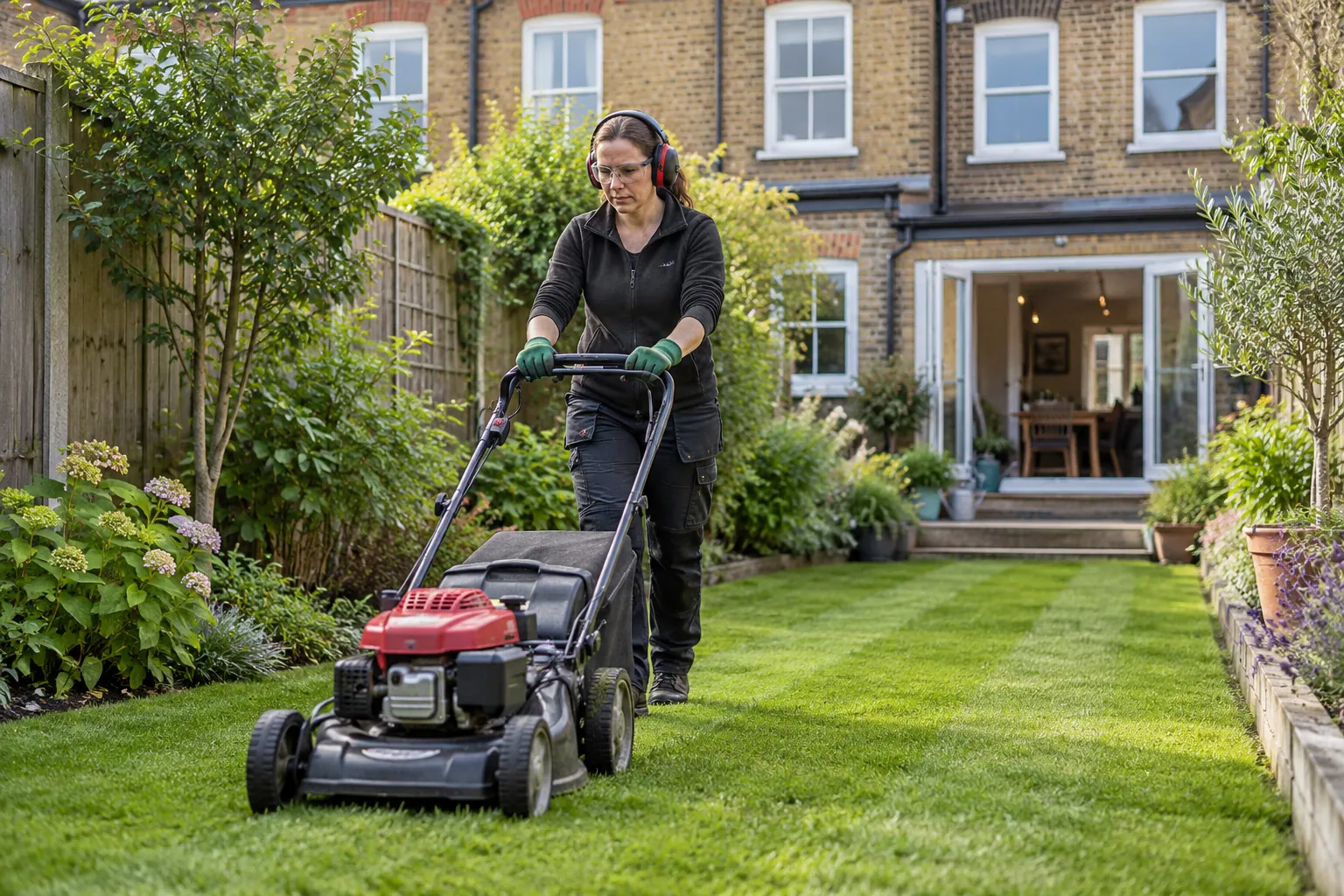
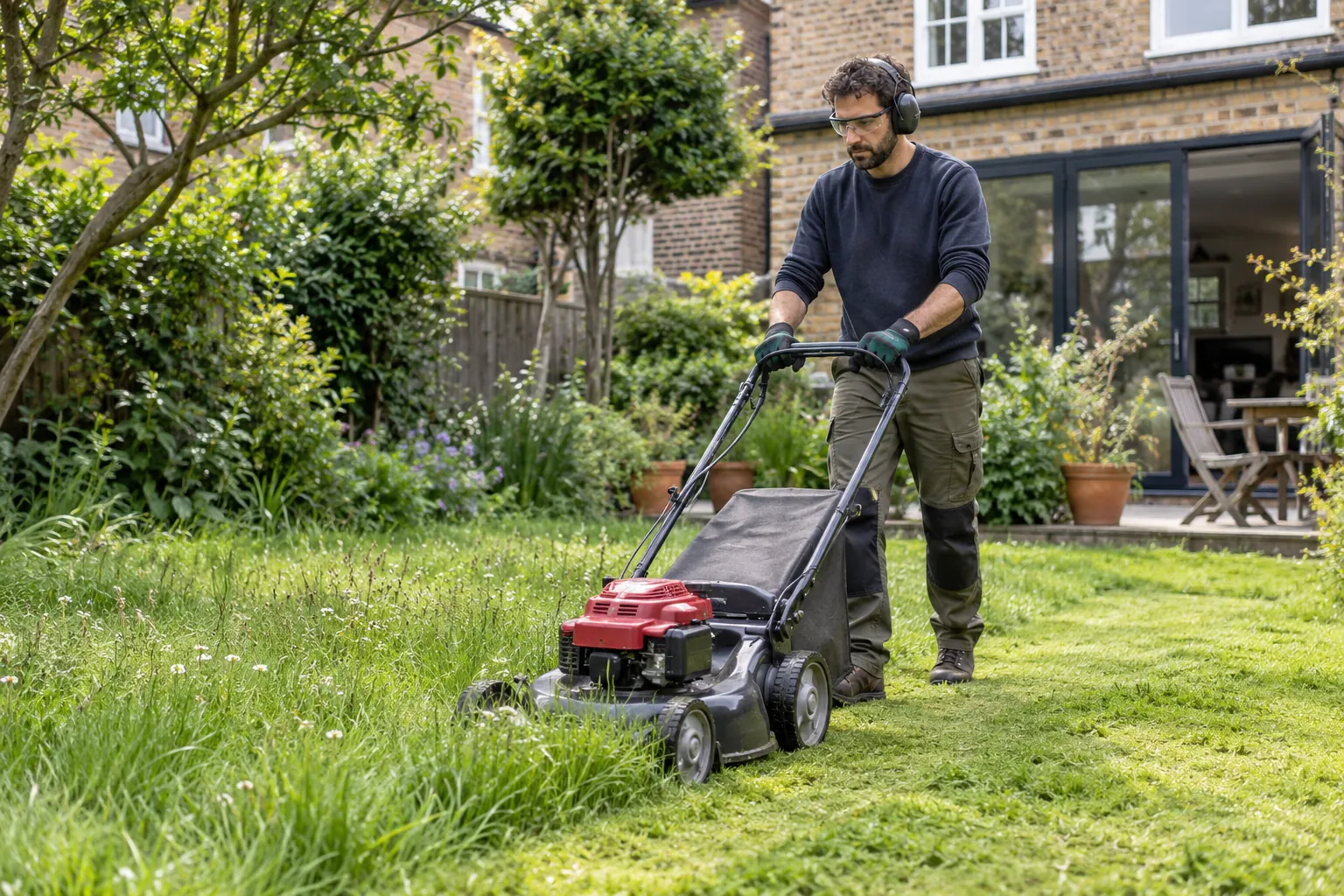
Our lawn-care service cuts suitable grass and finishes its existing edges, with the operation organised around growth, ground conditions and the features within the lawn. The gardener prepares the working route, completes the accessible passes and gathers the specified cuttings. Additional recovery receives its own proposed treatment, keeping ordinary mowing and any further improvement clear within the quotation.
The work within our routine lawn service
Our included tasks can cover mowing accessible grass, controlled finishing around obstacles, attention to existing edges and clipping collection. The actual lawn and working positions determine the suitable method. Feeding, patch repair and other recovery tasks have their own purpose and materials, allowing the customer to distinguish the maintained cut from separately selected work on the lawn's condition.
Our first operation on long growth
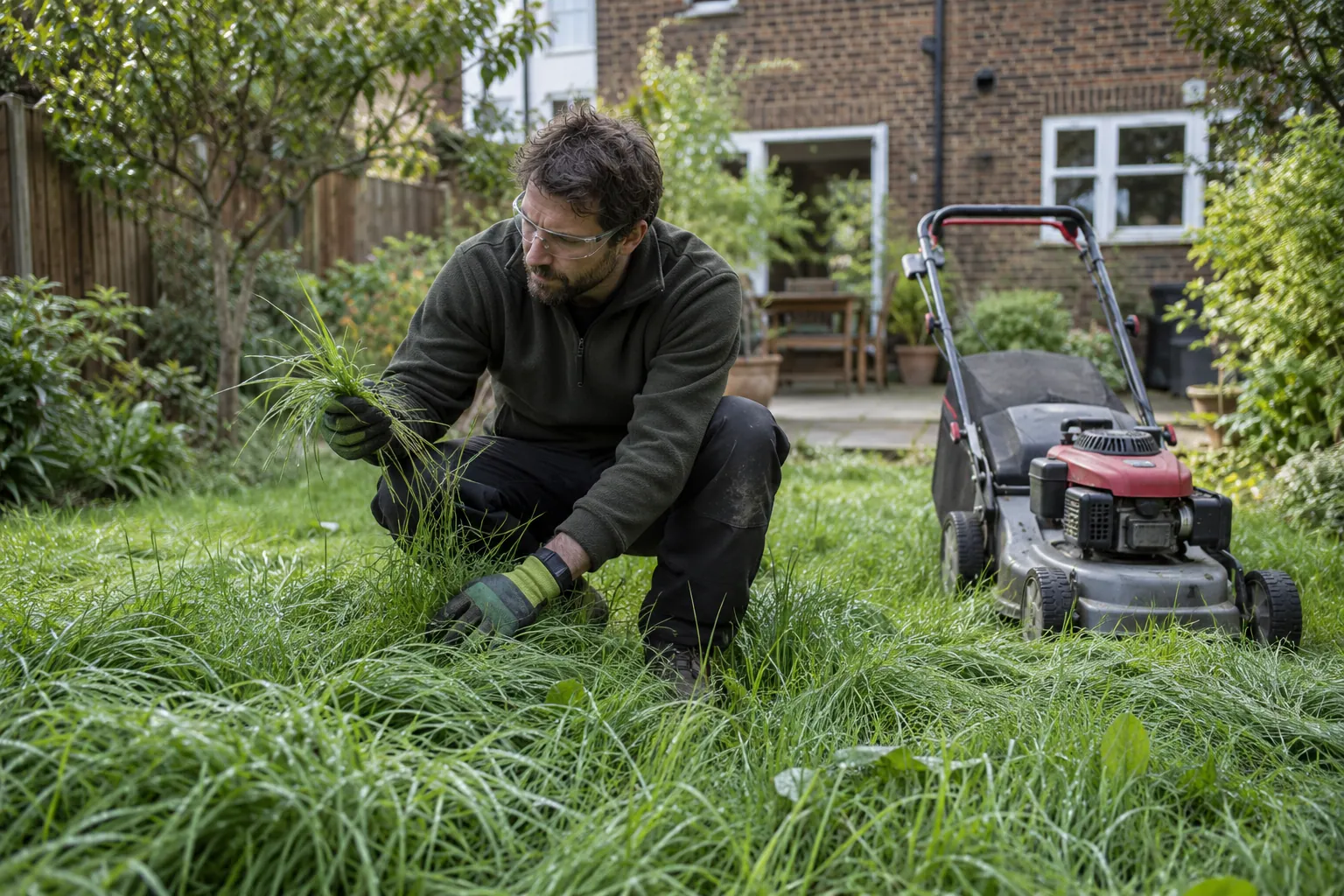
Tall grass is checked for its density, moisture and any concealed obstacles before the cut is selected. A suitable higher or staged approach can bring that growth under control. The team then follows the surface revealed and gathers the resulting material, leaving the initial reduction and any further recovery requirements identifiable as the lawn becomes easier to assess.
The full shape and surface of the lawn
Our preparation considers how the grass connects across the garden. Open areas, narrow strips, planted islands and separate patches create different passes and turning positions. Seating, trees and bed margins also shape the route available to the equipment. The proposed work follows those features together, relating the lawn's footprint to the detailed finish and movement needed around its actual outline.
Visible hollows, raised roots and covers are identified alongside the surface condition before cutting proceeds. Longer grass can conceal loose contents, while soft or persistently wet patches affect suitable equipment movement. The gardener uses those findings to establish the available operation. A concern about poor growth receives its own appropriate consideration, keeping visible mowing constraints distinct from a diagnosis of every underlying cause.
Preparation of the cutting route
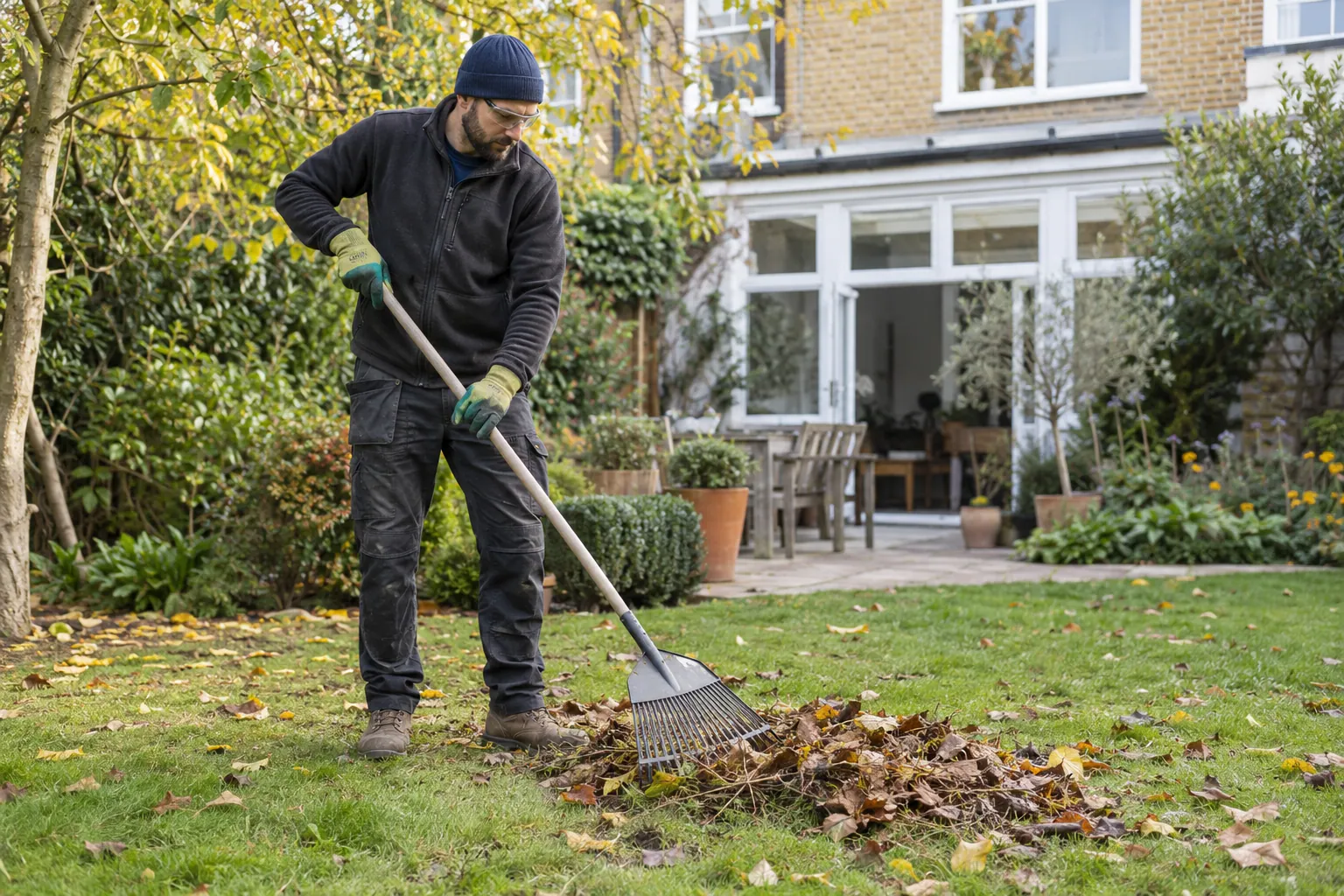
Movable objects, toys and hoses are kept clear of the intended pass before the mower starts. Known fittings and shallow covers remain identifiable around the working area. Loose leaves and debris can require an initial collection, particularly where grass has accumulated over time. This establishes an accessible surface for the current cut and keeps the route practical as the machine moves through the suitable grass.
The gardener identifies the boundary between turf and retained surrounding growth. Trailing plants stay outside the cut, and intentional longer areas have their own visible limits. Dog waste is removed before mowing so it is not spread through the grass and equipment. This preparation gives the lawn a controlled working area while preserving the planting and retained patches that form part of the intended garden.
A cut suited to the present grass
On established maintained turf, our mower follows controlled passes across the accessible area. The chosen height reflects the growth and current condition, including differences between shaded and more strongly growing open sections. The gardener works with the available supported surface and suitable turning space. This gives the customer an appropriate cut at that stage while maintaining a clear relationship to the lawn that is actually present.
The first reduction of neglected grass brings the taller stems into a manageable state. Flattened growth can conceal sparse patches and an uneven underlying surface, which become more apparent as the height comes down. Our assessment follows those revealed areas and identifies any additional work needed. The operation therefore leaves its cutting result clear, with existing weak turf distinguished from the growth removed during that initial pass.
Controlled finishing around fixed features
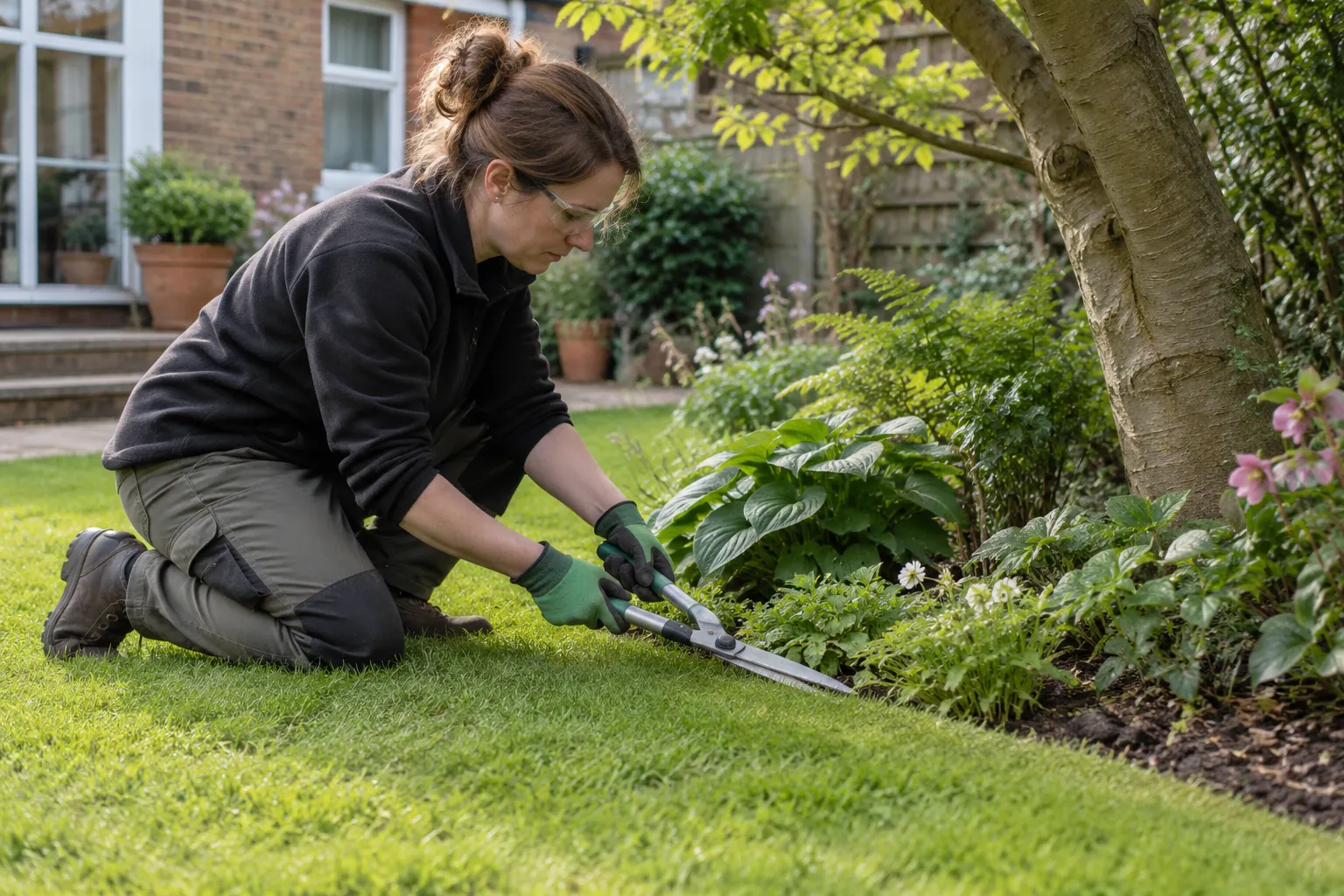
Grass beside posts, pots, trees and planted margins needs a suitable close finish beyond the broad mower passes. Our gardener selects appropriate equipment for that accessible space and the material beside it. Bark, delicate foliage and loose stone remain clear of the cutting movement. This completes the reachable lawn outline with the relevant features retained and the adjoining planted area kept distinct from the grass operation.
Available access informs which equipment can reach each section suitably. An open side route, a narrow indoor approach and stairs create different handling before cutting starts. The proposed operation identifies those limitations with the actual grass area, keeping the practical arrangements clear in advance. The team can then concentrate on the appropriate passes and finishing available through the property's established route.
Attention to the existing grass boundary
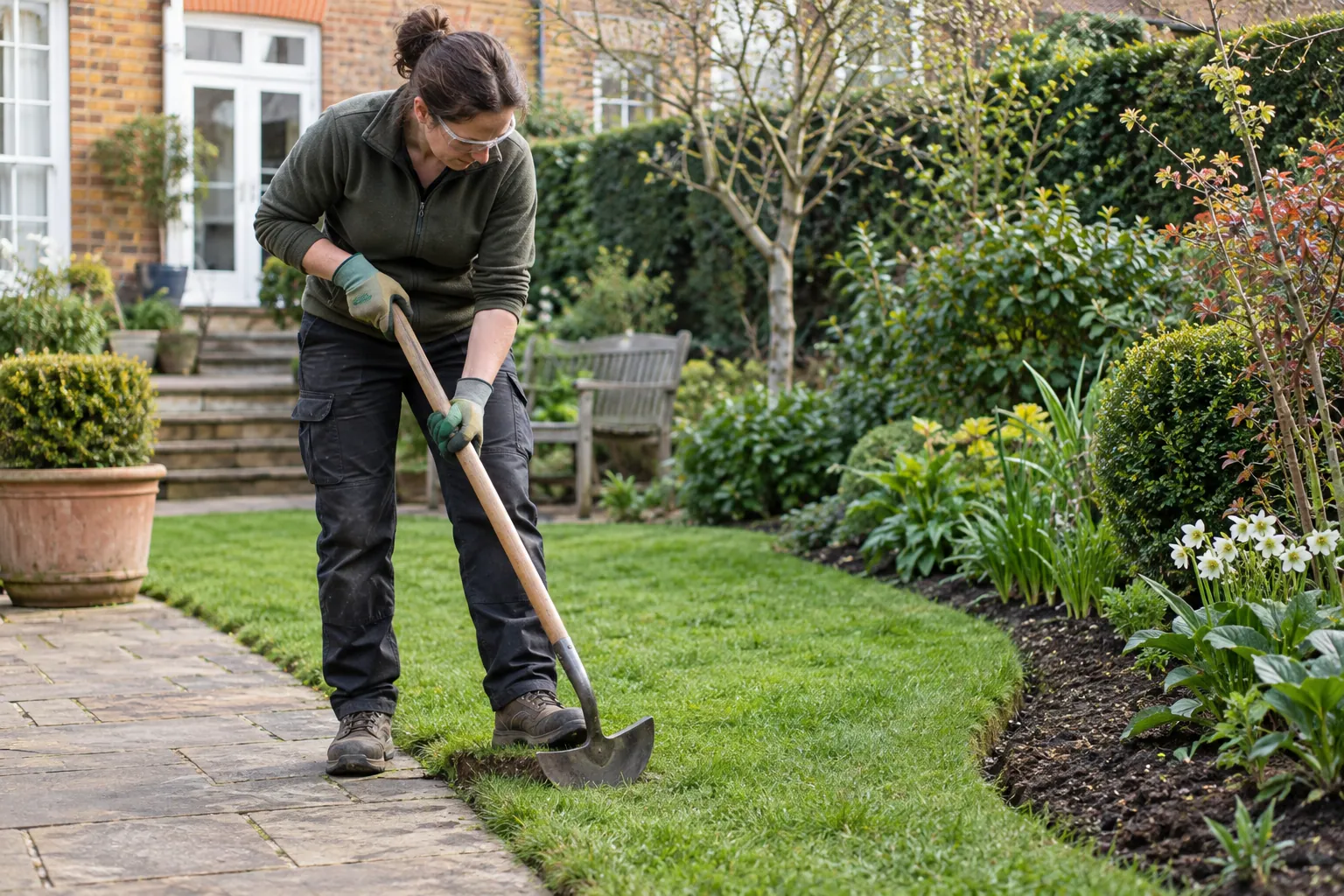
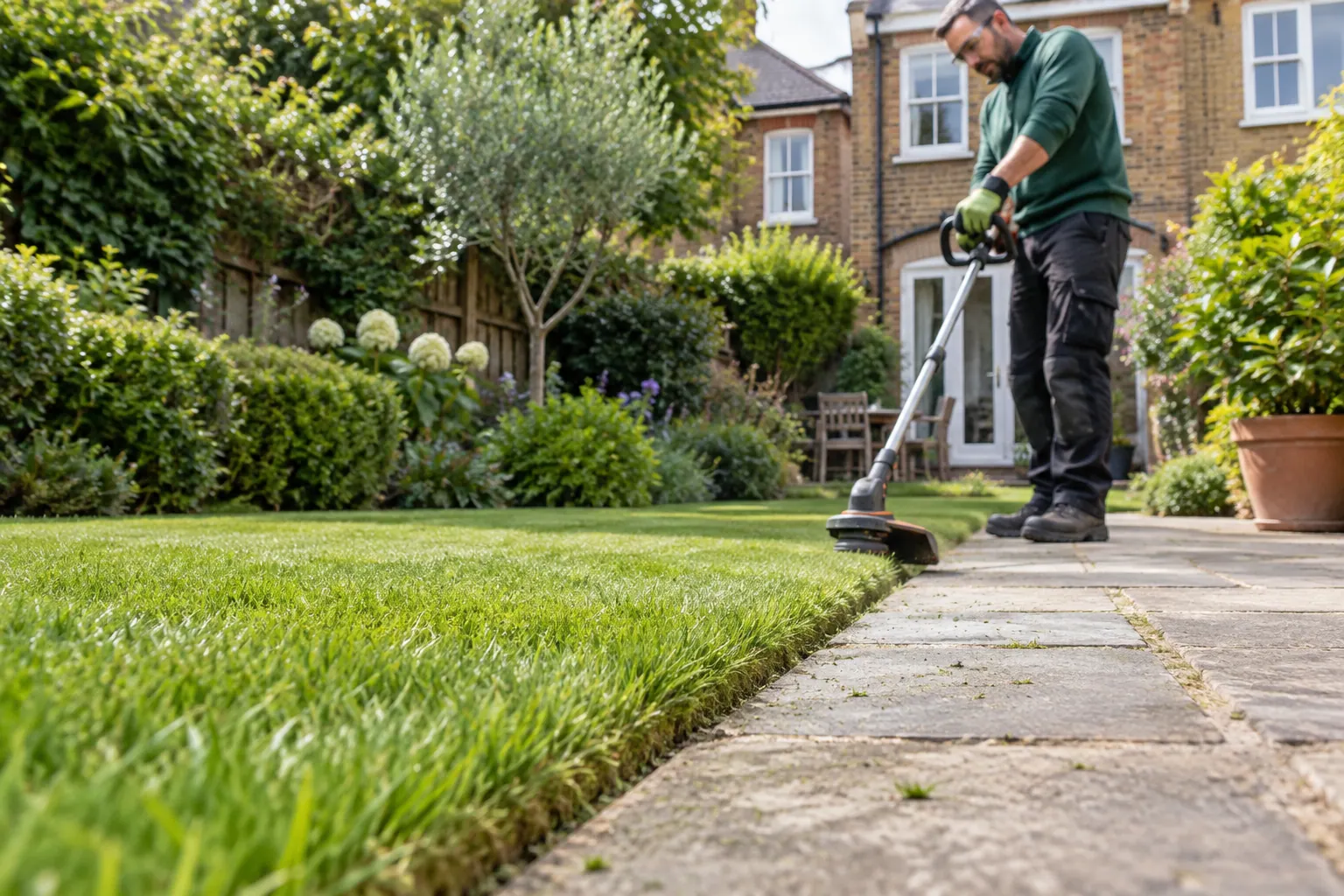
Our edge work follows the intended line where turf meets a path or bed. Suitable stray growth is removed to restore that visible separation, including reachable curves and smaller corners. This detail has its own controlled tool movement alongside the broad mowing. The finished edge relates to the retained grass and nearby planting, giving the existing lawn an identifiable outline within the current garden arrangement.
A lost edge needing re-establishment is assessed as a different task. It can require a defined line and specified turf or soil handling beyond ordinary trimming. A changed lawn shape, wider path or rebuilt border also has its own intended result. Our proposal distinguishes these requirements from care of the visible edge, keeping the extent of any additional ground work clear before it proceeds.
Clipping collection and adjoining surfaces
The collected material follows its specified destination, whether a suitable identified composting place or the included removal arrangement. Long dense growth produces a different load from a light routine cut. Steps and carrying distance are considered alongside that volume, linking the cutting to the handling needed afterwards. This keeps the load and receiving position clear while the gardener works through the available surface.
Loose cuttings on adjoining accessible paths are gathered while the worked area is finished. Paving washing and drainage work have separate purposes beyond that collection. Where older vegetation or mixed contents restrict the surrounding access, our garden clearance can address the defined accumulation before a practical mowing routine follows. The service sequence then reflects the actual space and leaves each completed operation identifiable.
Routine cutting and proposed recovery compared
| Lawn concern | Role of mowing | Separate issue |
|---|---|---|
| Growth has become tall | Reduce it to a manageable length | Thin areas hidden underneath |
| Grass spreads over a path | Tidy an existing edge | A new layout or damaged paving |
| The surface looks patchy | Keep existing grass controlled | Cause of the missing growth |
| Moss is visible | Maintain the grass around it | Conditions encouraging moss |
| Ground is uneven | Work within the assessed surface limits | Levelling and reconstruction |
Additional care selected for the lawn's needs
Our further lawn work can include appropriate feeding, aeration, overseeding and other defined recovery tasks. The selected operation follows the actual condition and intended improvement, with relevant materials and subsequent care identified in the proposal. These treatments have different purposes. The customer receives a clear account of the additional work alongside ordinary mowing, with each operation related to the need it is intended to address.
A repeatedly worn route, shaded thin grass or slow-draining area needs consideration of its actual setting before further treatment is chosen. Our routine cutting follows appropriate principles reflected in RHS mowing guidance, while the recovery proposal accounts for the property itself. This connects additional seed or other work to the conditions present and gives the intended improvement a defined practical basis beyond the visible bare patch alone.
Suitable work under changing weather
The gardener checks surface and growth before using the mower. Soft wet ground can be marked by movement, while dry-stressed grass can require a different cutting decision. Our service adjusts the available tasks to those conditions and the suitable work that can proceed. This keeps the maintained result connected to the actual lawn at that appointment and leaves unsuitable operations for their appropriate stage.
Shade and ordinary use can create different growing conditions within one garden. A play route and an ornamental section can therefore receive attention suited to their separate demands. Our assessment relates the finish to the grass present, with colour, density and response influenced by that setting. Any additional recovery follows a defined proposal, keeping the ordinary maintained cut and the intended improvement accurately distinguished.
Returning attention at a useful interval
Our mowing interval follows growth and the level of finish being maintained. Where grass regularly becomes tall between appointments, the next operation can involve more initial reduction and collection. Where growth slows, the amount requiring removal changes. The continuing arrangement reflects that pattern, giving each return a practical role in keeping the existing lawn manageable through its different stages and conditions.
Our garden maintenance can connect the suitable lawn cut with accessible bed work and appropriate pruning elsewhere. A change to the turf's size or position can be developed through garden design as a separately defined project. This keeps the quoted work clear, with continuing care for the current grass distinguished from the intended implementation of a new arrangement across the garden.
The workload around the mowing passes
The quotation considers area, growth height and the number of grass sections alongside the detailed finish. Confined corners, posts and collected material can add handling to the open pass. The approach and distance to the lawn also affect the equipment route. Our preparation brings those features together so the proposed time reflects the actual operation available at the property and its surrounding planting.
The price basis for routine work is shown below. Additional materials and selected recovery tasks remain identified within the complete quotation. Overall photographs, approximate dimensions and access information can establish a useful starting view of the request. Our preparation then relates the proposed cut or treatment to the grass and intended result, keeping any further assessment clear where a condition needs closer consideration.
PUBLISHED RATES FOR THE DEFINED WORK
Guide prices for lawn care and mowing
Our routine lawn-care rate follows the time required for the cut, detailed finish and actual access. Proposed recovery operations and their materials are separately identified in the complete quotation.
| Visit time | Price | Charging unit |
|---|---|---|
| First hour | £83 | One hour |
| Each subsequent hour | £65 | Additional hour |
Scroll the table sideways to see every column.
The complete quotation identifies the total and applicable VAT treatment before booking.
Questions about our lawn service
Does your mowing treat the cause of mushrooms?
Our ordinary cut deals with the grass and any specified visible material; it does not identify a fungus or remove the conditions beneath it. Unidentified fungi remain a separate concern, with children and animals kept away while appropriate advice is obtained. The proposed lawn operation keeps that distinction clear before any different response is considered.
Can your mowing preserve bulbs within the grass?
The bulb position and intended uncut area are identified while their growth needs to remain. Our suitable pass can then maintain an available route or shorter surrounding grass with that patch retained. This gives the customer a defined mowing result around the planting, keeping the particular leaves and growing area outside the immediate cut.
How does your edge work account for a robot-mower wire?
Known surface or buried wires are identified from the available route and installation information before edging or ground disturbance proceeds nearby. Their concealed position cannot be inferred from the grass alone. Our proposed method follows that information and the accessible boundary, keeping the appropriate finish clear where a fitting or wire affects the work.