

Perivale · Gravel maintenance with the covering kept in place
Gardeners Perivale
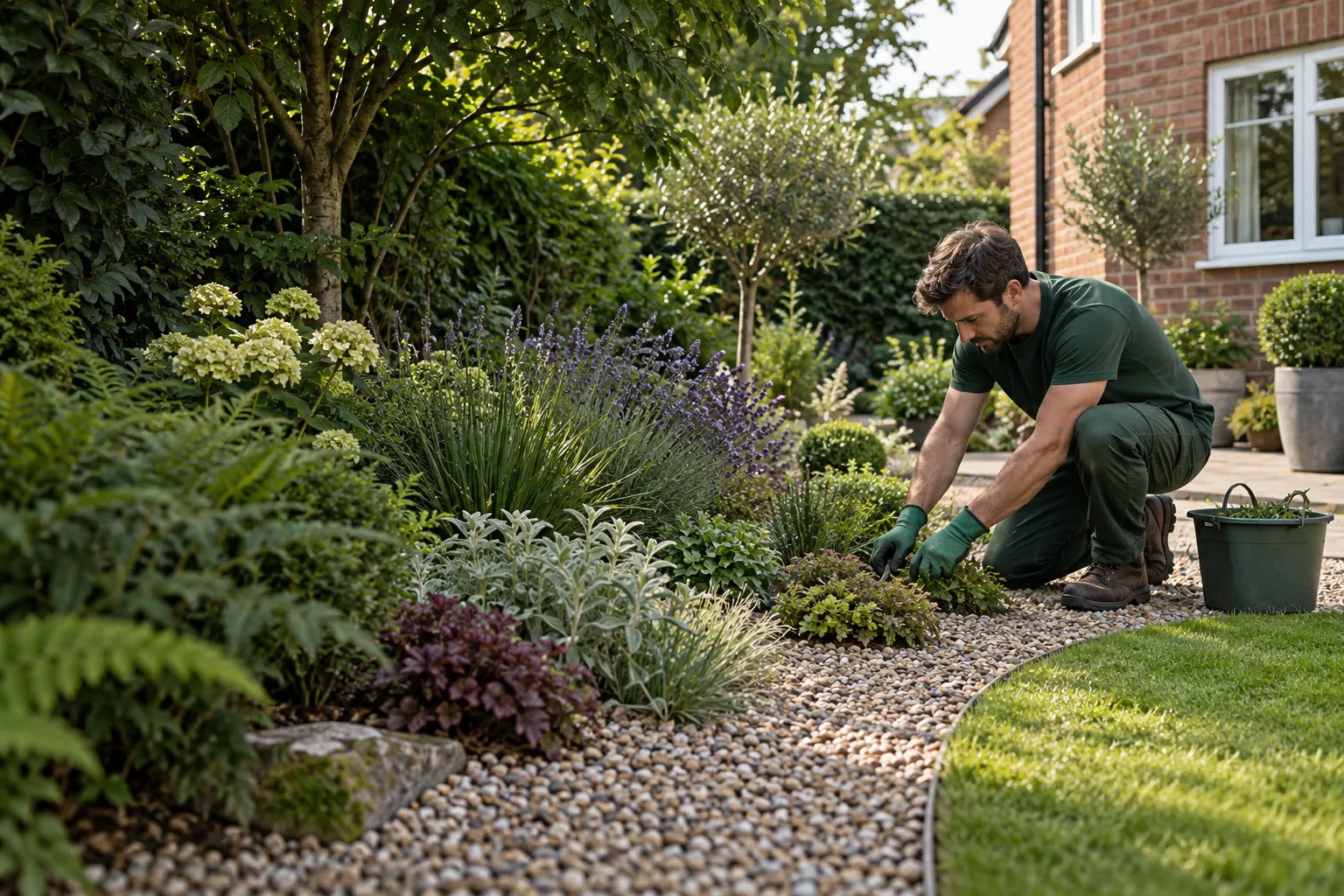
We collect leaves, remove accessible weeds and maintain the planting within loose gravel areas. The work separates organic debris from aggregate, follows the roots of individual unwanted plants and keeps the boundary ready for adjoining lawn care. Hedge collection is organised above the stones so fresh clippings remain manageable as the surrounding garden is maintained.
- How do you locate weeds in an existing gravel surface? Our gardeners trace the rooting point, distinguishing accumulated material above fabric from growth at openings and margins before selecting removal.
- How do you collect leaves without removing the gravel? We work in controlled patches, separate the gathered material and check the load for stones that belong on the surface.
Selective care above an existing gravel construction
How are weeds above a membrane handled?
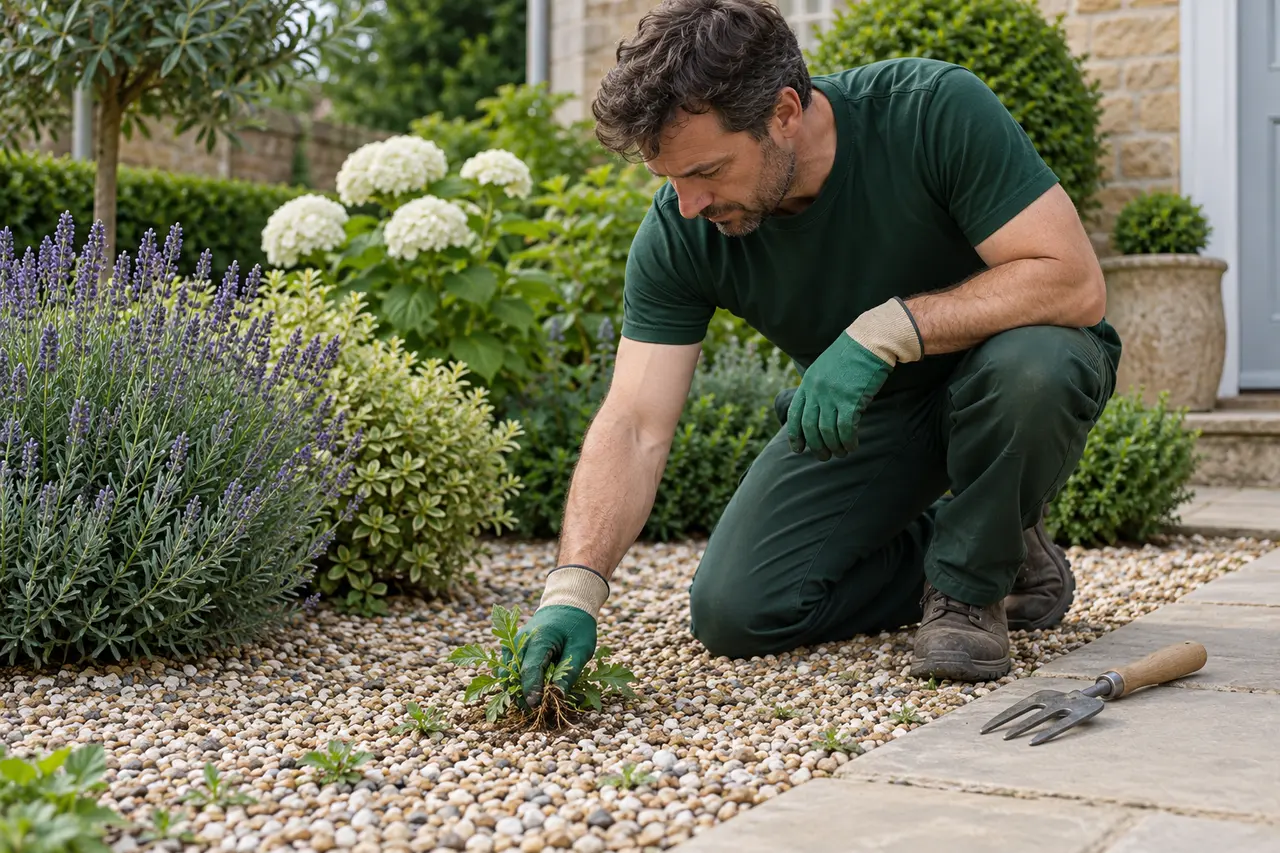
We locate the unwanted plant’s roots before loosening it. Seed and organic deposits can support growth in gravel above existing fabric, while other plants enter through openings or margins. The method follows that actual rooting position. This lets maintenance address accessible weeds while keeping the covering and underlying arrangement understood, without treating a visible seedling as proof that the whole membrane needs replacement.
What can your gravel-maintenance visit include?
Our surface tidy can cover accessible weeds and loose garden material while preserving the aggregate and intended plants. Controlled hand work follows the loose covering, with collection suited to the stones beneath the debris. Surface rebuilding, membrane replacement and level changes remain separately specified operations. The visit is therefore directed to maintenance of the existing area, with any larger requirement identified for its own proposal.
The unwanted plant within the stones
Rooting points located through small working sections
The gardener begins with an accessible patch and identifies whether a weed roots in collected organic material, beside a wanted plant or through an opening below. That position determines how it can be loosened. Work progresses with the visible connections understood, keeping the existing fabric and neighbouring roots within the selection. The operation then addresses the unwanted plant itself instead of opening the entire gravel layer to find every weed at once.
Small weeds are eased from their rooting points, with displaced stones kept beside the same working opening. Known fabric, shallow fittings and established roots are accounted for before tools enter the covering. A larger rooted plant requiring more than light hand work is identified separately. This maintains the selected patch with its useful material available to return, and keeps the extent of the operation clear as different root sizes are encountered.
Our garden-maintenance service includes this close surface weeding within the task list. Collected organic matter and incoming seed can create later growth, so recurring attention can address new seedlings while they are accessible. The result is maintained gravel with unwanted plants worked out and loose material gathered. It is not presented as a permanent removal of every possible source of growth from the garden.
- We locate unwanted roots before lifting through aggregate.
- Displaced stones stay beside their original working patch.
- Deliberate planting openings remain available to their plants.
- Organic debris is collected separately from useful gravel.
- Any surface rebuilding receives its own defined proposal.
Leaf and debris collection
Organic material separated from the loose covering
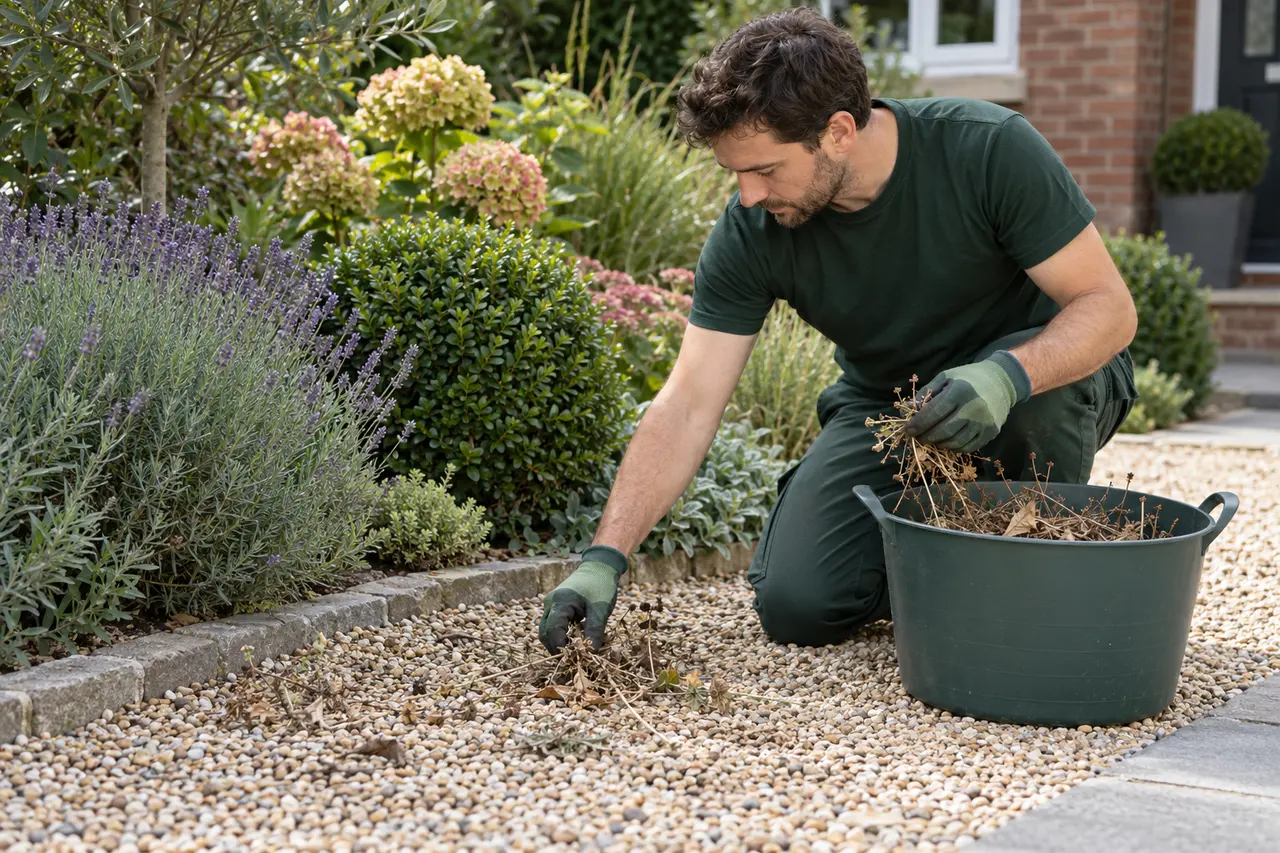
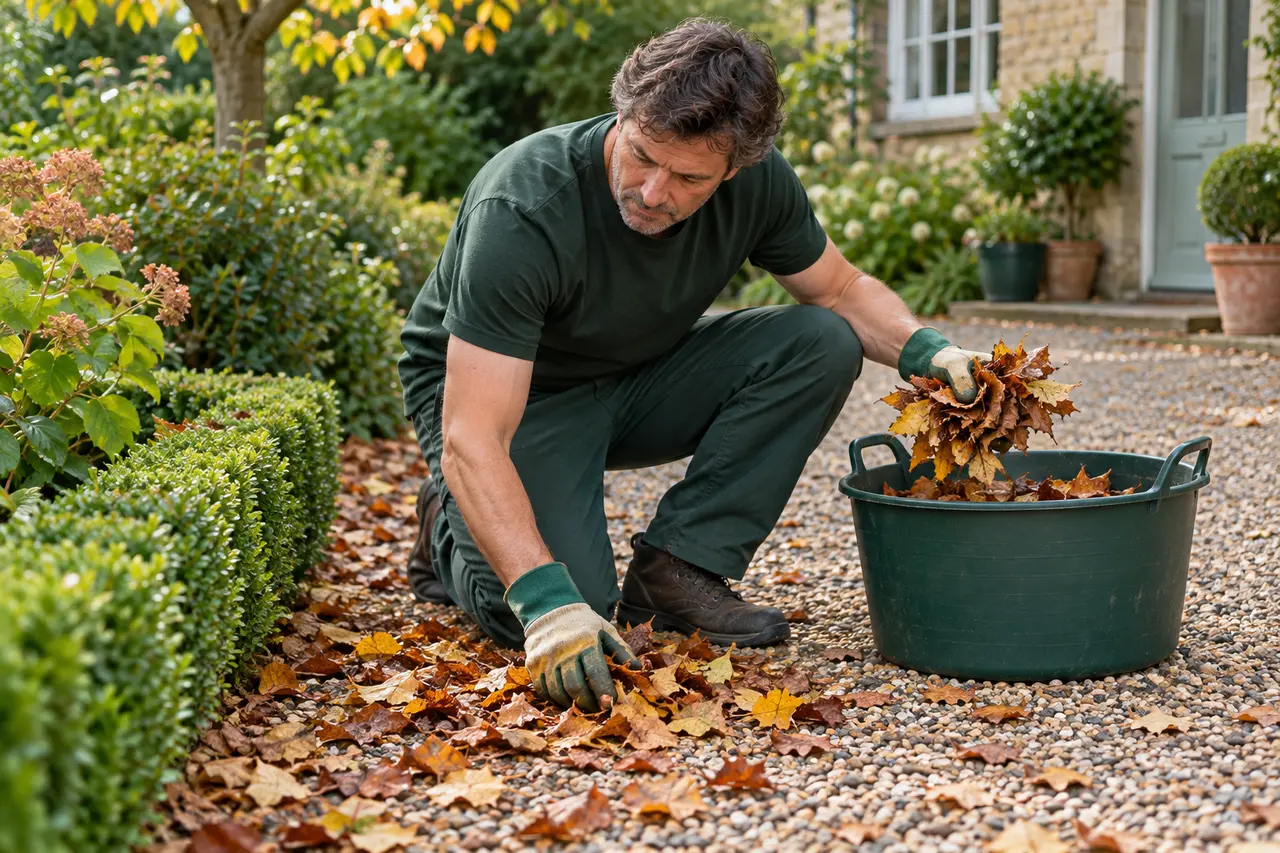
Loose leaves are gathered with a light controlled action, with hand finishing around plants. The gardener works through manageable patches where pieces have settled between stones. This allows the larger organic fragments to be separated while the aggregate stays in place. Collection follows the material accessible within that layer, with the completed patch checked before another area is worked so fresh mixing does not undo the separation.
An older deposit may include fine decomposed material as well as whole leaves. We consider how much can be collected while preserving the existing surface construction. Deeply mixed or contaminated sections can require a separately planned renovation, which is distinguished from ordinary debris lifting. The maintenance therefore retains the useful covering instead of gradually excavating and disposing of stones to obtain a cleaner-looking surface.
Where a garden clean-up also covers surrounding vegetation, its fresh cuttings are held apart from the gravel collection. The garden-waste guide keeps green outgoing material distinct from aggregate remaining at the property. This separation reduces additional sorting on the stones and gives the combined visit an orderly collection route. The gravel surface is not used as the temporary landing position for every load produced by nearby cutting.
Plants within the mineral surface
The growing base kept visible during surface attention
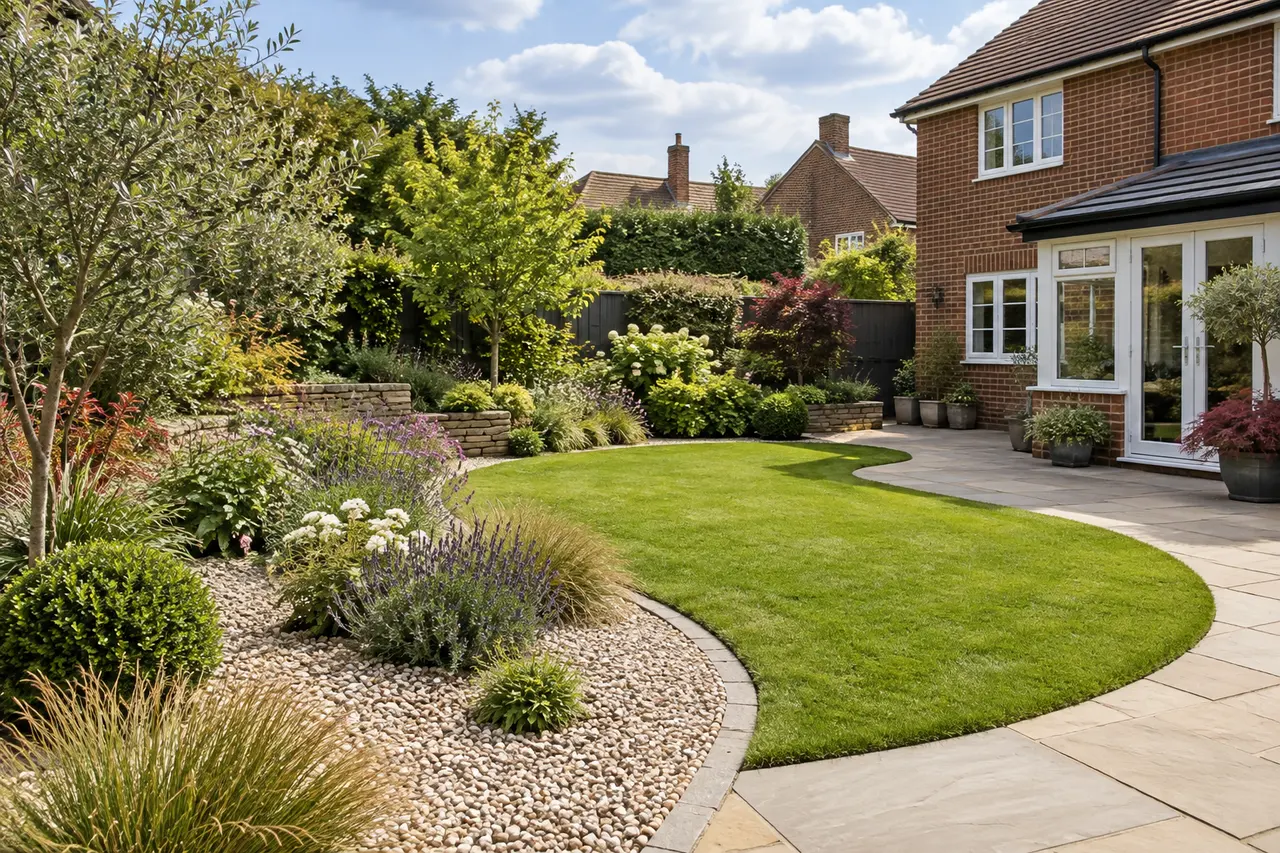
We identify deliberate planting openings, wanted self-sown growth and unwanted seedlings before working around their bases. Low foliage spreading across the gravel may belong to the intended arrangement. That plant remains part of the bed even where it extends beyond its original opening. This gives the gardener a clear selection within the covering, preserving useful growth while removing the actual weeds beside it.
Stones displaced during hand work are returned with the established plant’s base visible. Aggregate is not mounded against stems to hide the mark left by weed removal. Where the covering has shifted repeatedly, we identify that change before replenishment is considered. This preserves an appropriate level around the plant and gives the surface issue its own visible location, instead of concealing it beneath each new layer of stone.
For commissioned planting, the receiving opening and preparation follow the particular plant and any existing sheet beneath the gravel. The proposed work identifies new material and alterations to the covering before installation. A root ball needs an appropriate growing position, not merely a slit wide enough to push it through. This keeps planting a defined operation within the mineral surface and leaves the surrounding construction understood.
The gravel and lawn boundary
Loose stones gathered before grass cutting
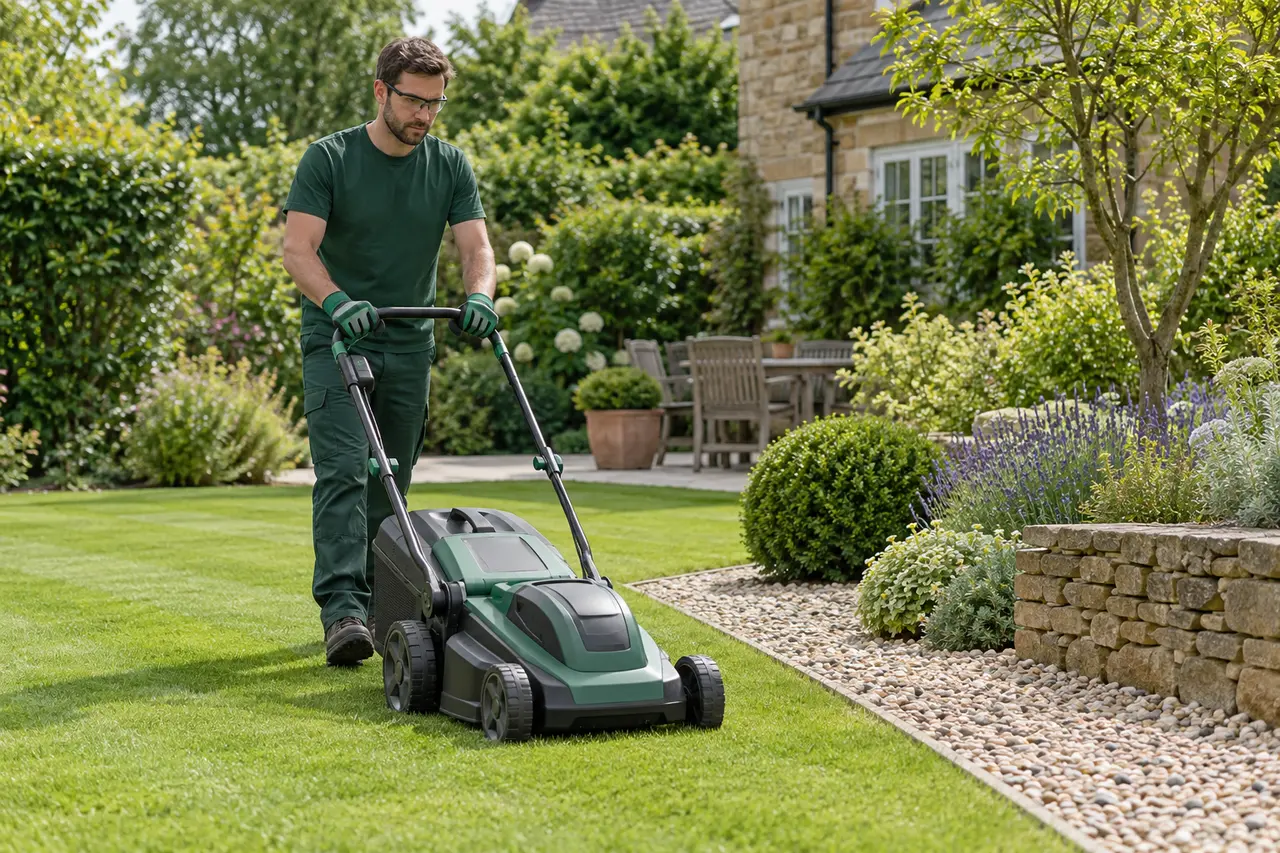
Our preparation includes visible aggregate that has moved onto adjoining grass through foot traffic, dragged objects or earlier raking. Those stones are collected from the cutting route before the mower approaches. The machine is not used to chase them back towards the gravel. This gives the lawn task a clear working surface while preserving the material belonging to the adjacent covering.
The existing edge distinguishes the gravel tidy from the grass finish. Concealed edging and changes of level are identified before close cutting. A limited area can receive another finishing method where the proposed machine would disturb nearby stones or plants. The route therefore follows the actual junction, completing the grass without scattering loose aggregate across the bed opposite or progressively changing the surface boundary.
Our lawn care covers the accessible turf with the gravel margin accounted for during preparation. Recurrent spilling associated with an edge or covering level is identified separately for consideration. Mowing improves the grass finish, while any edge rebuilding remains a different task. This keeps the maintained lawn and the condition of its neighbouring construction distinguishable within the completed visit.
Hedge cuttings above gravel
Collection coverings positioned around the existing planting
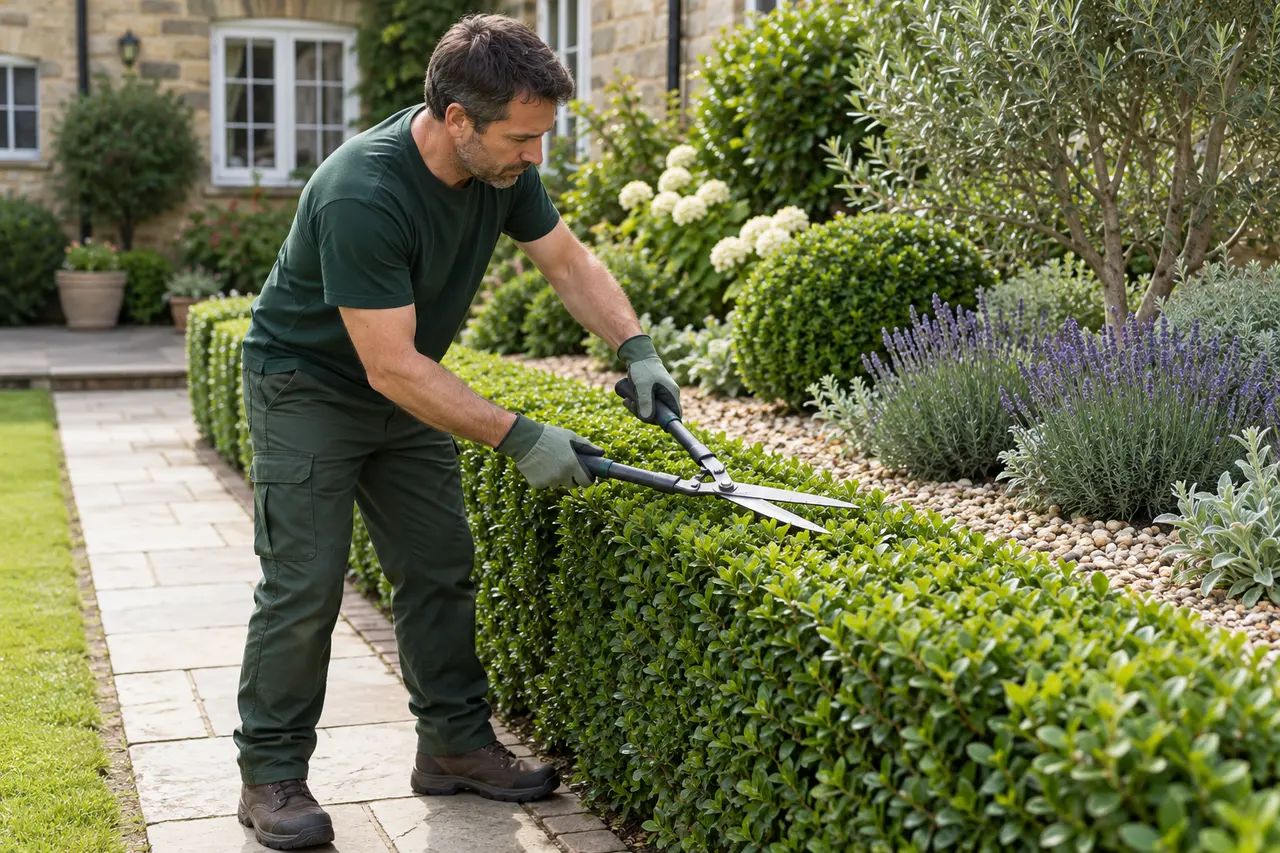
Where a reachable hedge borders gravel, we can position a temporary collection covering to receive fresh clippings before they enter the stones. The placement works around plants and leaves stable room for cutting. Its route and edges are considered so it does not become a loose obstacle underfoot. The setup supports both the hedge operation and the surface being kept beneath it.
Cut material is gathered in manageable portions, with the covering lifted to contain fine fragments as the load moves. Pieces that missed it are picked from the accessible surface as each section finishes. This reduces the later sorting required among the stones. The collection method remains useful through withdrawal, keeping material caught during cutting from tipping back onto the gravel at the end.
The hedge cut follows its species, condition and accessible faces. Nest checks precede the operation, with disturbing work postponed where nests are being built or used. The covering supports collection from that maintenance task; the amount removed still follows the plant. The result leaves the upper boundary attended to and its fresh material separate from the lower surface, ready for continued care of both.
Regular attention to fresh deposits
Collection follows the places receiving new organic material
During recurring maintenance, we attend to the actual deposits forming at different points. A corner beneath deciduous growth can need leaf collection while another gravel section remains clear. Fresh loose material is lifted where practical before it becomes a more extensive decomposed layer. The operation follows those particular accumulations, keeping the surface readable without subjecting every stone-covered area to the same unnecessary raking pass.
Our recurring collection and weeding identifies new seedlings against the maintained surface. Unwanted plants are worked out carefully, while selected self-sown growth stays recorded for later attention. This carries the planting decisions between visits and lets fresh accessible roots be handled before they occupy a more substantial patch. The work therefore follows what has appeared in the actual covering since its previous maintenance.
Where collection repeatedly removes appreciable gravel, we review the method and surface condition. Replenishment, handling lifted stone and construction changes have their own proposals. Routine care preserves the existing covering while gathering new organic deposits and unwanted growth. The finished surface remains available for the next maintenance stage, with any larger requirement identified before continued work changes the intended level or quantity of aggregate.
Related exterior services with defined materials
Design considers the route’s everyday users
Our garden-design proposal distinguishes decorative gravel from a route intended for wheels or particular walking aids. Use and movement inform the complete surface choice alongside appearance, including the actual aggregate and construction. A material sample can support the discussion without representing the firmness of a fully installed route on its own. This gives the design a practical access purpose as well as the finish seen across the garden.
Stump work identifies the ground area actually treated
Our tree-surgery assessment distinguishes the specified stump area from the wider lateral root network. Grinding does not necessarily excavate every root extending through the garden. The intended subsequent use of the ground informs the proposal, including later digging beyond the treated position. This gives the operation an identified result and area without implying that removal of the visible stump has emptied the surrounding soil of all tree roots.
Surface washing identifies the actual aggregate construction
Before a jet-washing operation, the surface is identified as loose gravel, resin-bound material or another actual finish. Product and condition inform the method, with available care guidance followed for the construction. A stony appearance alone does not establish an appropriate pressure-cleaning process. The proposal therefore relates to the surface holding the aggregate, keeping loose stones and a bound finish distinguishable in the cleaning work.
Gutter clearing follows the intended outlet
For a gutter-cleaning assessment, the actual outlet and deposit are identified within the run. The closed end remains a designed component. Clearing a route through the channel differs from removing an end cap or creating another opening wherever water appears low. This keeps the operation directed to the system’s intended arrangement, with the deposit and its path to the outlet considered together.
Private seasonal collection kept distinct from council arrangements
Our booked Christmas-tree collection identifies the accepted tree, date and receiving position for that service. A council recycling calendar describes another arrangement and does not create a private collection. The proposal therefore follows the actual removal being commissioned here, with the material accessible at its agreed location. Putting a tree outside is kept separate from establishing who will take it and under which collection arrangement.
Gardening time for separation within the surface
Our quotation distinguishes light leaf lifting from more substantial rooted growth, reflecting the hand work each requires. The general gardening rates below guide time for surface maintenance. Aggregate lifting, membrane replacement and edge reconstruction remain separately specified operations where they are required.
| Gardening time | Guide charge |
|---|---|
| First hour | £83 |
| Each subsequent hour | £65 |
GBP guide prices. The complete quotation identifies booked work, material handling, VAT treatment and any applicable access, parking or congestion charges. This keeps the ordinary gravel tidy and larger construction-related changes clear within the full proposal.
Maintaining an existing loose-gravel area
Should a gravel area be raked more deeply to reach every weed?
Our weed work locates roots and uses targeted handling appropriate to the surface. The method accounts for aggregate, fabric and planting beneath it. Where a deposit requires lifting or renovation, that larger operation receives its own description. An ordinary tidy therefore maintains the existing covering without increasing raking force until the stones or underlying arrangement move with the unwanted plants.
Can fresh gravel simply be poured over an accumulated leaf layer?
Before additional gravel is proposed, we consider the existing level, plant bases and accumulated organic material. Accessible unwanted debris is collected and the actual need for replenishment established. The new material is not used simply to conceal a leaf layer. This preserves the intended covering level and keeps the cause of recurring build-up visible for the maintenance method selected.
Can leaves gathered from gravel go straight into my leaf-mould pile?
Leaves intended for an agreed on-site leaf-mould arrangement are checked for accidentally gathered stones and unrelated rubbish. Aggregate is separated and returned to the appropriate surface where practical. The load is sorted before entering the leaf pile. This gives the retained organic material its intended use while preserving gravel that belongs to the path or bed from which collection took place.
Is a garden vacuum suitable for collecting material from every gravel surface?
Machine collection follows the equipment’s instructions and the actual loose surface. Where aggregate could enter a vacuum, we select another controlled method such as hand gathering. The tidy addresses leaves while leaving stones within their covering, so aggregate loss is not accepted as a routine consequence. This keeps both equipment use and the completed surface connected to the material being collected.
The covering preserved through continuing garden care
Our gardening services leave wanted stones and planting in their intended positions while collected organic material follows its outgoing arrangement. The worked patches remain readable for later small weeds and leaf deposits. Larger surface requirements retain their own proposal, preserving the distinction between continuing care of the existing covering and a separately planned change to its construction.