

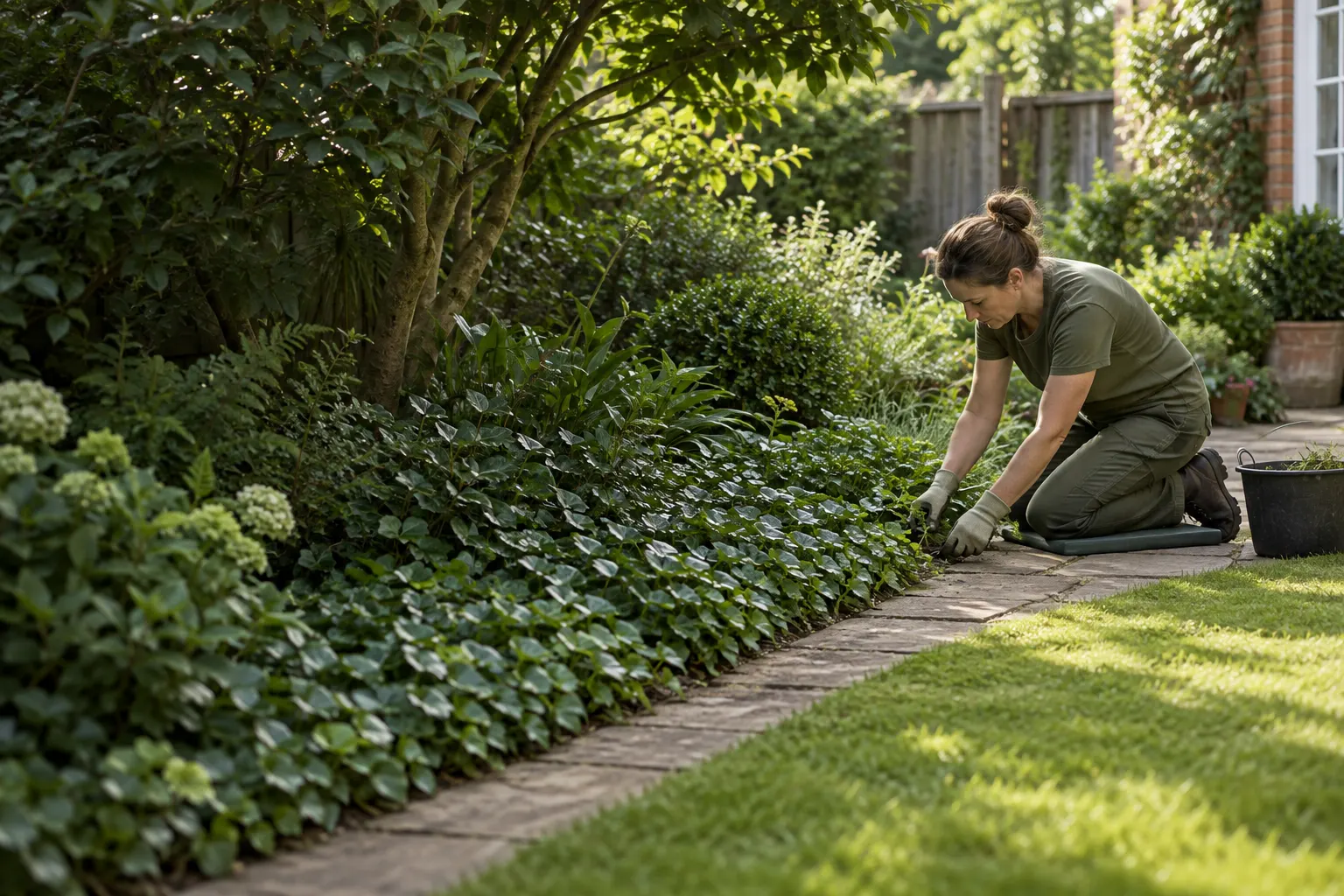
Osterley · Low planting maintained as a living part of the bed
Gardeners Osterley
We maintain existing ground-cover through selective weeding, controlled edge work and collection within its foliage. Crossing stems are traced and rooted extensions handled individually. Mowing and hedge attention are coordinated beside the lower planted layer, preserving the useful carpet within its intended area. The completed bed remains a living part of the garden with readable edges and access for continuing care.
- How do your gardeners contain spreading ground-cover? We trace crossing stems and rooted extensions, separating the edge work from the connected planting that remains within the bed.
- How is collection carried out within low planting? Loose pieces are eased clear with nearby living stems supported, then gathered without lifting the whole planted tangle together.
Selective care within an established planted carpet
How is ground-cover controlled at the edge of its bed?
We identify its intended limit and trace growth crossing that boundary. A stem on the path and an extension rooted among neighbouring plants receive different handling. The connected cover staying in the bed is identified before a rooted section is separated. This keeps containment focused on the edge without pulling out the wanted carpet behind it as part of one uncontrolled removal.
What does a maintained ground-cover bed look like?
Where the planting is staying, exposed soil is not our measure of completion. The living cover remains across much of the bed, with its edge attended to and accessible weeds and debris collected. Natural openings can remain. Removing a defined patch of the carpet is a different operation, not the necessary finish of routine care around low planting intended to keep occupying the ground.
Identifying the planted layer
Wanted cover distinguished from other growth among it
Our gardeners identify spreading perennials, unrelated seedlings and shrub shoots sharing the low layer before selection. The intended ground-cover remains clear as weeds are worked out among it. This provides an accessible starting point at the bed edge, keeping its different occupants understandable. The surface can then receive close care while the useful planting retains its place and the outgoing material remains individually recognisable.
Working from the edge lets the gardener follow stems through the carpet. Small unwanted plants can be loosened individually while surrounding growth is supported, without repeatedly dragging it apart. Where roots are firmly entangled, that patch receives a considered next step instead of a stronger pull through both plants. The area being recovered remains specific, with the main planted layer kept distinguishable from the unwanted growth occupying it.
Our Garden maintenance identifies whether the cover is staying throughout, being reduced at its boundary or removed from a particular patch. Those are different finishes even when one species occupies them all. The stated purpose gives the team a defined operation alongside the rest of the visit. It avoids interpreting a general request for tidiness as authority to make every low-growing bed bare.
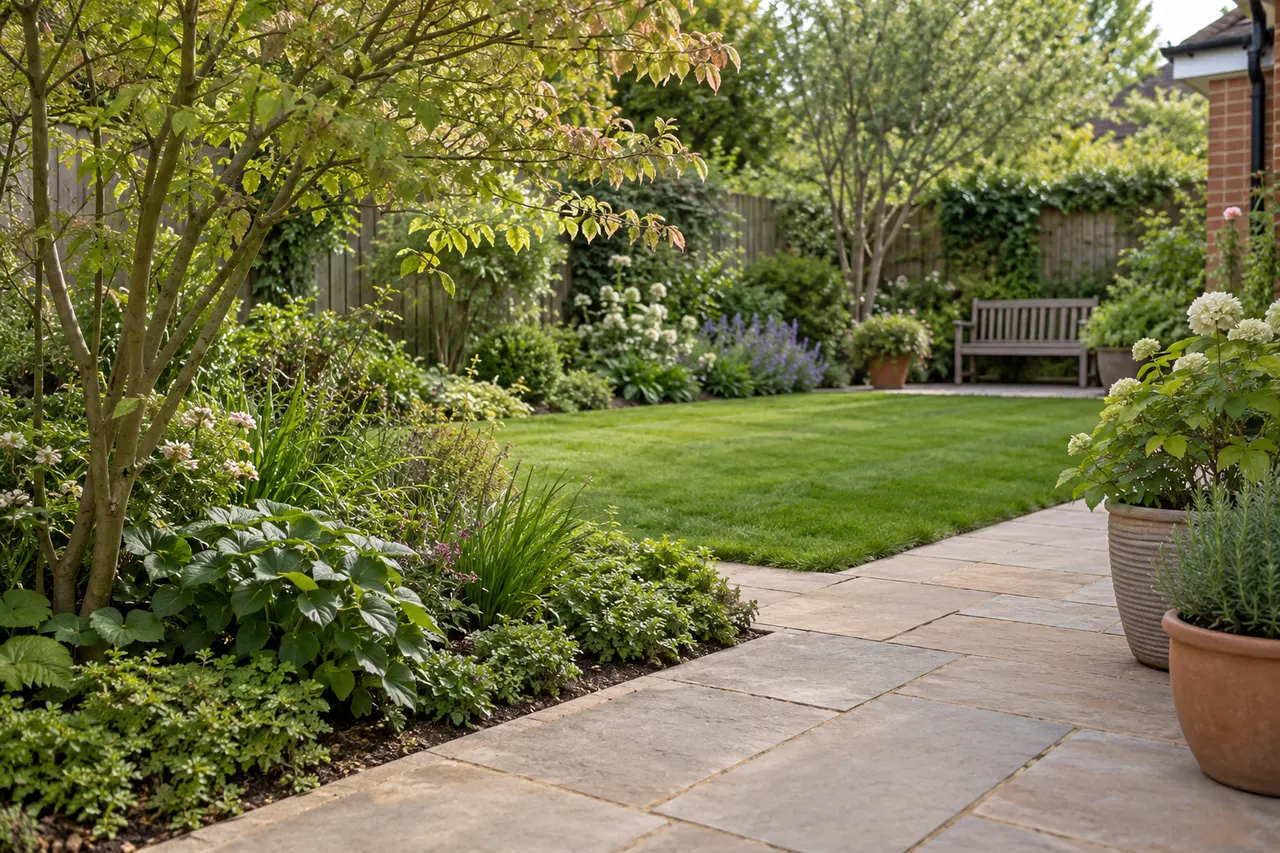
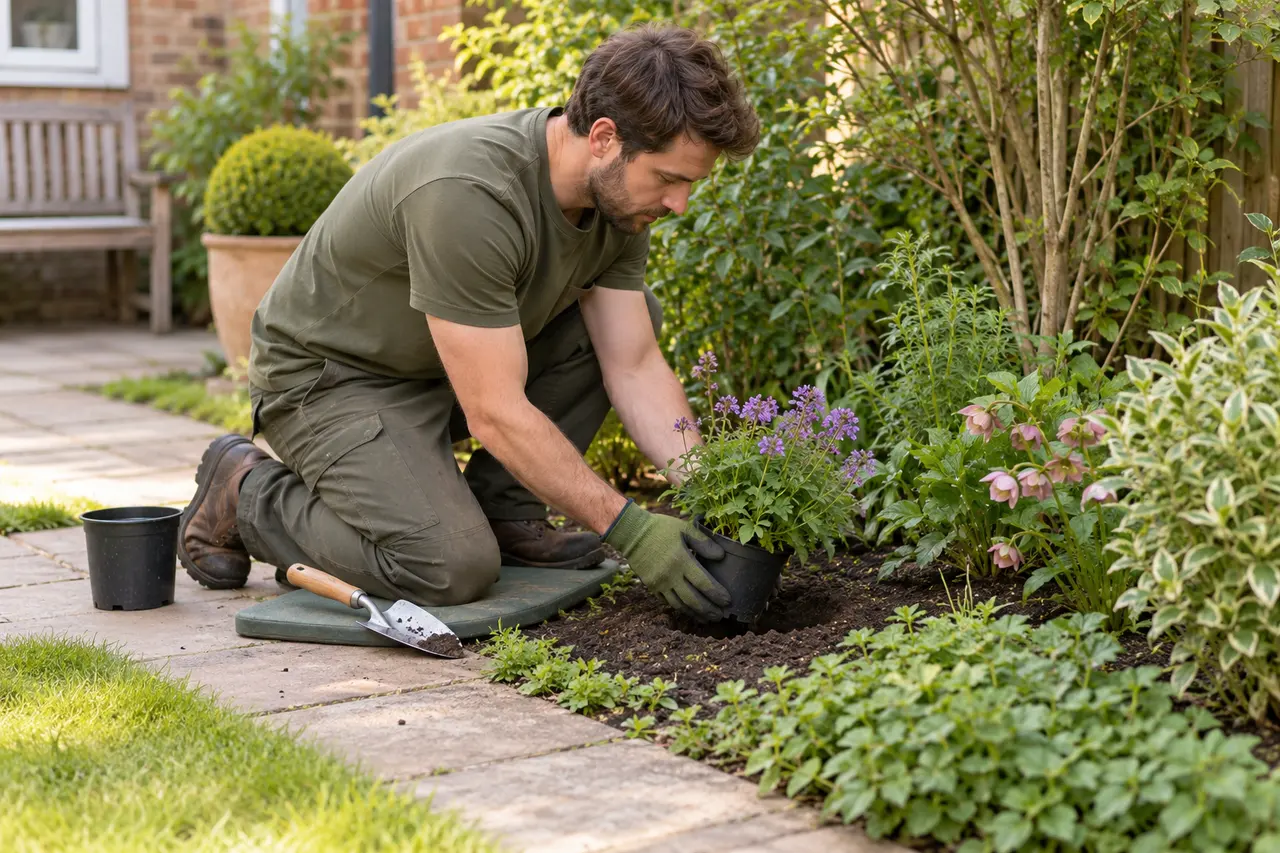
Containing the planted edge
Rooted extensions separated from surface overhang
We trace where spreading growth starts and ends before selecting the edge operation. A stem lying over paving and a rooted section among smaller neighbours present different work. Rooted extensions are loosened and separated according to the plant while the main cover stays identifiable beneath its shrubs. This gives the margin a defined finish and preserves the intended connected carpet behind the boundary.
The method follows the growth habit, including dense mats, longer stems or underground extensions. Our gardener works in manageable portions and checks attachments before separation. The useful section under the shrubs stays supported and identifiable while outside growth is removed. This provides a controlled edge through the actual plant material, with the depth of any operation kept within the portion selected for attention.
Where a real gap is to be planted, we assess the surrounding expansion and the receiving space before adding another pot. Growth and establishment requirements in the RHS ground-cover guide inform the selection and preparation. The supply and planting task is identified for that position. This gives the addition its own room among the existing cover, including access for its next care as the neighbouring plants continue to spread.
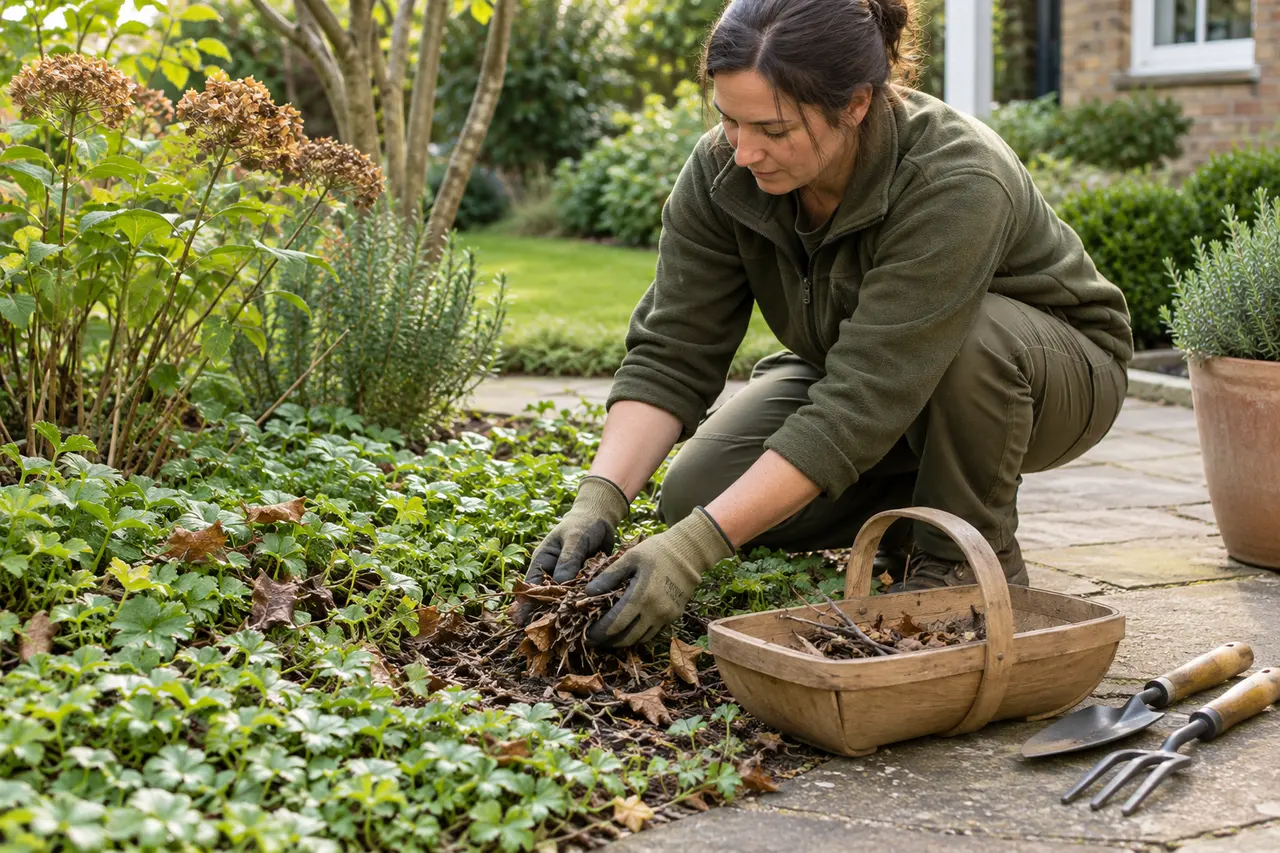
Collecting the material caught within foliage
Loose pieces lifted while the planting stays seated
We gather accessible twigs and windblown material in controlled portions, supporting nearby shoots where they are caught. Each loose length is eased free with its connections visible. Collection proceeds through the lower foliage while the planted layer stays seated. This leaves the bed clear of the actual debris without drawing attached living stems into the load merely because several pieces occupy the same small space.
Deeper accumulations are worked through with unrelated material separated as it appears. Packaging and broken objects are not mixed with soft vegetation simply because both were caught in one planted space. Where the task has become substantial recovery, our garden clean-up identifies that larger operation. The load is assessed as material is exposed, recognising that a small bed can conceal considerable debris compacted among its foliage.
The plants staying in place are identified alongside the outgoing objects. Accessible wanted stems are freed from a discarded pile before it is moved, keeping their connection to the bed clear. The garden-waste guide separates vegetation from unrelated items through collection. The recovered section then provides a readable growing surface for the next hand task, with the main carpet preserved and the removed load directed to its identified destination.
- We trace crossing growth before separating its rooted portion.
- Nearby living stems are supported while caught twigs are lifted.
- Unrelated litter stays separate from useful planting material.
- The junction between lawn and planted cover is identified.
- Hedge fragments are gathered from the lower planted layer.
The join between grass and ground-cover
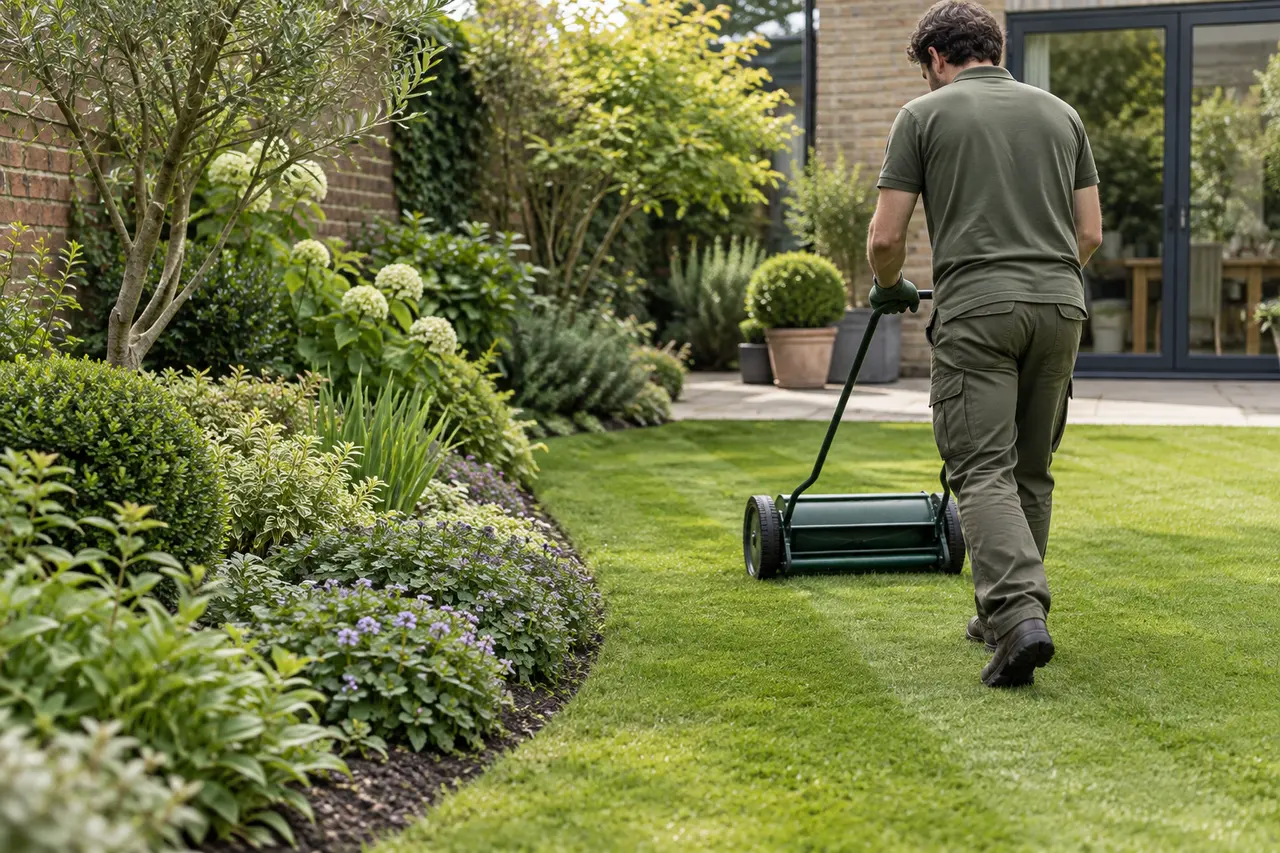
The mower follows turf outside the planted edge
Our gardeners identify the existing bed line where foliage leans over the lawn. That growth is not assumed to be grass for the mower. Accessible trailing stems are moved clear without pulling them from their roots, leaving the machine a defined route. This maintains the visible edge without gradually reducing the planted area on every pass simply to remove all overhanging leaves with the same cutting deck.
Runners rooted into turf receive a separate hand operation where their removal is commissioned. Their connection and intended boundary are identified before work begins. Mowing may shorten the leaves while leaving the rooted extension, so it is not presented as completing that containment task. Conversely, the machine does not work farther into the bed to catch every leaf at the cost of the plants that should remain.
Our lawn care follows the grass and its contact with the planted edge. Fragments landing over low foliage are gathered as part of finishing, leaving the turf and bed recognisable on either side. Their different methods are completed together at the junction. The next visit can then follow the established boundary, with the plant selection intact and the lawn available for its own continuing cut.
Hedge trimming over a lower planted layer
Fresh clippings collected before they settle deep into the bed
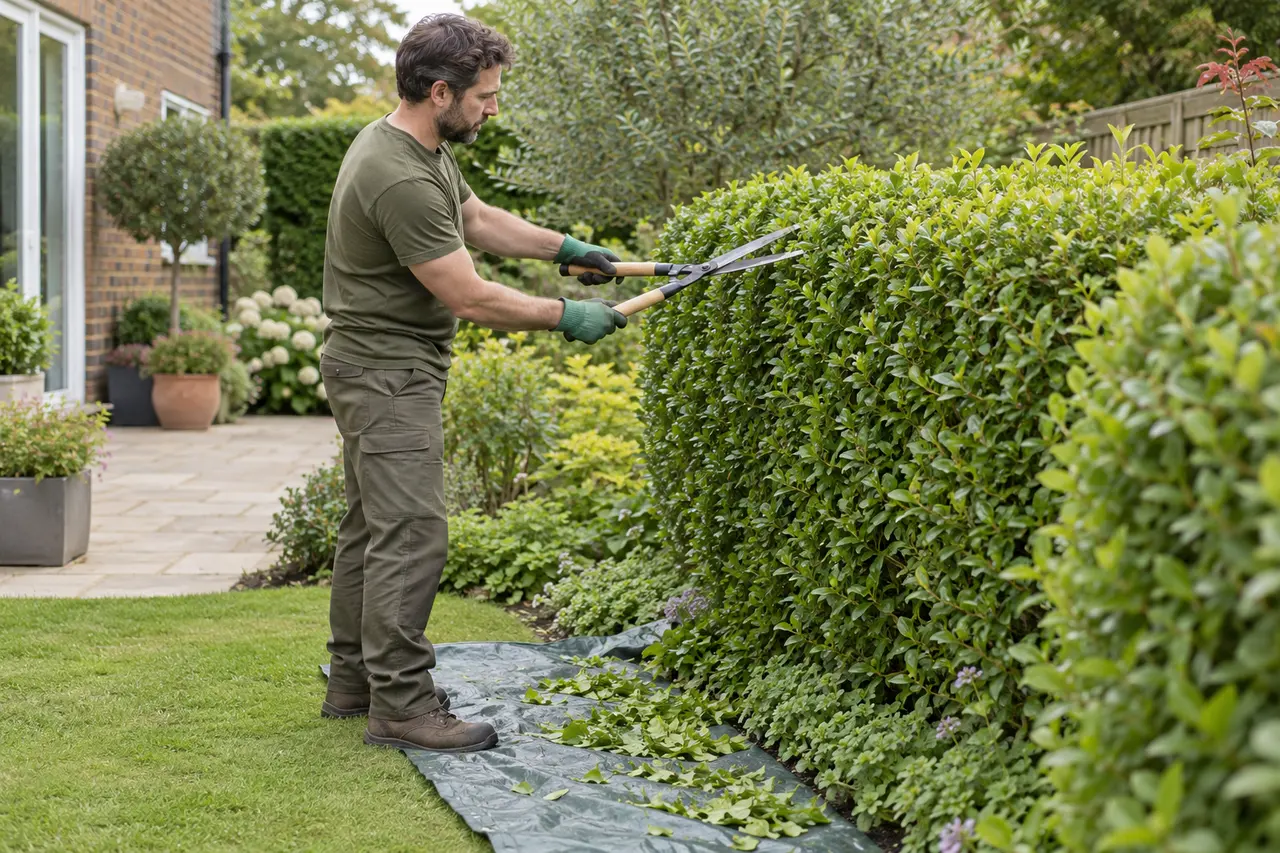
Before an accessible hedge trim, we arrange the collection position for the lower planting. A temporary surface is used only where plants remain clear and load withdrawal is practical. Firm space stays available for controlled cutting. This gives fresh fragments a defined receiving place throughout the operation, allowing the upper boundary to be worked while preserving the useful cover beneath it.
Long clippings caught among shoots are lifted separately after cutting. A narrow planted strip can require slower hand collection than an open path, because a rake drawn through the whole bed could remove useful stems with the debris. That handling is part of the actual hedge-and-bed task. It is not assumed that every fragment can be swept from hard ground once the upper outline is finished.
The hedge receives a cut for its species and condition, with affected shrubs and hedges checked for nests being built or used and disturbing work postponed. We identify the upper outline and lower-plant care separately. Cutting and collection then leave both layers understandable: the screen maintains its shape while the ground-cover keeps its planted role and remains accessible for close attention around its base.
Seasonal attention within the living cover
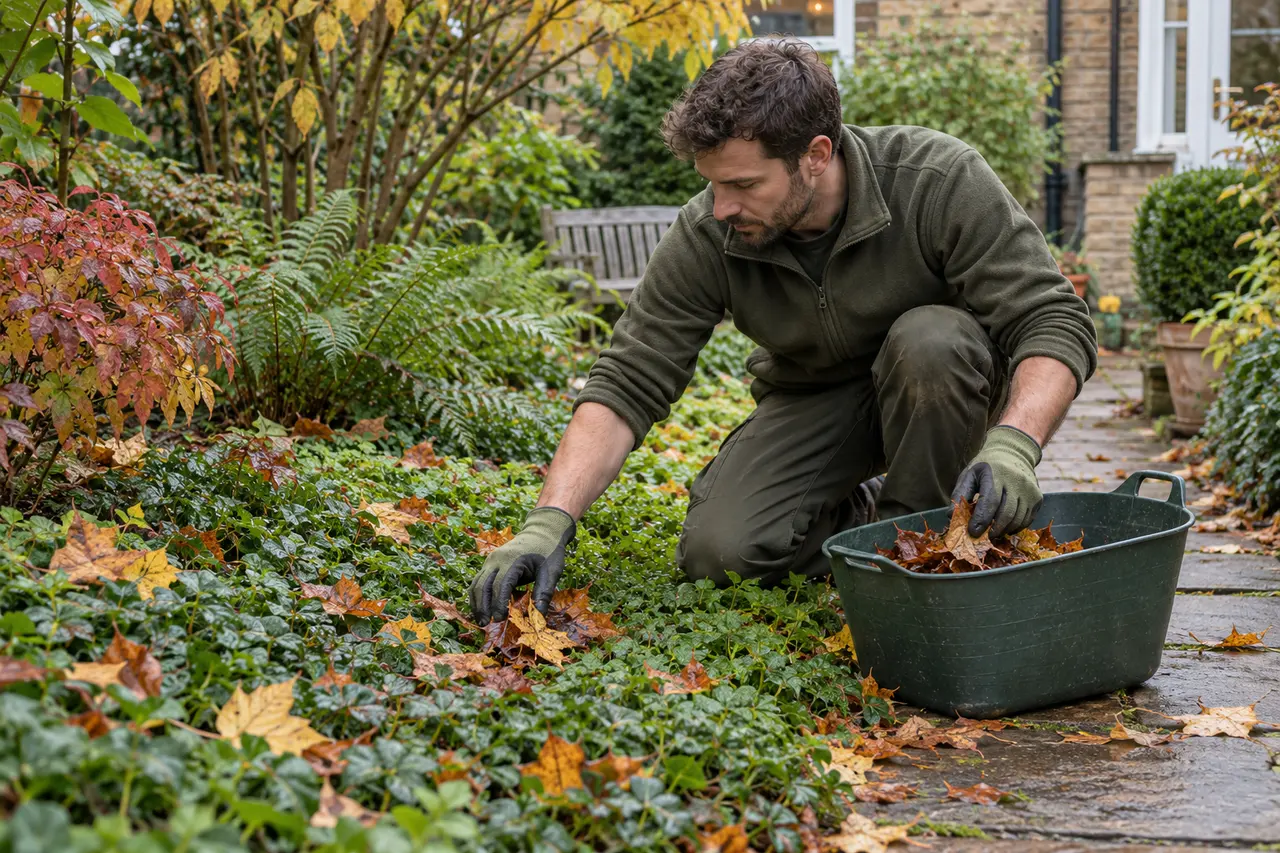
Accumulated leaves collected according to their position
The gardener distinguishes occasional loose leaves from a heavy wet pocket pressing on one patch of low planting. Accessible accumulations are lifted through seasonal leaf collection while the condition of the underlying cover remains visible. The operation does not comb the whole bed back to bare soil or classify every dry stem as waste. Collection follows the material actually causing an obstruction or covering vulnerable growth.
Temporary gaps after dieback are considered differently from persistent openings. We identify the surrounding species and its expansion before proposing another plant, since the existing cover may already be occupying that space below the visible foliage. Any newly planted gap receives its continuing establishment attention, including appropriate watering. Dense surrounding growth is not taken as evidence that the new root ball has no care needs of its own.
Further services alongside planted beds
Design sets the intended spread of continuous cover
Our garden-design service identifies where continuous cover is wanted and where slower-growing neighbours need their own space. Expected habit and spread inform quantities alongside the supplied pot size. The proposed limits connect the carpet with the plants and routes around it. This creates a defined planting arrangement that can be maintained as growth develops, while temporary small gaps retain their intended place within the whole bed.
Pollarding treated as continuing tree management
Our tree surgery distinguishes a pollarding regime from a single request to reduce crown size. The system begins deliberately on appropriate trees and involves continuing cuts to maintain that form. It is not a general name for taking the top from any mature specimen. The tree and its future care must support the proposed operation; describing a dramatic cut as a pollard does not make it an appropriate one-off treatment.
Surface washing selected for the material and intended finish
Our jet-washing assessment identifies the surface and intended clean before selecting equipment and handling. An open paved area and delicate margins can call for different methods. The proposal does not make the strongest setting its quality measure or require one machine for every material. This gives the operation a practical cleaning objective without presenting greater force as proof of a better completed surface.
Gutter work identifies seasonal cables and clips
Before gutter cleaning, light clips and roofline cables are identified as fittings separate from ordinary deposits. Appropriate handling is arranged with the responsible person where access requires it, preserving the installation within the working method. The channel task then follows a clear route to its debris. Any uncertain entanglement stays identified, keeping a seasonal cable out of an improvised collection from below.
Fresh cut-tree preparation separated from changing display height
For a cut Christmas tree, a fresh base cut is identified as preparation for water uptake. Display size and room height are considered separately when the tree is selected. Where the cut is needed, the arrangement states how it will be handled before securing the support. This gives preparation its own practical stage alongside delivery and installation, with the selected service and on-site requirements clear.
Gardening time for selective planted-cover work
Our quotation reflects the hand work and collection within dense low planting as well as the surrounding tasks. The general garden-maintenance rates below guide time, while recovery of caught material can differ substantially from gathering the same loose load off an open path.
| Gardening time | Guide price | How to use the figure |
|---|---|---|
| First hour | £83 | Describe the planted area and intended work |
| Each subsequent hour | £65 | For further agreed maintenance time |
GBP guide prices. The complete quotation identifies VAT treatment, waste handling and any applicable parking, access or congestion costs. Plants, materials and specialist operations remain separately identified within the actual arrangement for the visit.
Containment and collection within ground-cover planting
Can the plants over the edge be cut without clearing the whole patch?
Our edge work can contain extensions while preserving the main planted carpet. The gardener distinguishes loose, connected and rooted lengths before selecting shortening or separation. That identification gives each portion its appropriate method. The completed boundary follows the intended area of cover, leaving the continuing plants recognisable and the outside growth addressed without changing the purpose of the whole bed.
What if wanted ground-cover has grown around an unwanted object?
Where useful growth surrounds an unwanted object, we identify the item and free accessible stems before moving it. The plant is not hauled out as part of the object’s load. Something heavy or firmly embedded receives a different handling arrangement from a loose wrapper or twig. This keeps the recovery specific to what is being removed and preserves the planted layer intended to remain around it.
Can low ground-cover be walked on like a lawn?
Low green cover is not automatically treated as a walking surface. Our working route follows the intended access unless the actual planting has been selected for that use. Species and purpose therefore matter when maintenance is arranged around the bed. The visible resemblance to a green carpet does not make it interchangeable with turf or provide a reason for regular carrying traffic through its growing stems.
Should leaf collection take place before the hedge is trimmed?
Where hedge work will add to an existing accumulation, we consider collection in the lower planting before the trim. A heavy old layer may need removal first, followed by gathering the new clippings. The sequence keeps those materials from repeatedly being mixed back into a bed just recovered. This gives the combined operation a clear progression without requiring the planting to be cleared again after each separate task.
Can the same visit deal with both the planted carpet and its lawn edge?
The planted edge and adjoining lawn can receive attention in one visit, with their boundary identified before mowing. Growth rooted across it has its own hand operation where commissioned. The machine then works the grass outside that line. Both sides finish with appropriate care, preserving the bed shape and leaving a readable junction for the next cut or close planting task.
A controlled margin with the living carpet intact
Our gardening services leave the intended carpet connected within its bed, with crossing growth attended to and loose accumulated material gathered. The boundary stays readable for subsequent mowing and hand work. The result preserves the low planting’s purpose while giving access to its next care, with any larger change kept identifiable as another operation beyond the current edge maintenance.