

Selective care through a border’s changing seasons
Gardeners Barnes
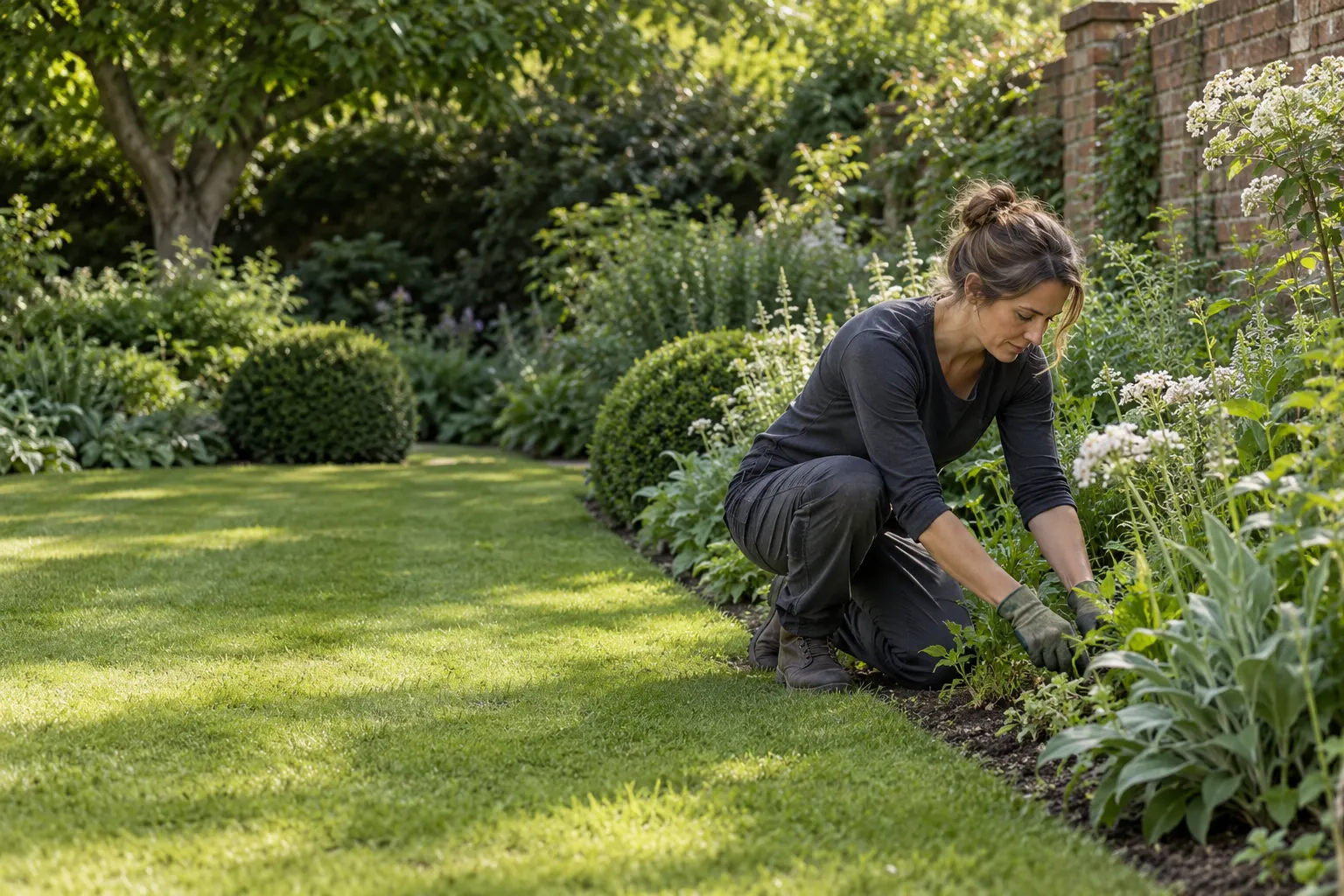
Our gardeners maintain planted beds without treating seasonally bare ground as empty space. We work around known bulbs, perennial crowns and retained shrubs, lifting accessible weeds and collecting loose growth as the border changes. Mowing and suitable hedge attention provide a finished frame while the planting continues through its own cycle.
- How are fading bulb leaves treated? We leave attached foliage to finish naturally and carry out suitable weeding and surface collection around the group meanwhile.
- What happens when digging uncovers a bulb? Our hand work stops at that spot while the planting is identified, keeping the position clear for selective work around it.
Bed maintenance around visible and dormant plants
What remains during your selective bed work?
We distinguish wanted bulbs, perennial crowns, retained seedlings and useful shrubs from the weeds being removed. Those occupants remain part of the bed as its appearance changes. Our work can combine accessible soil-level care with mowing and suitable hedge attention, without making a completely bare, uniformly clipped garden the measure of its finish.
How do you weed around dormant planting?
We use known positions, labels and reliable planting records to follow accessible weeds around dormant bulbs and crowns. Uncertain parts remain identifiable for their appropriate next stage. This gives the current hand work a clear route through the bed, allowing selected weeds to be loosened and gathered while the established planting keeps its place beneath the seasonally bare-looking soil.
Planted ground through several seasons
Hand work around the bed’s existing occupants
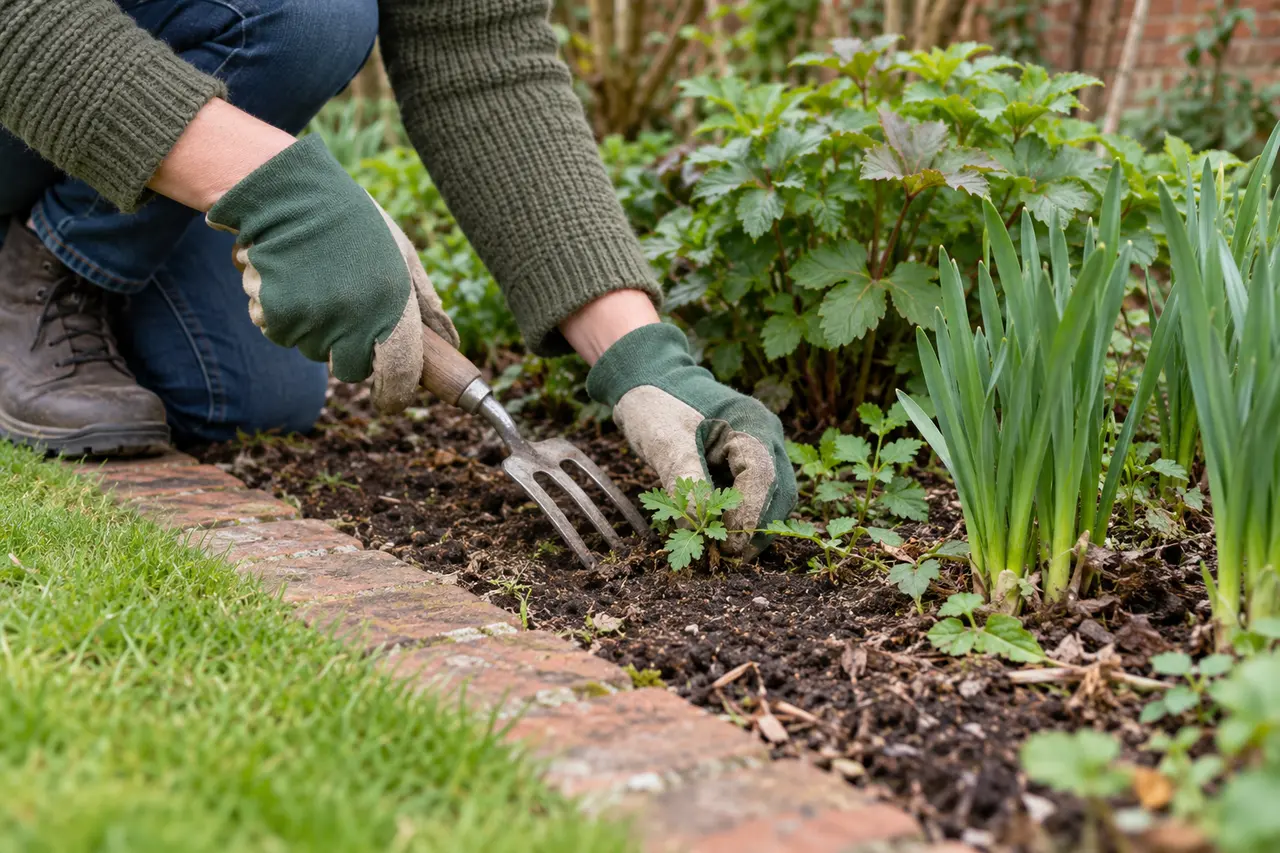
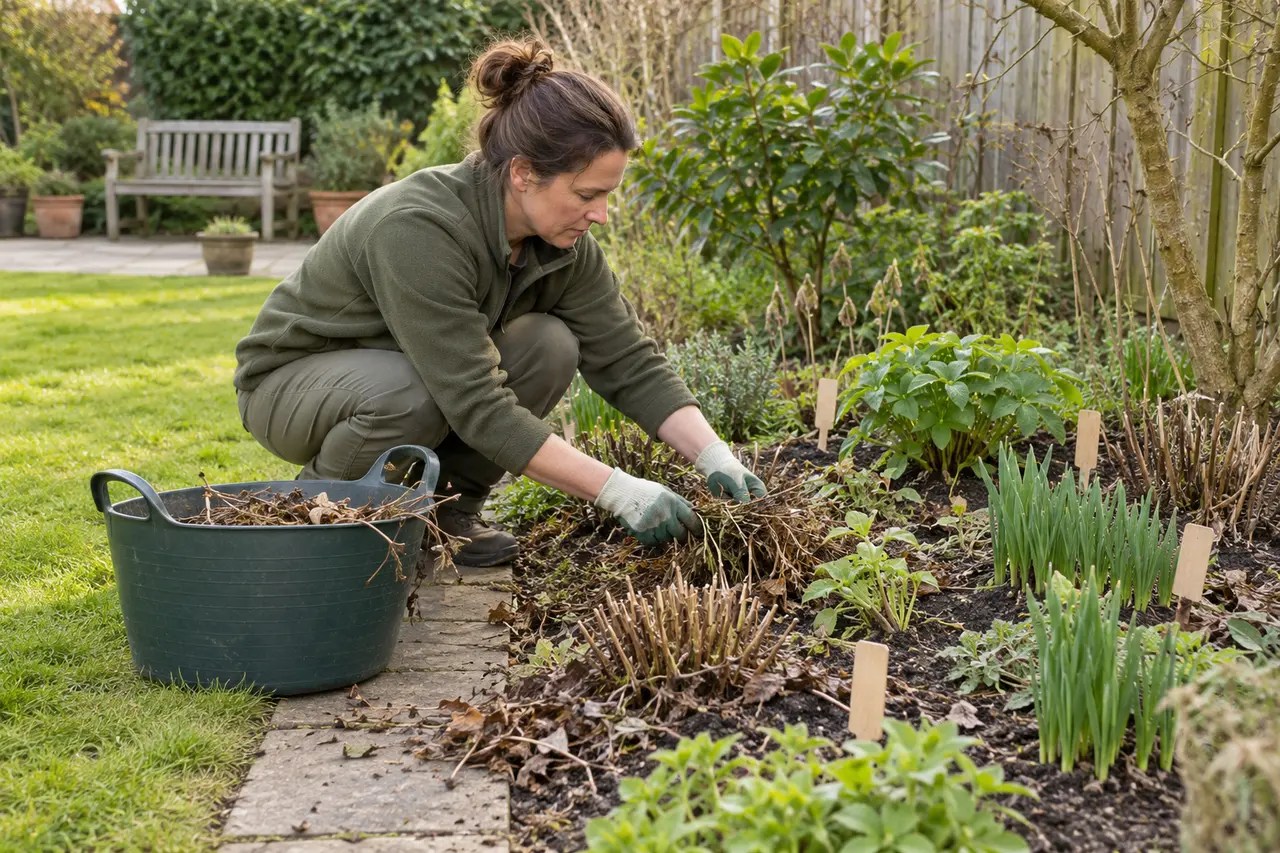
Our first pass establishes what occupies the apparently open soil. A bed looking sparse after flowering can still contain its next growth below the surface. Surviving stems, labels and clump positions help locate those occupants before the hand fork enters. A known bulb group between shrubs remains marked within that working arrangement while accessible weeds are attended around it.
We follow individual weeds from a visible edge, loosening accessible roots locally around the retained planting. A substantial weed entangled with wanted roots receives particular attention before the next movement. Detached material goes to its receiving position clear of the foliage, and uncertain roots or emerging shoots remain identifiable. Each worked portion gives the following hand operation an understandable view of the bed.
Our garden maintenance works within the established planting structure. The finished portion has accessible weeds removed, recognisable crowns and usable room for further hand attention. Stems retained for a suitable later stage remain identifiable alongside the gathered material. That makes the current result clear while keeping the bed’s changing growth connected to its appropriate next operation.
- Known bulb positions stay outside the disturbance used to lift nearby weeds.
- Loose dead fragments are gathered carefully around new emerging shoots.
- Green bulb foliage remains clear of our mowing and trimming operations.
- Unidentified roots are separated from vegetation selected for removal.
- A reachable opening is retained for watering each plant receiving attention.
Flowers finished, foliage still active
Seasonal tidying without premature leaf removal
Our bulb care separates finished flowers from healthy leaves still supporting the plant’s cycle. Suitable foliage remains until natural dieback, with spent heads attended individually where appropriate to the plant and display. The two parts receive their relevant treatment at different stages, leaving the group recognisable while other useful weeding and surface tasks progress around its retained leaves.
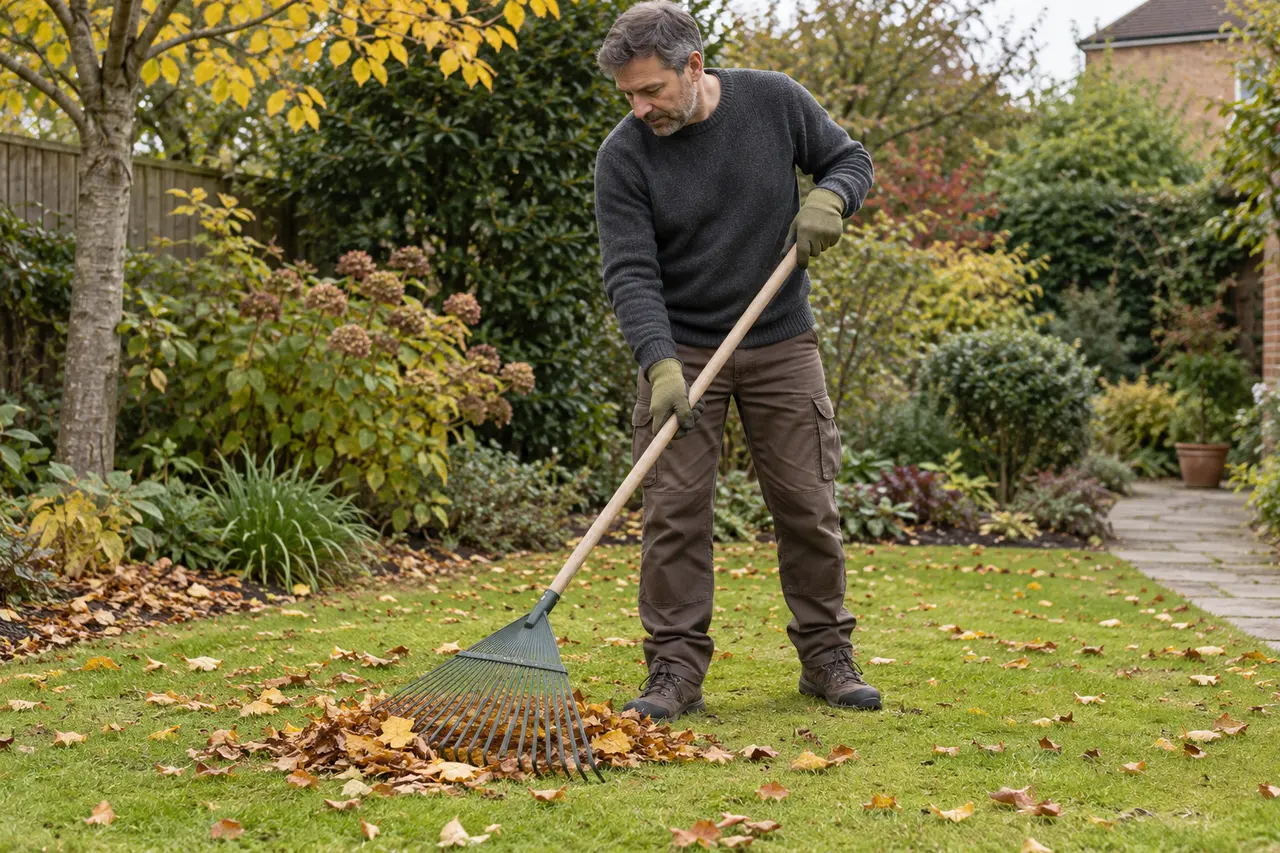
We gather loose litter, remove accessible front-edge weeds and maintain suitable nearby grass while bulb foliage completes its stage. Leaves remain naturally arranged, with the group visible within the border’s changing appearance. This keeps available hand positions clear around the plants as one display finishes and later foliage develops into the space, preserving useful access through that transition.
Later collection follows the material’s actual condition. We distinguish fully dead foliage that releases readily from growth still attached to a living crown, lifting loose leaves carefully from tender shoots. The year-round garden guide provides wider context for this seasonal attention, while the operation follows the individual plants present and their separate stages of suitable collection.
Grass alongside retained bulb groups
A mowing route outside useful leaves
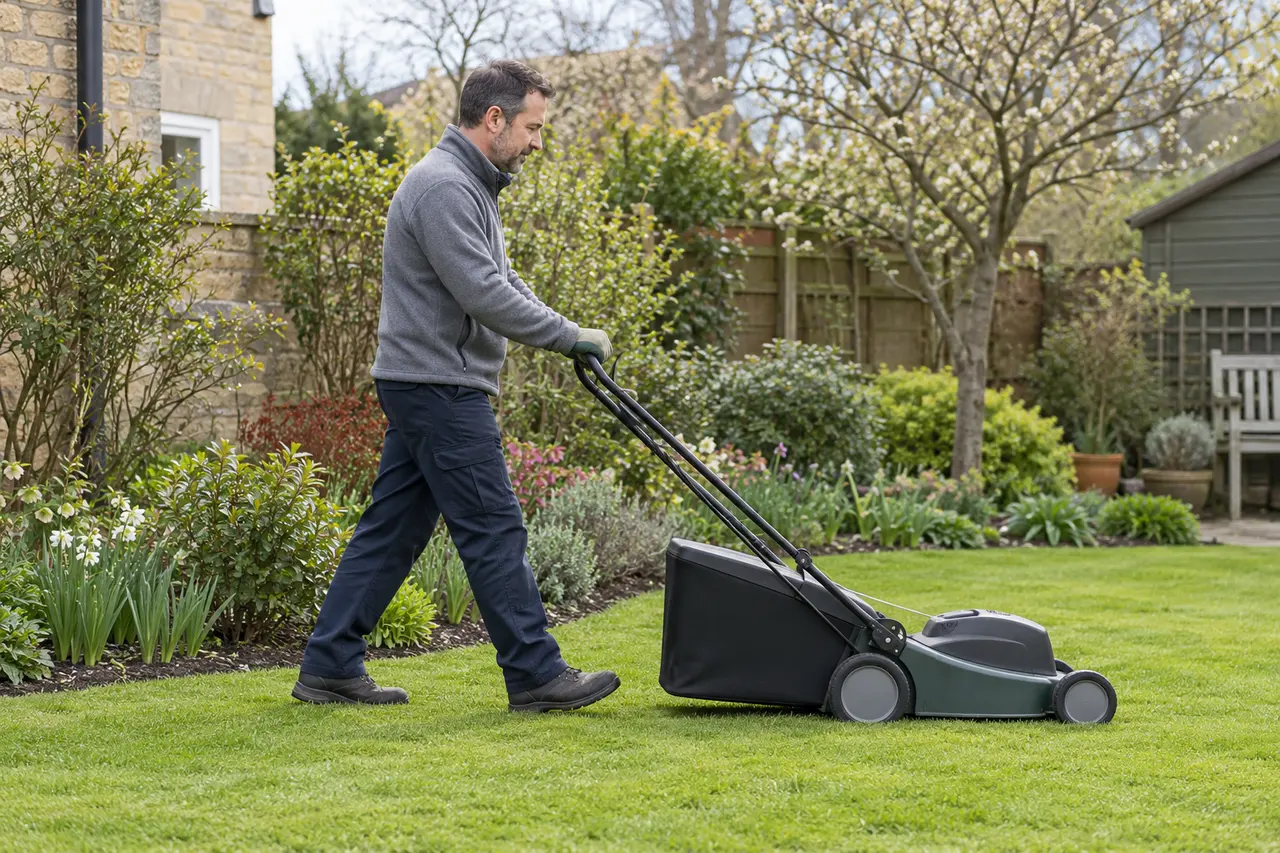
We establish the turf area ready to cut before moving beside bulb foliage at its margin. Leaves extending beyond the bed remain part of the retained plant, not incidental growth for the mower to remove. Our preparation clears loose objects, identifies stones and low edging, and places the turning route on suitable firm lawn so the machinery can work without entering that foliage.
Within the available grass area, we choose a suitable height and coherent cutting passes for the turf. The receiving ground and growth guide the finish, including accessible margins near the bed. Soft or frosty portions may need postponement. Our sequence keeps those different working conditions clear while completing appropriate grass attention around the retained bulb group.
Our Lawn care and mowing can finish the accessible perimeter and retrieve loose grass from adjoining paths. Beside fragile plants, hand shears may give a more controlled margin than a broad powered pass. A naturalised bulb patch remains a distinct area until its foliage has completed the appropriate stage; the ordinary lawn can receive its cut elsewhere without bringing that retained group into the same routine prematurely.
Recovery of an obscured planted bed
Overgrowth opened in visible working sections
Where old growth and weeds obscure the bed, we begin with a small readable section. Retained shrub stems and the rooting points of unwanted growth guide the opening. Loose material is lifted from the base and gathered clear, allowing that finished portion to provide the reference for the next accessible section as the planting arrangement becomes visible again.
Long weed stems are released from the planting they pass through before the detached length moves. Our handling avoids dragging a wanted clump out with an intertwined load. Wire, broken containers and sharp debris receive a different material decision from clean cuttings. Where identification or safe handling remains unresolved, that portion stays outside active clearance while an appropriate approach is established.
A garden clean-up can recover the bed outline and remove the specified vegetation without declaring that every surviving root has disappeared. Later growth may reveal further selective work. Our sorting follows the material distinctions explained in the garden-waste guide, keeping careful recovery separate from emptying the planted area. The useful result is an accessible border whose retained occupants remain available for continuing care.
The hedge above the planting
Clipping collected without covering emerging growth
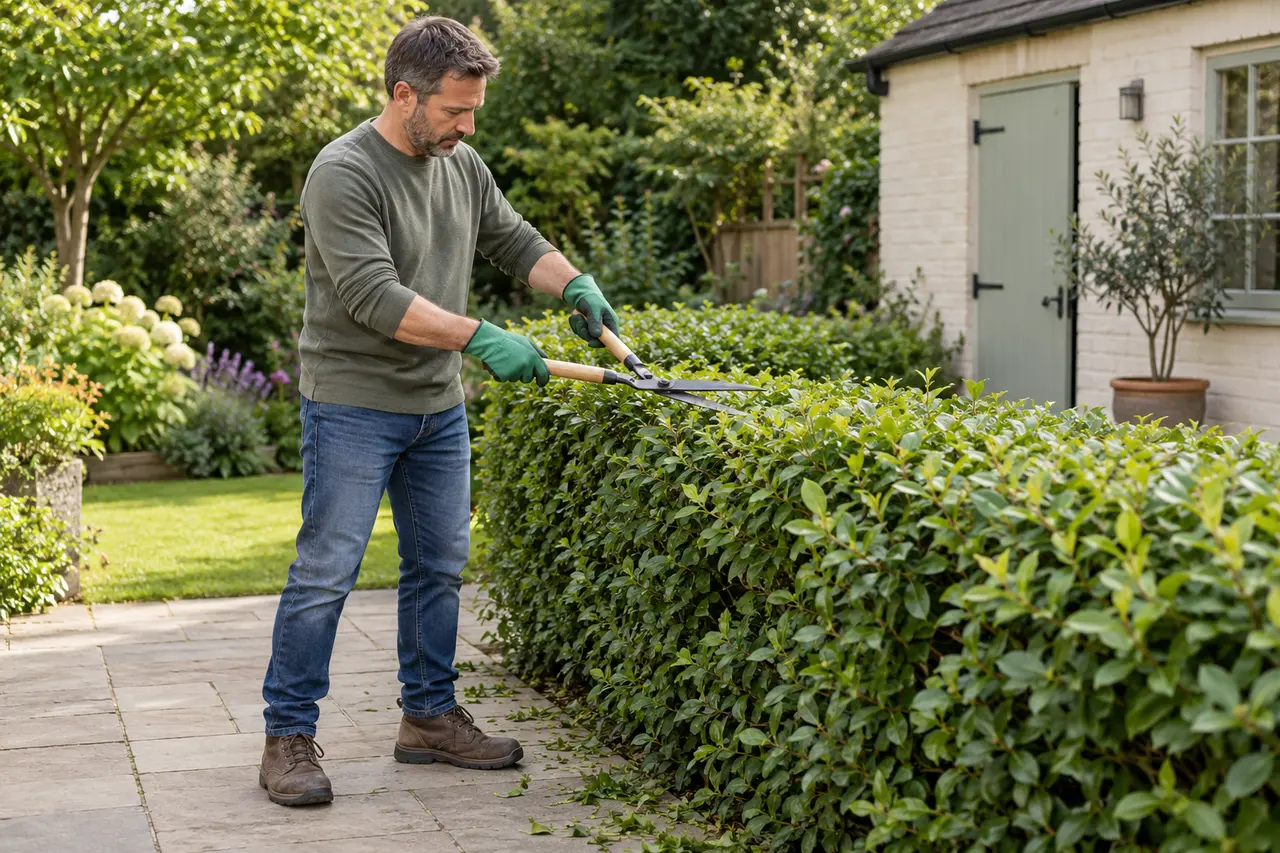
Our hedge preparation accounts for the low plants beneath its face and where small fragments will land. A suitable sheet can receive material where it fits clear of emerging shoots. Delicate occupied ground may call for smaller cutting sections and close gathering. We select that arrangement around the actual plants, preserving their place through both the trim and removal of its load.
The hedge species, current growth and controlled working position guide the cut. Individual attention can suit broad leaves or an isolated projecting stem, with the appropriate maintained surface followed across the accessible face. Older woody sections retain their own assessment alongside younger extension, keeping the selected light work and any larger proposed reduction distinguishable within the boundary.
We check affected vegetation for nests being built or used and postpone disturbing work where necessary. The suitable reachable extent remains clear, while heavy branches or unstable stems receive separate attention. Our finishing collection retrieves fragments among the planting below, leaving living shoots visible and the receiving surface ready for the bed’s continued care after the boundary task.
Continuity between garden visits
Known plant positions carried into later care
Our close bed work can retain identification useful after foliage disappears. A discreet label marks a bulb group, and a note of deliberately uncut growth explains its place in the current finish. That information carries the occupied positions into later attention, giving the next hand operation a reliable starting point as the planting changes its seasonal appearance.
The following work responds to new weeds between clumps, finished flower stems, actively growing grass and foliage now ready for collection. We assess additional planting against known roots and the space retained plants require later. This keeps proposed additions related to the bed through the year, with watering and hand access preserved alongside its existing seasonal occupants.
The finished arrangement remains recognisable through those changes. Loose cuttings produced by our work are gathered from paths, suitable turf meets its intended margin, and the retained bed has accessible places for water and hand care. Its useful earlier and later growth stay distinguishable, connecting the current surface finish with the planting that continues to occupy the border.
Further services for established planted gardens
Design for the bed’s seasonal occupation
Our garden-design brief can record the changing positions of bulbs, perennials and permanent shrubs through the year. Proposed additions are then related to the existing roots, eventual spread and display timing within that seasonal arrangement. This develops a suitable succession with practical care positions, while routine maintenance continues to address accessible weeds and the growth at its appropriate current stage.
Tree assessment separate from border clearance
Our tree surgery provision gives a questioned tree or branch its own appropriate assessment and proposed operation. Deciduous trees can retain a living framework while leafless in winter, so the actual condition and purpose guide any cutting. We keep that tree decision identifiable alongside the border’s vegetation work, with the relevant result and handling considered for the particular structure being assessed.
Exterior cleaning suited to timber decking
Where exterior cleaning includes decking, we treat the timber and its existing finish as a separate receiving surface from nearby stone. Worn boards or coatings can limit the appropriate approach, and the proposed method follows those actual conditions. Washing is specified for the suitable material; replacement boards, a new coating or restoration of a deteriorated finish are not implied by the cleaning operation itself.
Gutter deposits collected as their own material
The load produced by gutter cleaning is assessed separately from clean cuttings retained in the garden. Its contents can include mixed deposits needing their own collection destination. We gather and handle that building-related material according to what is found, keeping the retained compost or border material distinguishable and leaving the route below clear of the outgoing channel load.
A display position with usable light controls
Our Christmas tree arrangement can retain accessible light controls within the display position, alongside suitable distance from heat and clear escape routes. The layout allows switching without moving the stand or reaching through branches. The set’s own instructions remain available for its operation, including switching off before bed or leaving home, with usable access to those controls from the start.
Close bed care within the gardening visit
General gardening starts with the published hourly guide below. Selective weeding among known planting takes a different amount of time from cutting an open piece of lawn.
| Gardening time | General guide rate |
|---|---|
| First hour | £83 |
| Each subsequent hour | £65 |
GBP guide rates. The quotation identifies the work, waste arrangements, VAT treatment and any applicable access or parking charges.
Questions about our seasonally occupied bed care
How do you work while bulb leaves are yellowing?
We retain attached bulb foliage until its natural completion while attending to suitable weeds, loose material and nearby paths. Remaining dead growth receives its appropriate later treatment. This leaves the bed’s current stage understandable, with useful leaves and known positions kept visible while the accessible surrounding surfaces receive their own completed attention.
What happens when a hand fork encounters a bulb?
We stop disturbing that spot and establish the planting position before proceeding around it. An unexpected bulb can belong to a retained group whose leaves have disappeared. Keeping it identifiable allows accessible nearby weeds to be addressed without repeated probing through the same occupied soil or misclassifying the bulb as waste.
How are weeds reached beneath later foliage?
Our hand work starts from a visible edge, separating the unwanted stem from retained leaves before loosening an accessible root. Known bulb positions remain relevant below the later foliage. Any tightly occupied part needing another approach stays identified for suitable subsequent attention, while the reachable selected weeds can be gathered with the planted group left seated.
How do you assess a bare-looking position for new plants?
We relate a proposed addition to the bed’s planting history, known roots and later spread. Dormant bulbs and perennial crowns remain included in that assessment even where top growth is absent. Suitable receiving conditions and watering access then guide the position, giving new bedding an identified place within the occupied arrangement and preserving room for the retained plants to return.
How is mowing continued around one retained bulb patch?
We keep a clear temporary boundary around that group and route suitable mowing over the surrounding turf. The patch returns to the ordinary cutting pattern only when the particular bulbs’ foliage has completed the required stage. This separates work available now from later care without treating the whole lawn as one shared cutting surface.
A border kept recognisable through seasonal change
Our Barnes bed work preserves the knowledge held in existing labels, crowns and bulb positions while removing accessible unwanted growth. Through our gardening service range, that careful soil-level attention can be connected with a suitable lawn and hedge finish around planting whose value continues beyond its most visible flowering stage.