

Selective renewal of established blackcurrants
Gardeners Sydenham
Our Sydenham gardeners maintain suitable established blackcurrant bushes through selective older-wood renewal, with useful younger growth retained. We trace the chosen stems before cutting and gather the resulting woody material, then attend to the surrounding weeds, grass and suitable hedge work. This combines a defined pruning operation with the garden care around the fruit planting.
- Which blackcurrant growth does your renewal retain? Our selection preserves useful younger productive wood while suitable older stems are removed, rather than treating every fruited stem as finished material.
- How is a reused reservoir stand accounted for? Our tree-installation preparation distinguishes stable support from a watertight reservoir, with the actual stand and maker's assembly requirements kept in view.
Selective renewal of the bush’s older stems
What does selective blackcurrant pruning involve?
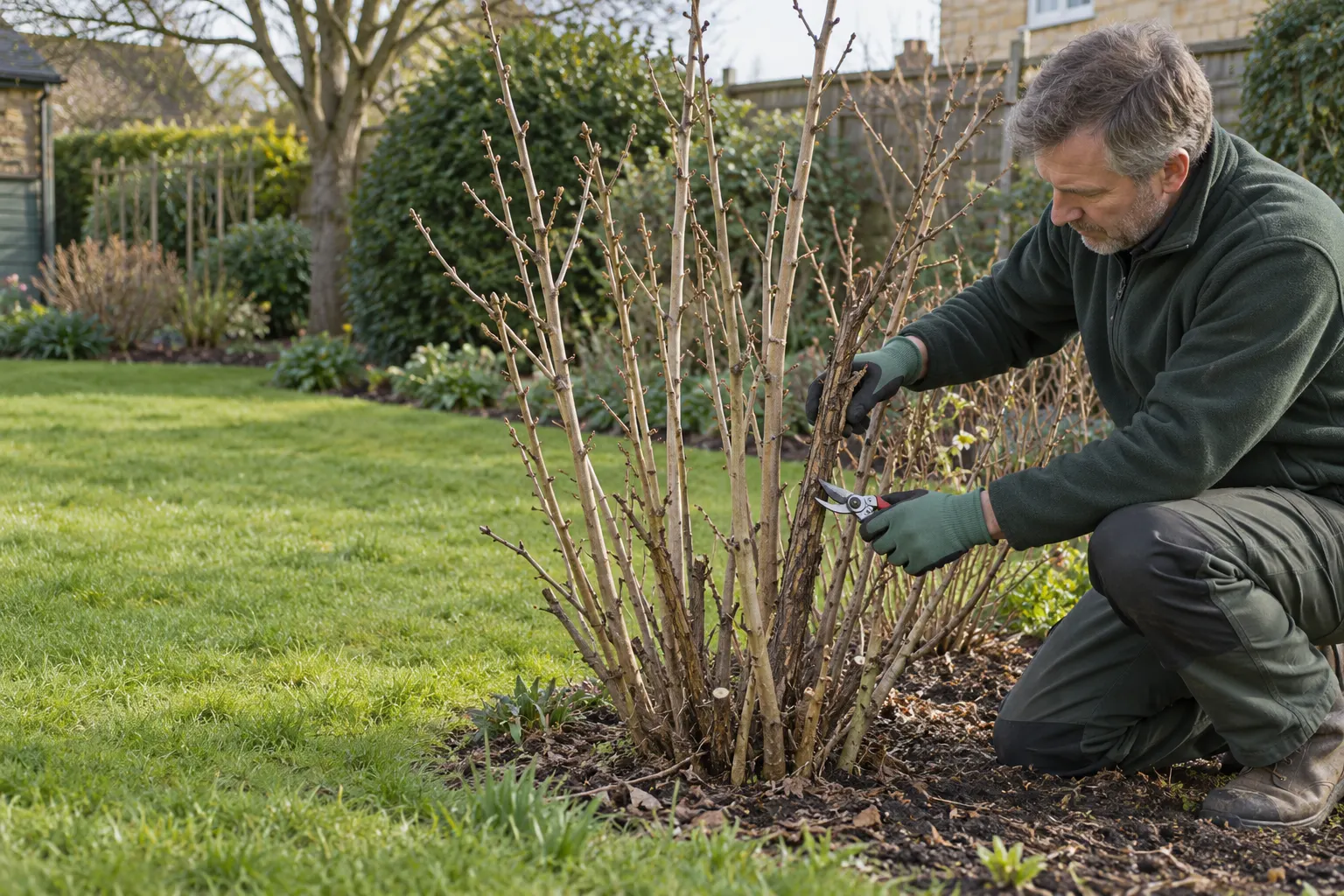
Our gardeners trace suitable older stems to their appropriate low removal points while keeping strong younger growth within the bush. This is a selection from the established structure, with the retained and outgoing branches understood before collection. The service therefore manages the actual blackcurrant growth.
When is an established bush's pruning operation carried out?
Suitable established blackcurrants are normally pruned during dormancy, after leaf fall and before new spring growth. Our proposed operation follows the identified bush and its condition at that stage. A plant carrying foliage or fruit can need different work around it, so the dormant pruning remains distinct from another selected task. This keeps the service related to the actual growing stage instead of treating every visit beside the bush as the same operation.
A deliberate choice of retained wood
The branching structure within the bush
The gardener examines the bush beyond its outside spread, recognising the strong young wood on which blackcurrants crop well. Older stems may appear darker and thicker, but their branching and condition also inform the selection. The work preserves useful continuing growth while identifying suitable older material for renewal. This gives the cut a relationship to the plant's productive structure.
Selected stems are followed through their smaller branches before the cutting position is approached. One older base can carry several branches, with a useful younger shoot emerging close beside it. Our gardener establishes which parts will leave together and which remain rooted before removing the selected stem. This makes the renewal a controlled choice within the bush, with neighbouring young growth kept distinct during both the cutting and subsequent handling.
Our garden maintenance can include the suitable pruning of an identified established bush alongside the surrounding work. A recently planted specimen and a crowded mature stool require different amounts of treatment. More extensive renovation is therefore distinguished from an ordinary renewal pass, with the intended removal clear before a larger stem is cut. The customer receives a defined plant operation.
Low cuts on the selected older wood
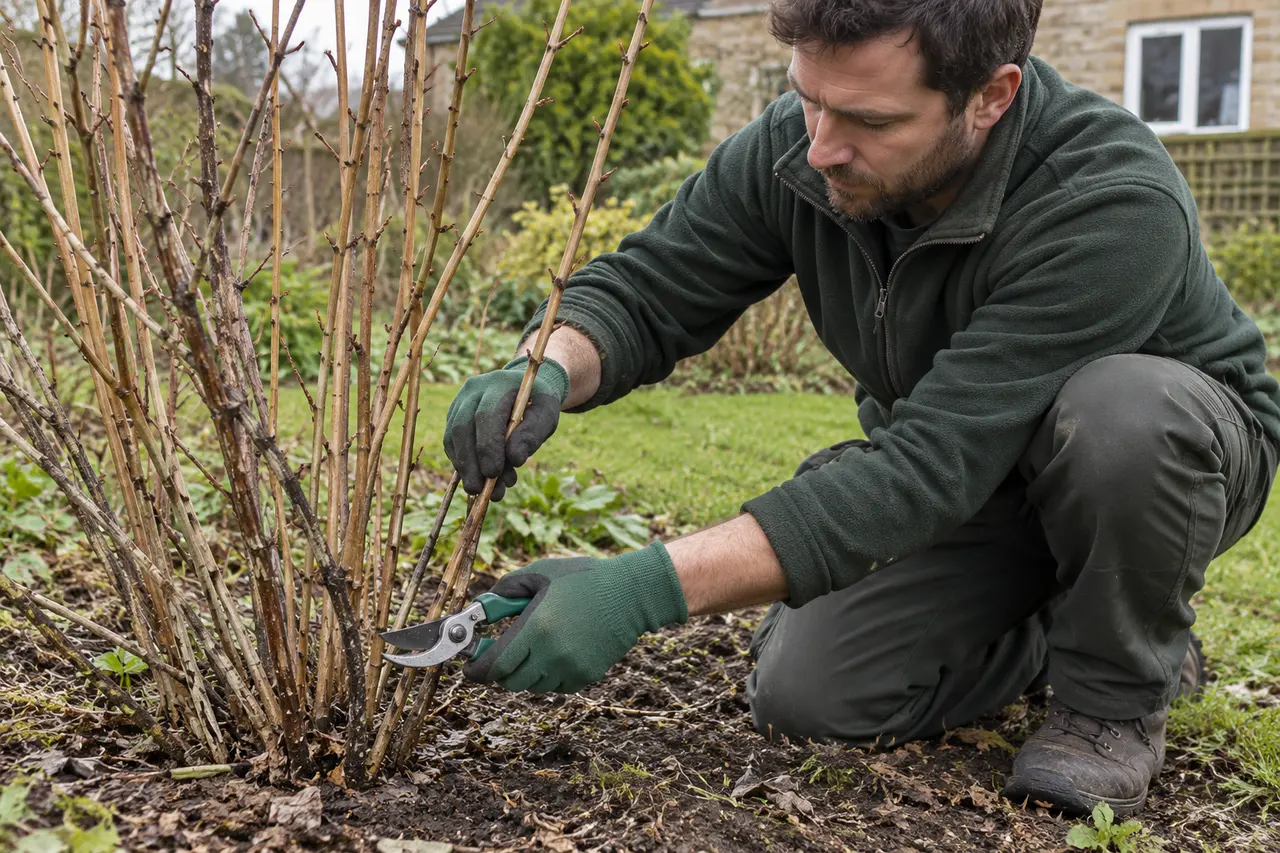
Individual cuts at identified removal points
Working space is established for the appropriate tool while the selected older stem remains visible at its base. The gardener keeps neighbouring young shoots out of the cutting movement. Several stems can meet closely at the stool, so the combined thickness is not treated as one branch to sever. This controlled approach relates each removal to an identified stem and preserves the separate growth chosen to remain.
The completed selective renewal leaves a useful mixture of growth within the established bush. Our treatment does not remove every stem merely because it has carried fruit; that would create a different degree of removal. The selection follows the blackcurrant's actual habit and the wood retained for continuing production. The service describes the chosen older-wood work and the remaining young structure accurately.
The cutting tool is suited to the stem and used within its capacity. This gives the gardener a controlled cut instead of crushing thicker older wood with equipment intended for smaller growth. Where the access or handling needs exceed the proposed operation, that difference remains identifiable before proceeding. The finish does not leave a partly cut connection hidden among retained branches, with the intended stem removal still incomplete beneath an apparently shortened outline.
Collection that reflects the actual selection
The remaining bush shows the renewal completed
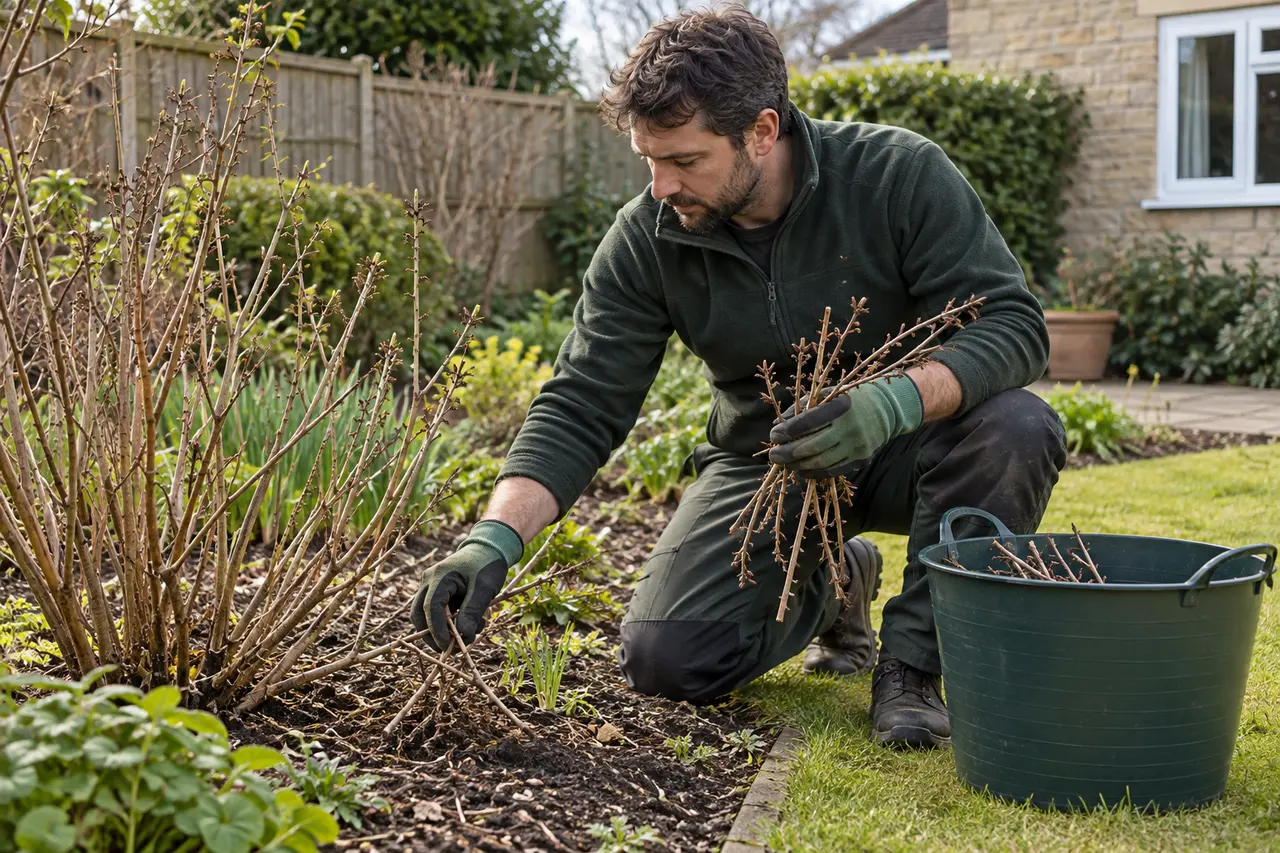
Our review of the pruning relates the removed bases to the younger growth remaining in the bush. A branched stem can produce several loose lengths when prepared for handling, but those pieces are not treated as separate stem removals or a percentage of the original plant. This keeps the completed selection understandable. The outgoing load shows the material to be carried, while the retained bush shows the plant treatment that has actually taken place.
A combined garden clean-up gathers that woody material alongside the other specified clearance. Its branching and carrying lengths influence the load, so our garden-waste arrangement follows what has actually been collected. Detached pieces remain clear of the retained bases during gathering. This leaves the customer with both a recognisable pruned bush and an outgoing load suited to the handling included in the service.
Close work around the retained stool
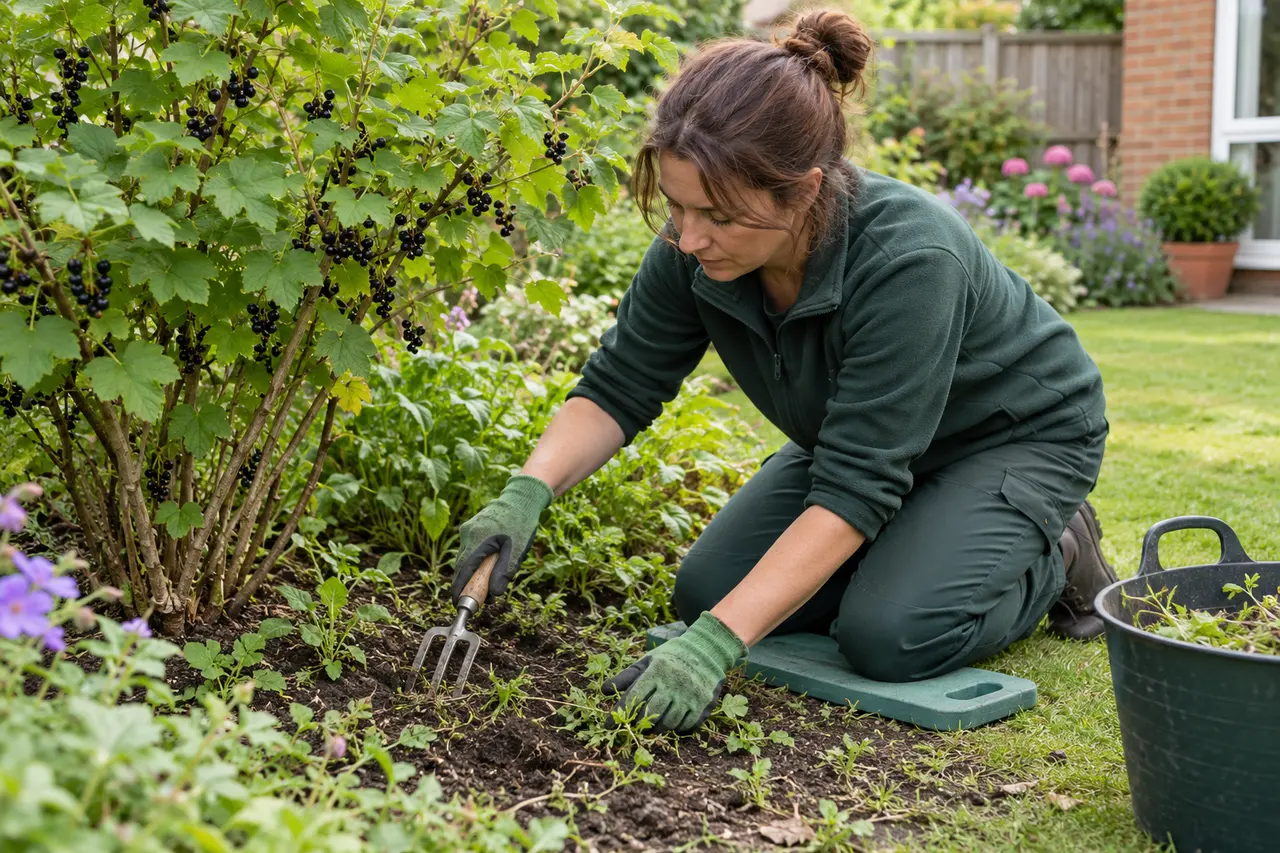
Weeding around a retained blackcurrant
The gardener distinguishes accessible unwanted growth from the retained stems and roots around the bush. Hand work separates suitable small weeds at the surface without treating the whole stool as material to excavate. Young shoots remain recognisable as soil and fallen leaves are moved, particularly where they stand beside the older wood. The resulting patch is tended around the existing fruit plant, with its living base kept intact.
Our surface work limits unnecessary deep disturbance beside the root system. Each weed is followed where it enters the planted area, using a suitable method. The service removes the accessible unwanted growth while leaving the fruit plant seated. This keeps the effort directed at the particular weed.
Material is gathered as the patch is completed, leaving the bases visible for later seasonal border care. Emerging growth can then be recognised in its own position instead of disappearing beneath a mixture of old leaves and cut wood. The cleared view supports the following maintenance while keeping further pruning a deliberate plant selection. This connects the immediate weeding finish to the living bush, without treating every later shoot as another item left behind by the first clear-out.
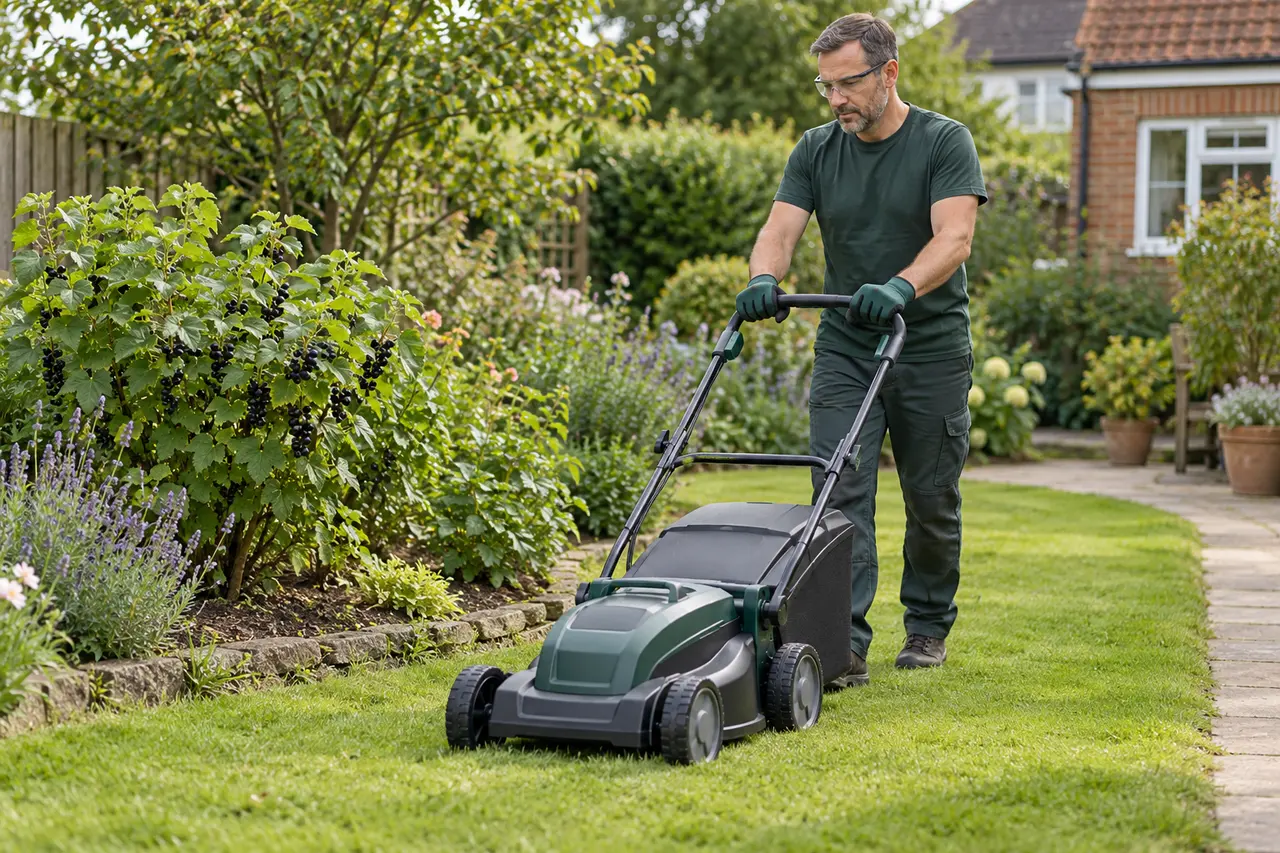
Mowing beside the fruit planting
The grass route outside young shoots
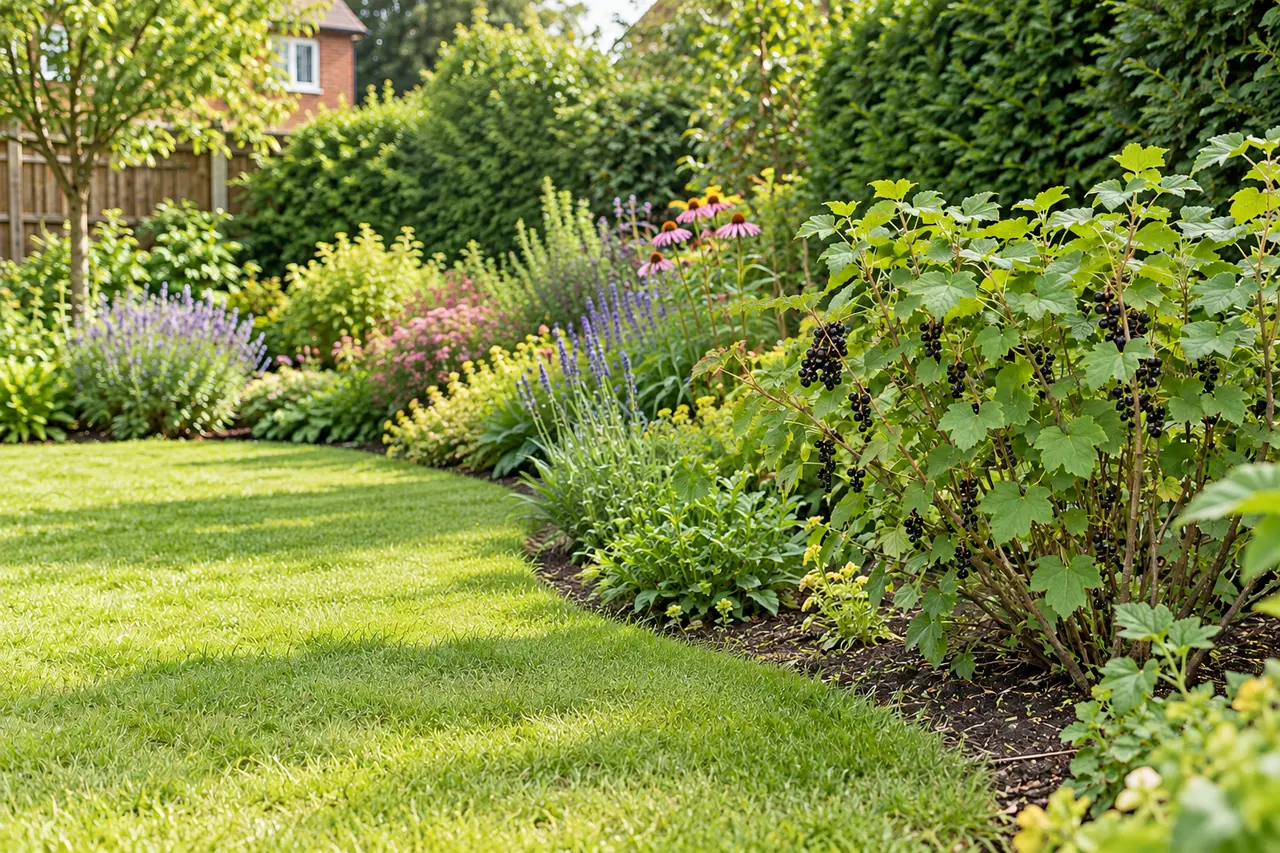
Before mowing alongside the bush, our team establishes the grass edge and the position of young shoots extending towards it. Their treatment follows the selected planting and pruning arrangement first, with the machine kept from choosing their removal accidentally. The fruit bush and turf can therefore meet closely while remaining distinct working surfaces. This preserves the young growth deliberately retained during the preceding renewal operation.
Our lawn care proceeds on suitable grass after loose woody fragments have left the intended mowing strip. Turning positions keep equipment from pressing against the bush, so the selection made during pruning is not undone by a wheel bending its remaining shoots. The lawn receives its own controlled pass and reachable finish. The result is maintained turf beside an identified fruit plant.
A repeated conflict between the bush and the grass needed for ordinary use is identified as its own continuing issue. Our proposed response can concern the planting arrangement or a considered pruning purpose. This gives the customer a clear distinction between normal lawn work and a larger space decision, with the retained young shoots protected from the varying turning room available during a routine cut.
Separate treatment for neighbouring woody plants
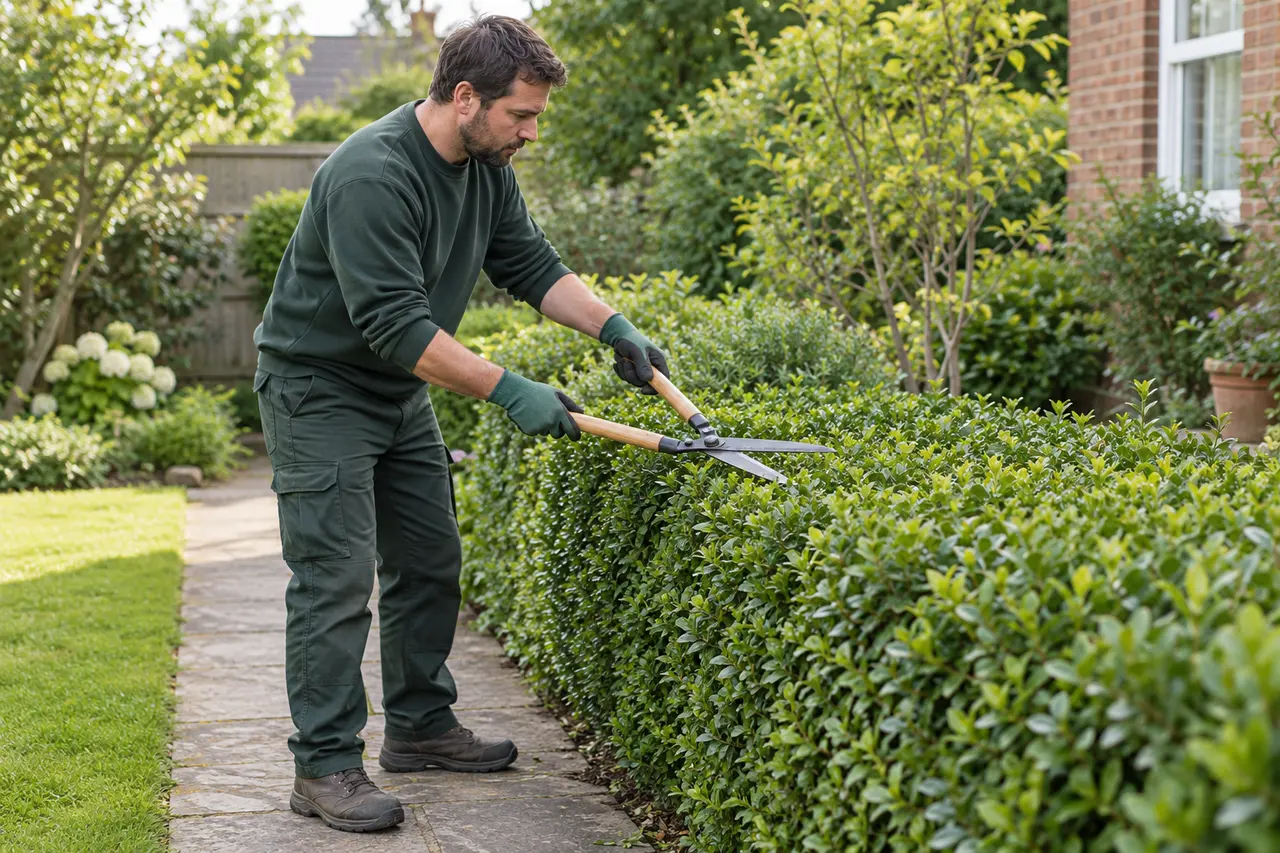
A separate finish for the neighbouring hedge
The gardener identifies a nearby hedge separately where its foliage overlaps the blackcurrant. Suitable hedge work follows its own species and maintained line, while the fruit bush keeps the selected branching chosen during renewal. This preserves two different plant structures in the same view. A continuous hedge face is not carried across the blackcurrant simply because both plants occupy the boundary area or their leaves are close together.
Nest checks apply to the affected woody growth, with disturbing work postponed where a nest is being built or used. Suitable hedge fragments are gathered without being packed around the fruit-bush bases. The completed area leaves the retained blackcurrant stems visible for the following care, with the loose material collected as part of the identified task. This brings the boundary finish together with the earlier plant selection while preserving their different operations.
- Identification of the established bush and suitable dormant stage.
- Tracing of the older stems to their low cutting positions.
- Retention of strong useful younger wood within the bush.
- Controlled release of detached branches from the continuing shoots.
- Collection of the woody load with retained bases left recognisable.
Additional services around the fruit garden
A design that accounts for existing outdoor light
Our garden design can relate planting to light from existing outdoor fittings. The ordinary route and its night-time view provide useful evidence of where foliage intercepts light before it reaches the surface below. The arrangement takes account of those actual shadows as well as a bright daytime view. Existing light positions remain features of the site, allowing the planting proposal to address their relationship with developing growth without implying a separate electrical installation service.
Tree work planned around ash condition
Our proposed tree surgery takes account of a known or suspected ash-dieback concern when the method is selected. Affected ash can develop brittle wood, with implications for climbing and branch anchors. The relevant stems and branches must therefore be considered as load-bearing structure, not only by their leaf appearance. An earlier successful climb does not replace that assessment of current condition, keeping the professional operation related to the actual tree encountered.
Pressure cleaning with water volume understood
Our jet washing setup distinguishes the machine's pressure figure from its water flow. A value in bar does not alone establish the litres passing through it per minute, so the washwater arrangement follows actual flow and use. This keeps handling related to the water produced during the operation. The chosen surface and equipment still need appropriate control around the working area, without one rating being treated as a complete description of the cleaning setup.
Gutter collection beside an opening
Our gutter cleaning preparation accounts for an adjacent window or rooflight when dry deposits are disturbed. Appropriate closure or protection is arranged for the affected section so small particles are not directed through an exposed opening. Where a window must remain in use, the method and sequence need to accommodate it. This relates the operation to the building beside the channel.
Installation preparation for a reused water-holding stand
A reused reservoir for a cut Christmas tree forms part of the installation preparation, including its condition and the maker's assembly instructions. Stable support does not by itself establish that a damaged reservoir or fitted component retains water. The arrangement must therefore be suitable for its continuing water-holding purpose. This keeps the display's care connected to the actual stand.
Guide rates for the selective gardening work
Identify the bush, selected pruning and outgoing wood alongside any mowing, weeding and hedge work. These general gardening guide rates provide the starting point.
| Gardening time | Guide rate |
|---|---|
| First hour | £83 |
| Each subsequent hour | £65 |
GBP guide rates. Confirm the work, materials, outgoing waste, VAT treatment and any applicable parking, congestion or access charges.
Questions about our blackcurrant maintenance
How does your work differ on a standard blackcurrant?
Our assessment follows the actual trained form. A standard carries its raised head on a supporting stem, so low removal intended for an ordinary bush is not transferred to that structure. The pruning treatment preserves the appropriate support and selected growth, giving the customer work suited to the plant encountered.
How are unusually swollen buds handled during the visit?
The observation remains identifiable as a plant-health concern within the work. Rounded, unusually swollen buds can be associated with blackcurrant big bud mite, but appearance alone is not treated as a confirmed diagnosis. Our ordinary renewal operation is therefore distinguished from verified pest treatment, with appropriate identification and plant-specific advice guiding any further response to the actual condition.
What result follows more substantial bush renovation?
A more severe renovation can remove fruiting wood while the next growth develops, with a possible reduction in the following crop. Our proposed operation therefore makes its extent and timing distinct from an ordinary selective renewal pass. The retained amount and actual bush govern the work, allowing the customer to understand the larger treatment without a promised immediate crop being attached to it.
How is seasonal netting treated during pruning?
Our gardener identifies the mesh and its attachments before selected branches are moved. Appropriate removal or adjustment keeps the intended stems visible and the netting distinct from cut wood. The detached load is gathered without wrapping it into the retained netting, so both the pruning selection and the material to remain stay manageable. This prevents an overlooked covering from turning separate branches into one mixed bundle during collection.
A retained bush with the next renewal stage understood
Our following gardening visit in Sydenham can work from the older section left for a later stage and the younger stems retained now. The completed renewal leaves that choice recognisable, together with the surrounding ground and grass care. This provides continuity around the actual plant.